Serengeti National Park Vs Kruger National Park Serengeti National Park Vs Kruger National Park are the…
Gorilla Habituation
Gorilla Habituation | Gorilla Trekking Tours | Gorilla Safaris in Africa
The choice between gorilla trekking and gorilla habituation on safari in East Africa. If you want the truth, you have to talk to the rangers at the briefing points in Rushaga or the trackers who walk into the dense forest of Bwindi Impenetrable National Park every single morning while the mist is still thick and cold.
Their boots are held together by dried mud, their uniforms are torn by thorns from the wild mimosa bushes, and they will tell you that the jungle does not care about your expensive camera gear or your expectations.
There is a massive divide between a standard gorilla trek and a gorilla habituation experience. Making the wrong choice can turn a dream holiday into a miserable, exhausting ordeal, or leave a serious photographer feeling rushed and frustrated. The regular trek is a highly controlled, tightly timed encounter with wild animals that have already been exposed to humans for years. Habituation is an active, unpredictable, and often chaotic experiment in inter-species psychology.
Traditional Gorilla Trekking Logistics
To understand regular trekking, you have to understand how the park authority manages the logistics on the ground in places like Bwindi or across the border in Volcanoes National Park in Rwanda. In the morning, you are assigned to a group of eight people. Before you even set foot on the trail, a team of advance trackers has already been in the forest since dawn. They start at the exact location where the specific gorilla family slept the night before, identifying the nests made of flattened leaves and branches. From there, they follow the physical trail, footprints in the black volcanic soil, freshly broken stalks of wild celery, and discarded fruit skins.
Once the advance team locates the primates, they notify your lead guide using a handheld radio. Your group walks along paths that have often been partially cleared by machetes. When you reach the family, the guide looks at his watch. You have exactly sixty minutes.
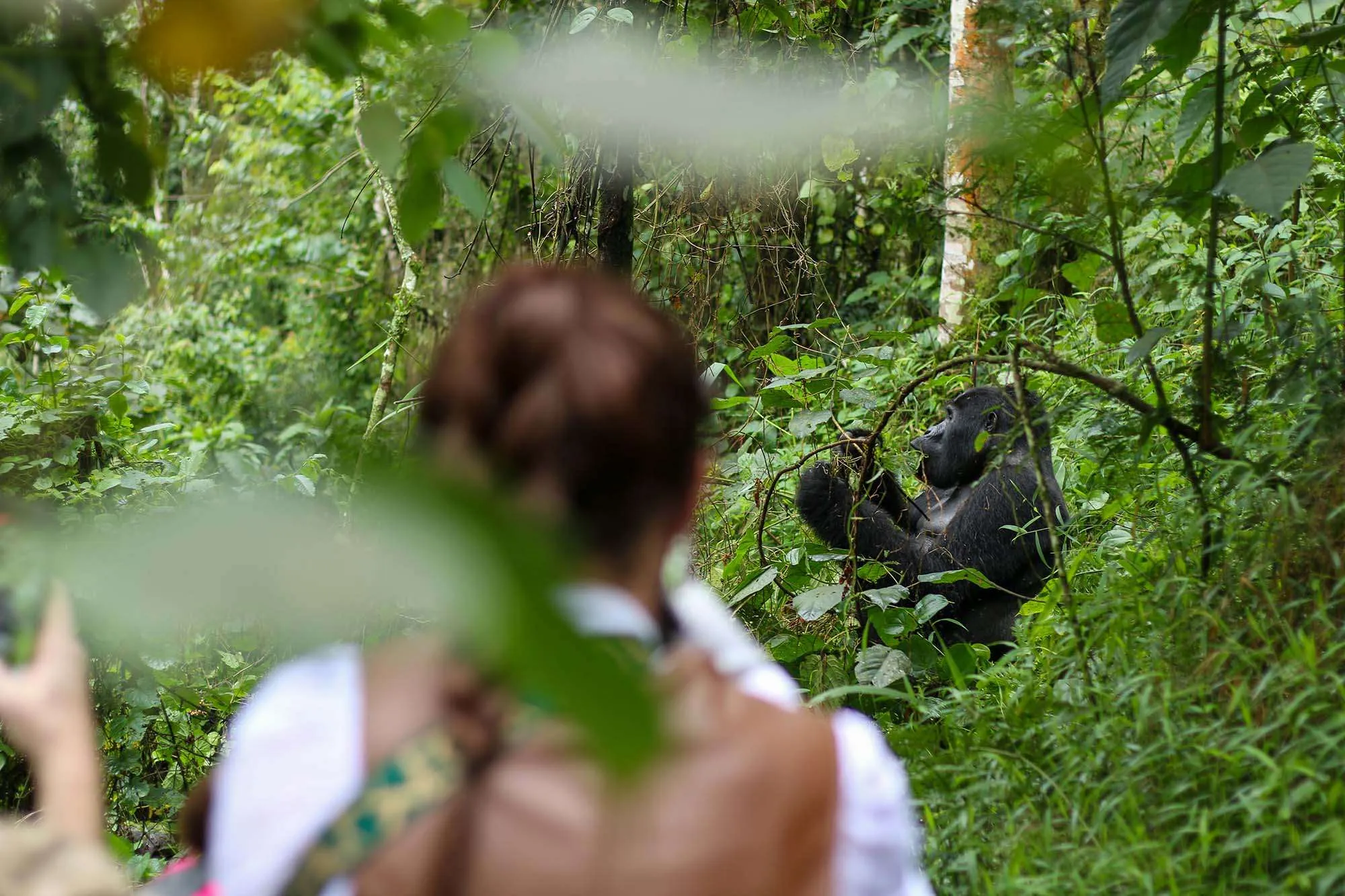
Because these groups have undergone years of habituation, the gorillas treat humans with absolute indifference. To a family like the Rushegura or the Mubare group, a line of eight tourists sitting in the brush is no more interesting than a patch of ferns or a passing bird. A young black back might slide down a vine right next to you, or a mother might nurse her infant three meters away without ever looking you in the eye. They go about their daily routine of sleeping, grooming, and stripping the bark off trees. It is a passive observation experience. It is predictable, and for most people, it is physically manageable because the trackers do the heavy lifting of finding the animals before you arrive.
Inside Bwindi Gorilla Habituation: Four Hours in the Primate Classroom
Gorilla habituation is completely different. Right now, this option is only available in the southern section of Bwindi, specifically around the Rushaga and Nkuringo regions. Instead of eight tourists, the group is strictly limited to four people. You do not wait for a radio call from an advance team. Instead, you walk out with the actual researchers, rangers, and conservationists whose daily job is to train completely wild gorilla families to tolerate the presence of humans.
You start early from the park headquarters, walking straight to the previous night’s nests. From that point forward, you are part of the tracking team. You learn to spot the slight indentation of a knuckle print in the wet mud or the sour smell of fresh dung. When you finally catch up with the family, the clock starts, and you stay with them for up to four hours.
The major difference is that these gorillas are not entirely comfortable with humans yet. They are still in the process of learning that we are not predators. This means their behavior cannot be predicted. They do not sit still in a clearing for your photographs. The silverback is hyper-vigilant. He might give a sudden, booming chest beat that echoes through the valley just to test your reactions, or he might gather his females and juveniles and move deep into the thickest, steepest part of the valley to see if you will follow.
During habituation, you are not a passive observer. You are an active participant in an intense psychological negotiation. The researchers will instruct you to mimic local forest sounds, like a low, rhythmic throat-clearing grunt, to signal that your intentions are peaceful. If the silverback stops and stare, you have to look down immediately, drop to your knees, and show complete submission. You spend a large portion of those four hours scrambling through tangled vines, sliding down muddy slopes on your backside, and trying to keep up with a four-hundred-pound primate who can move through the dense undergrowth effortlessly.
The Geography of Choice: Rwanda’s Bamboo vs. Uganda’s Ancient Rainforest
The geography and price tags of these locations add another layer of practical reality. If you choose a regular trek in Rwanda’s Volcanoes National Park, you are paying fifteen hundred dollars for a single hour. In return, you get exceptional infrastructure. The drive from the international airport in Kigali to the park takes about three hours on smooth, well-tarmacked roads. The forest itself is heavily dominated by bamboo. Because bamboo grows straight and lacks the thick, tangled undergrowth of an ancient rainforest, the terrain offers clean lines of sight. For a photographer, Rwanda is the easiest place to get a clear, unobstructed shot of a gorilla without branches obscuring the face.
Uganda charges eight hundred dollars for a regular permit and fifteen hundred dollars for the four-hour habituation permit in 2026. However, reaching Bwindi is an experience of its own. Driving from Kampala or Entebbe takes nine to ten hours along roads that become incredibly bumpy and dusty for just over one hour once you leave the main highways or a few more hours if connecting from Queen Elizabeth National Park through the famous Ishasha sector famed for the tree climbing lions. The alternative is the one hour flight or a bit more depending on the day’s weather as well as the routing on the Cessna caravan planes operated by Aerolink Uganda to the airstrips at Kisoro airstrip or Kihihi airstrip, followed by a one and half hour transfer in a four-wheel-drive vehicle with air conditioning over some rough but scenic mountain tracks.
The forest in Bwindi is completely different from the Rwandan bamboo zones. This is a primary, ancient rainforest that has existed for over twenty-five thousand years. The topography consists of incredibly steep ridges and deep valleys. The vegetation is a chaotic wall of giant ferns, strangler figs, stinging nettles, and thick vines that catch your ankles. There are no smooth pathways here.
Consider the reality of a traveler who wants the ultimate photographic record of their journey. If she opts for a standard trek in Rwanda, her morning is highly organized. She leaves a high-end lodge, walks along a relatively clear path through the bamboo, and spends an hour taking bright, well-lit photos of a relaxed gorilla family sitting in an open space. When the sixty minutes end, the guide turns the group around. It is efficient, beautiful, and clean, but it ends just as she begins to understand the rhythm of the family.
If that same traveler books a habituation permit in the Rushaga sector of Bwindi, her experience will be defined by physical exhaustion. The morning begins in the pitch black and damp cold. The trackers might have to use a machete to hack a path through the jungle. When the wild family is located, they are usually on the move, foraging for food.
She will spend the first two hours jogging through the brush, trying not to trip over roots while sweat pours into her eyes. She will see the silverback casting angry glances backward over his shoulder. The researchers will be whispering instructions, explaining the specific quirks and volatile personalities of the individual animals.
By the third hour, the family might finally settle down in a steep ravine to rest and digest their food. Only then, when the adrenaline slows down and the cameras are put away because the lighting under the thick forest canopy is too dark, does the real magic happen. She sits on a wet patch of moss, completely covered in mud, listening to the deep rumbles of the silverback, watching the juveniles wrestle in the leaves, and becoming a brief, accepted part of a wild primate family’s life.
Scrambling Through Rushaga: The Physical Toll of Following Wild Silverbacks
The physical exhaustion of Bwindi is not something you can fully appreciate until you are standing at the park office in Rushaga at seven in the morning, watching the mist rise off the ridge while a ranger named Godfrey explains what to do if a wild silverback decides to mock charge you. Your legs are probably already stiff from the long drive up from Kampala, and the air has a sharp, damp chill that gets right into your lungs.
When you do a standard trek, you are walking into an experience where the edges have been smoothed down. If you are tracking a family like the Kahungye or the Bweza, those monkeys and apes have seen humans every single day for over a decade. They know the sound of a tourist gasping for breath, and they know the metallic click of a camera lens shifting focus.
But when you step out with the habituation team, you are entering a zone where nothing is guaranteed. The researchers from the Uganda Wildlife Authority are not there to show you a performance; they are there to do their jobs. They carry notebooks, data sheets, and old AK-47 rifles for scare shooting in the air if you come across a forest elephant, and they walk at a pace that tells you they do this every single day of their lives. Always walk by your own pace, they will always wait for you. If nature calls and you need to respond, alert your lead guide, don’t stay behind alone, a quick bush toilet will be organized for you though not a flushing one this time. A small hole is dug for you using a machete and you cover it well after your business then proceed with your experience. Never feel shy to ask to stop for a toilet break or water break
The first hour after you find the nests is usually a lesson in humility. In May, when the wild berries are ripe on the lower slopes, the gorillas move fast. You might find where they slept, huge piles of bent branches and flattened leaves that still smell faintly of gorilla sweat, but the family itself could already be a kilometer away, moving down into a steep valley where the mud is knee-deep.
You do not walk on trails during habituation. You follow the path the silverback made when he plowed through the bush. The vines here are thick and covered in thorns that catch on your sleeves, and there is a specific type of stinging nettle that the locals call asiza, which goes right through lightweight trekking trousers and leaves your skin burning for hours. Your guide will be swinging his machete to clear just enough space for you to squeeze through, but you will still spend a lot of time crawling on your hands and knees under fallen logs.
Reading the Forest: How Local Trackers De-escalate a Mock Charge
The researchers will tell you that the hardest part of the process is teaching the silverback to trust the sound of a human voice. Wild gorillas communicate through a complex system of grunts, barks, and posture. When the habituation team approaches, the lead researcher will start making a low, rumbling sound from the back of his throat, a sort of mmm-hmmm that sounds like a man clearing his throat before speaking. He does this every few minutes to let the silverback know we are there, and that we are not trying to sneak up on his family like a leopard would.
If the silverback is in a bad mood, the atmosphere changes instantly. You will hear him before you see him. A sudden, sharp bark will cut through the quiet of the forest, followed by the terrifying sound of thick trees being snapped like toothpicks. That is the signal for the family to run.
This is where the physical reality of the four-hour permit hits you. You cannot sit down and rest. If the gorillas run, you have to run with them. If you lose them in the thick bush, the habituation session is effectively over for the day because finding them a second time in that terrain is nearly impossible. You will find yourself scrambling up slopes so steep that you have to grab onto tufts of wild grass just to keep from sliding backward, all while your heart is pounding against your ribs and your lungs are begging for oxygen.
By the second hour, if you have managed to keep up without causing a panic, the silverback might decide to test your boundaries. This is the moment that tests your nerves. He might stop in a small opening, turn around, and stare straight at the group. A fully grown silverback in Bwindi can easily weigh two hundred kilograms, with arms thicker than a man’s thigh and a chest that looks like solid rock. When he looks at you, you realize how completely defenseless you are in his territory.
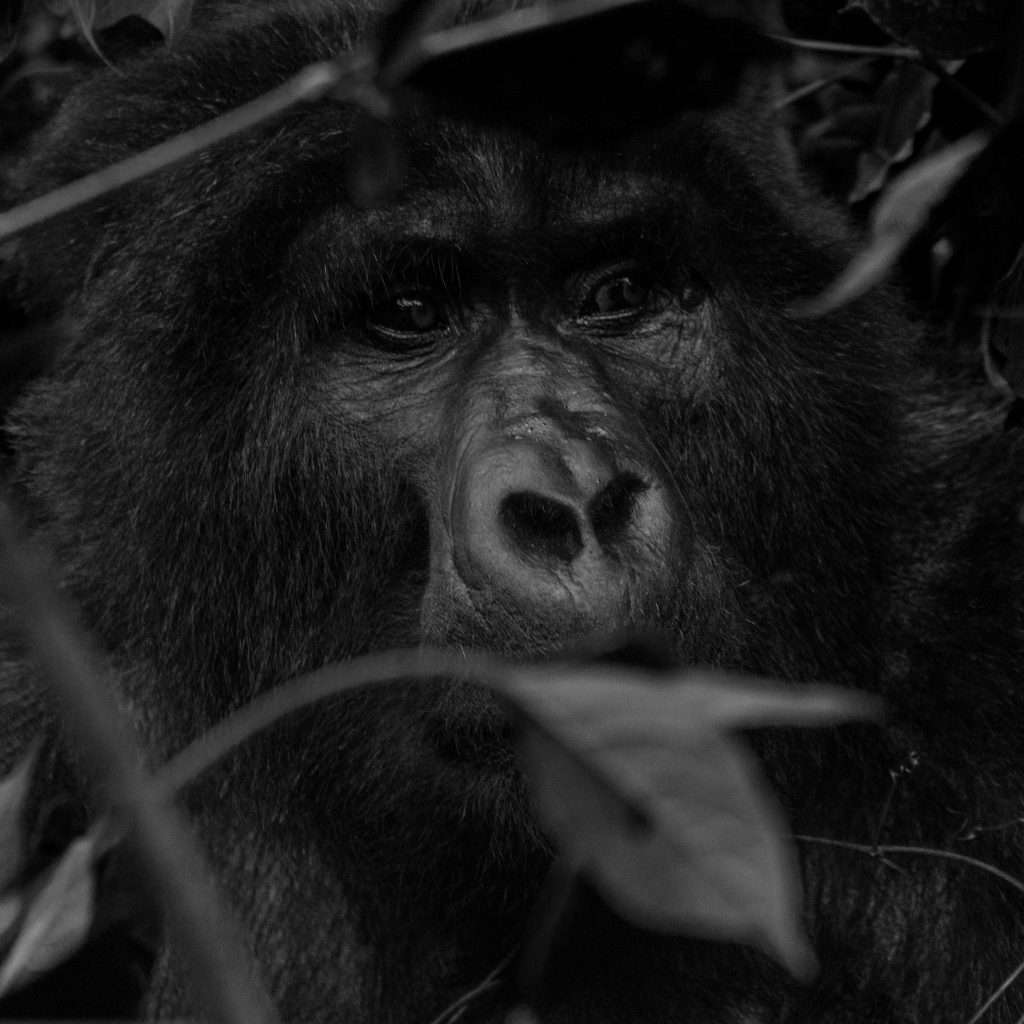
The temptation is to raise your camera and start shooting, but the rangers will quickly slap your arm down. You have to look at the ground, drop your shoulders, and sit as low as possible in the dirt. Looking a wild silverback in the eyes is a direct challenge to his authority, and if he thinks you are challenging him, he will beat his chest and charge. Even when you know it is a bluff, the sound of a two-hundred-kilogram primate rushing through the bushes toward you at full speed is enough to make your knees shake.
The locals who work these trails have a deep respect for these animals that goes beyond the money brought in by tourism. If you sit with the porters during a break, men who grew up in the villages surrounding the park like Rubuguri or Nteko, they will tell you stories about how the forest used to be before the national park was gazetted in 1991.
In those days, entering the forest meant hunting for bush meat or collecting firewood, and encounters with gorillas were rare and dangerous. Today, those same communities rely on the income from the permits to build schools and clinics, creating a fragile peace between the local farmers and the wildlife that occasionally raids their banana plantations.
When the Camera Stops and the Rhythm Shifts
By the time the third hour rolls around, the sheer physical exertion begins to give way to a strange kind of exhaustion-induced calm. The gorillas will usually tire of moving and find a place to rest during the hottest part of the day. They will settle into a valley where the wild celery is abundant, and the juveniles will start to play.
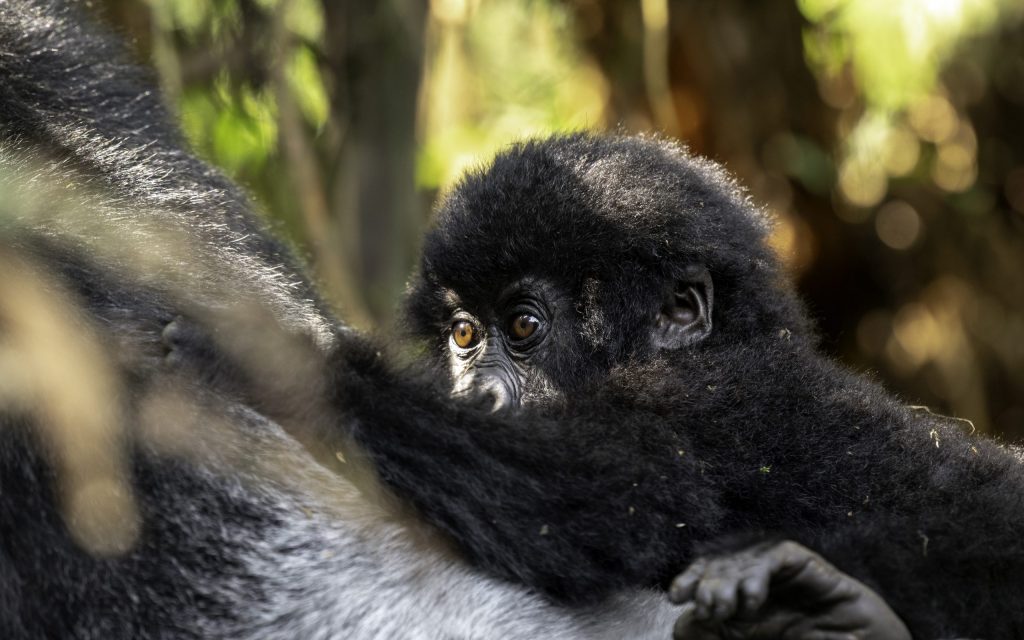
This is the phase of habituation that you can never get on a standard one-hour trek. Because you have been following them for hours, your presence has become part of the background noise of their day. The silverback will lie down on his back with his massive arms crossed over his chest, occasionally blinking at the sky through the canopy. The mothers will begin the slow, methodical process of grooming their infants, using their huge, gentle fingers to pick through the thick black fur.
You are no longer looking through a camera viewfinder trying to get the perfect composition for a social media post. Your lens is probably fogged up from the humidity anyway, and your hands are covered in black dirt. You just sit there on a rotting log, breathing in the smell of damp earth and crushed leaves, watching a world that has remained unchanged for thousands of years. You realize that the value of the experience isn’t the proximity to the animals; it is the time you are allowed to spend simply existing in their space.
Rain, Ruts, and Mountain Ridges: Leaving the Impenetrable Forest
When the fourth hour begins, the sky above Bwindi often changes. The clouds roll in low over the ridges of Nkuringo, bringing that heavy, cold afternoon rain that makes the clay paths slick like oil. The trackers don’t pull out fancy Gore-Tex jackets; they just pull their old hoods up, lean against their wooden walking sticks, and watch the gorillas react to the weather.
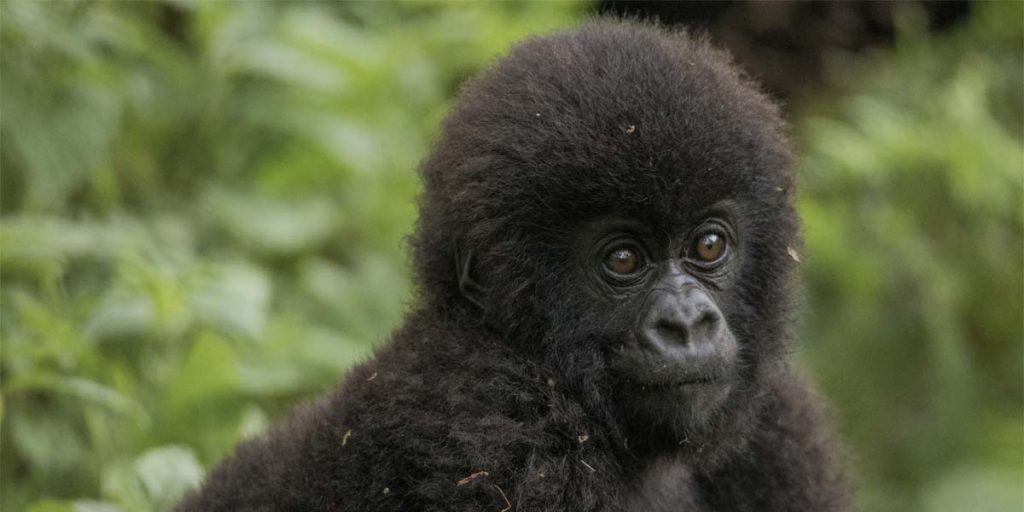
The juveniles are usually the first to get annoyed by the downpour. They will stop wrestling in the dirt and scramble up into the lower branches of the mahogany trees, trying to shield themselves under the thick leaves. You will see a young black back sitting on a branch, soaking wet, looking thoroughly miserable with his arms wrapped tightly around his chest. It is an image that feels entirely human.
This is the moment where the financial disparity between the Ugandan and Rwandan options becomes a secondary thought. In Rwanda, at fifteen hundred dollars for sixty minutes, your time would have run out long before the rain even started. You would already be sitting in a dry safari vehicle, heading back to a lodge with hot towels and heated floors. Here, for the exact same price tag, you are still deep in the thick of it, shivering under a poncho, watching the family navigate the reality of their environment.
The researchers use this final hour to note down specific social interactions. They are looking at which females are sitting closest to the silverback, checking for signs of skin parasites, and monitoring the coughing sounds that can signal an outbreak of respiratory illness. Because humans and gorillas share over ninety-eight percent of their DNA, a common cold brought in by a careless tourist can wipe out an entire wild family. That is why the rangers are so strict about the ten-meter distance rule, even when a curious juvenile decides to break protocol and waddle toward you.
If you are lucky, the rain will stop as quickly as it started, leaving the forest steaming in the afternoon heat. The smell changes instantly. The sour scent of wet gorilla fur mixes with the sweet, rot-tinged odor of the jungle floor.
The silverback will stand up, shake the water from his heavy shoulders, and give a low, guttural grunt that clears the entire family out of the bushes. It is time for them to move again to find their evening nesting site, and it is the signal that your four hours are officially up.
The walk back to the park boundary is often harder than the trek in. Your boots are heavy with mud, your water bottles are empty, and the trail is almost entirely uphill. The southern sectors of Bwindi are famous for their brutal topography. You are not walking on flat ground; you are climbing out of a deep gorge that drops hundreds of meters down to the riverbeds below.
You will pass women from the local Bakiga community working the steep tea plantations that border the park. They carry heavy baskets of green leaves on their heads, navigating the muddy slopes with a casual ease that makes your expensive hiking poles look ridiculous. Their fields form a sharp, distinct line where the human world ends and the ancient forest begins.
When you finally reach the park gate and sign your name in the register, the rangers hand you a paper certificate that confirms you completed the habituation experience, and then they go back to cleaning their boots and prepping their gear for the next morning.
You get into the back of the four-wheel-drive vehicle with your clothes caked in dirt, your skin itching from nettle stings, and a profound sense of physical relief. You didn’t get the clean, brightly lit, effortless photographs that the travel agencies use to decorate their websites. What you got instead was a raw, muddy, unedited look at what it takes to keep these animals alive in a world that is running out of wild spaces. You paid for the struggle, and that is exactly why the connection feels real.
The road from Rushaga back to your lodge is a bone-rattling reminder of where you actually are. There are no smooth highways here; the vehicle bounces over deep ruts and red clay tracks that cling to the edges of the hills, overlooking valleys filled with smallholdings of bananas, maize, and cassava. The dust from the road hangs in the air, mixing with the sweet smoke of charcoal cooking fires from the small trading centers you pass along the way.
This brings us to the final, crucial choice that every traveler faces when planning a gorilla safari: the reality of the two distinct worlds.
If you choose the regular trek, whether you do it in the bamboo forests of Rwanda or the northern sectors of Bwindi like Buhoma, you are choosing a version of conservation that is efficient, and reliable.
You can see the gorillas in the morning, have a hot lunch, and be looking for tree-climbing lions in Ishasha or boarding a boat on the Kazinga Channel by the next afternoon. For many, that balance is exactly what they need. It gives them the iconic encounter without breaking their physical limits.
But if you choose habituation, you are signing up for a completely different rhythm. You are choosing to let go of control. You cannot schedule the day, you cannot predict the photos you will get, and you certainly cannot avoid the mud. It is an immersive plunge into the unedited, unpredictable reality of wildlife conservation. It demands your sweat, your patience, and your respect for the slow, painstaking process of building trust between two species.
When you sit down at night at your eco-lodge, listening to the night crickets and watching the mist settle back into the valleys of the Impenetrable Forest, the physical aches begin to fade. Your camera might have fewer pictures than you expected, and your clothes might be permanently stained by the black forest soil. But as you look out toward the dark, jagged outline of the ridges where the silverback and his family are currently building their nests for the night, you realize you didn’t just visit the jungle. For four intense, chaotic hours, you let it pull you in.
Beyond the Checklist: Why the Permit is an Investment in Community Conservation
The morning after an experience like that changes how you look at the entire landscape. When you wake up to the sound of white-browed robin-chats calling from the eucalyptus trees outside your window, your body reminds you of every single ridge you climbed the day before. Your calves burn, your shoulders are stiff from carrying a pack through the vines, and your boots are still sitting on the verandah, damp and caked in that thick, reddish-brown clay that takes days to dry out properly.
But there is a specific clarity that comes with that kind of exhaustion. If you take a cup of black coffee out onto the deck and watch the first light hit the peaks of the Virunga Volcanoes in the distance; Sabinyo, Gahinga, and Muhabura standing like jagged teeth against the sky, the entire concept of a safari starts to shift in your mind.
Most people come to East Africa with a checklist. They want the big cats of the Serengeti national park, the wildebeest migration crossing at the Mara River, and the one-hour gorilla photo in their album. They want to consume the scenery from the safe, elevated seat of a custom-built land cruiser. That format is comfortable, it is predictable, and it keeps the wild at a functional distance.
However, gorilla habituation trail breaks that checklist mentality completely. It forces you to adapt to the animal, rather than demanding the animal adapt to your holiday schedule. When you spend four hours trying to keep up with a family that is entirely indifferent to your comfort, you realize that the forest doesn’t belong to the tourism boards or the luxury lodge operators. It belongs to the trackers who can identify a single snapped stem of wild ginger at a dead sprint, and it belongs to the silverback whose lineage has held these ridges since long before the borders of Uganda, Rwanda, and Congo were ever drawn on a map.
This realization is why the conversation around the campfire at night in these mountain villages is so different from the chatter you hear in the classic savannah game reserves. In places like Seronera or Maasai Mara, the talk is usually about numbers, how many leopards were spotted at the river, how close the lions came to the vehicle, or who got the cleanest shot of a cheetah on a mound. It is a conversation about luck and proximity.
In the hills around Bwindi, the talk always circles back to the people and the individual histories of the gorilla groups. You sit with the guides and you learn about the family you tracked. They will tell you about how a specific silverback took over the group after his father died, or how a particular female consistently tests the patience of the rangers by leading the juveniles too close to the community land where the local farmers grow their sweet potatoes.
You begin to see that conservation here is not a static policy written in an office in Kampala. It is a daily, living negotiation between the park authority, the local communities who need land to feed their children, and the primates who require an absolute wilderness to survive. The permit fee you paid is beyond just a ticket for admission; it is the economic engine that keeps the forest from being cleared for timber and agriculture.
It pays for the compensation when gorillas destroy crops, and it funds the healthcare centers that keep the village kids healthy, which in turn reduces the risk of human diseases jumping the park boundary into the wildlife population.
Related Posts