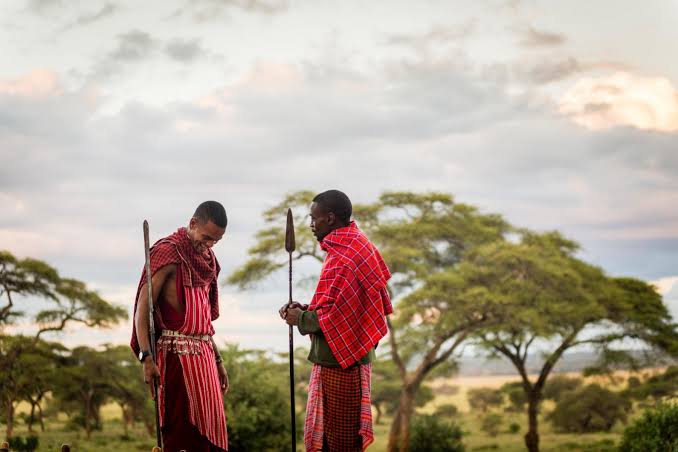
Mara Serena Safari Lodge | Maasai Mara, Kenya Mara Serena Safari Lodge holds a unique…
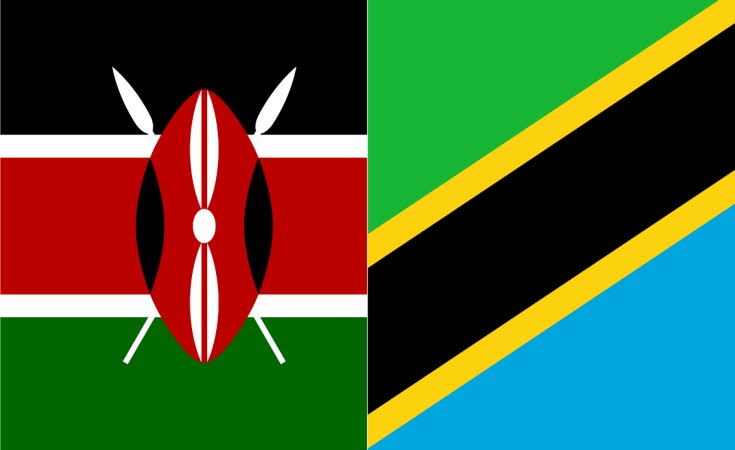
Kenya or Tanzania
Kenya or Tanzania : Which Is Best for Safari?
Kenya or Tanzania is one of the first questions every safari conversation eventually reaches, and it’s also one of the hardest to answer. Both countries share the same rolling savannah, the same acacia-dotted horizon, and for several months of the year, the same wildebeest herds moving back and forth across a border the animals themselves have no reason to notice. We’ve planned safaris in both countries for years, and the truthful answer is that there isn’t a single winner. There’s a better fit for your particular trip, your budget, your timeline, and what you want to feel by the end of it.
What makes this decision difficult, rather than just marketing spin, is that Kenya and Tanzania are strong in different ways for different reasons. Kenya built the safari industry much of the world still pictures, with the Masai Mara delivering some of the most reliable Big Cat sightings anywhere on the continent, backed by decades of infrastructure and a huge range of price points. Tanzania answers with sheer scale: the Serengeti alone is roughly nine times the size of the Masai Mara, and the Ngorongoro Crater packs an entire self-contained ecosystem into one collapsed volcanic caldera. Neither fact cancels the other out.
This guide compares the two countries category by category: the parks and wildlife, the Great Migration’s shifting geography, real costs, how easy each is to reach, how crowded the parks feel on the ground, accommodation styles, scenery, and how to add a beach finish. Each section ends with a straight recommendation, because a diplomatic tie doesn’t help anyone book a flight.
Kenya vs Tanzania: Head-to-Head Comparison
Use this as a quick reference, then read the detailed sections below for the reasoning and the exceptions worth knowing.
| Category | Kenya | Tanzania |
| Signature wildlife | Masai Mara: compact, predator-dense, reliable Big Cat sightings | Serengeti + Ngorongoro: greater scale and habitat variety, strong rhino and elephant numbers |
| Great Migration | Mara River crossings, late July-October | Calving season Jan-March; Grumeti crossings May-July |
| Typical daily cost (pp) | $400-$1,500 | $500-$1,800 (roughly 20-30% more overall) |
| Park fees (pp/day) | $40-$90 | $50-$100+, plus $200-$300 Ngorongoro crater descent fee |
| Getting there | Nairobi (JKIA) is a major global hub; easy transfer to Wilson Airport for safari flights | Kilimanjaro (JRO) has fewer direct long-haul routes; about 1 hour to Arusha |
| Crowd levels | Busier in the Mara during peak migration; conservancies offer relief | Larger parks mean lower vehicle density; Ngorongoro rim can still feel busy |
| Accommodation style | Widest range, budget lodges through ultra-luxury | Leans toward high-end small luxury tented camps; fewer budget options |
| Scenery | Classic Mara savannah and the Oloololo Escarpment | Endless Serengeti plains, Ngorongoro Crater, baobab country at Tarangire |
| Beach extension | Own coastline (Diani, Watamu) or connect to Zanzibar | Zanzibar is a short domestic flight from the safari circuit |
| Ideal trip length | Works well even at 5-7 days | Rewards 8+ days given park size and distances |
Figures reflect typical 2026 pricing and conditions. Costs move with season, camp category, and group size; migration timing shifts year to year with the rains.
Wildlife and Parks: Where Will You See More?
Which country actually has better wildlife? That’s the wrong question, and every experienced guide will tell you so, but it’s worth answering properly because the confusion is understandable.
Kenya’s Masai Mara is a comparatively small reserve, roughly 1,510 square kilometers including its neighboring conservancies, and that compactness is exactly what makes it famous: predators and prey are packed into a manageable area, so a good driver-guide can move you between three or four strong sightings in a single morning drive. Lion prides here are among the most habituated and well-studied in Africa, and leopard sightings, usually the hardest of the Big Five to find, are more consistent in the Mara than almost anywhere else.
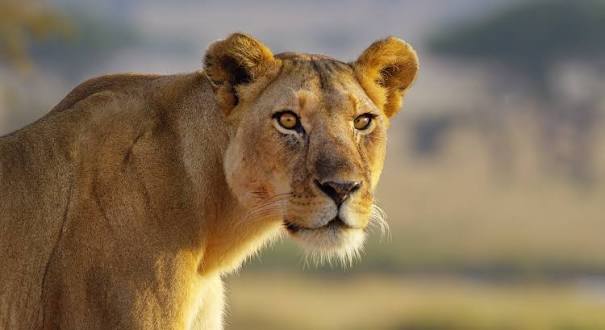
Tanzania answers with scale rather than density. The Serengeti covers roughly 14,750 square kilometers of park alone, and the wider ecosystem, including the Mara region and surrounding conservation areas, stretches to around 30,000 square kilometers.
That size means more room to spread out, more variation in habitat from open plains to riverine forest to kopjes (the granite outcrops lions favor for shade), and a genuinely different sighting on the same day depending on which corner of the park you’re in.
Add Ngorongoro Crater, an intact volcanic caldera holding one of the densest lion populations in Africa and one of the last strongholds of black rhino in East Africa, and Tarangire, known for elephant herds numbering in the hundreds during the dry season, and Tanzania’s northern circuit offers more variety across a single trip than Kenya’s Mara-centric itineraries typically do.
If your priority is maximum Big Cat action in the shortest possible time, especially on a five- or six-day trip, Kenya’s Mara delivers reliably and efficiently. If you have eight or more days and want to move through several distinct ecosystems, chase elephant herds at Tarangire, and add rhino tracking in the crater, Tanzania’s circuit rewards the extra time and distance.
The Great Migration: Which Country, Which Month?
If the Great Migration is the reason you’re going on safari at all, the country you should book depends entirely on when you’re traveling, not on any inherent preference for Kenya or Tanzania. The migration is a single, continuous circuit followed by roughly 1.5 million wildebeest and several hundred thousand zebra, and it spends different months in different parts of the ecosystem depending on rainfall.
From January through March, the herds are typically in the southern Serengeti and Ndutu area of Tanzania for calving season, when several thousand calves are born within a few weeks and predator action is intense and close. From around April into June, the herds move north and west through the central and western Serengeti, reaching the Grumeti River in Tanzania in May and June for a first round of river crossings, smaller and less crowded than what follows.
By late July, the migration typically reaches the Mara River, and this is where Kenya enters the picture: the classic, chaotic river crossings most people picture usually run from late July through September, with the herds spending August and September largely in Kenya’s Masai Mara. Come November, the short rains prompt the herds to turn south again, crossing back over the Mara River and returning into the Serengeti by December.
The practical implication is straightforward. Book Tanzania for calving season (January to March) or the Grumeti crossings (May to July). Book Kenya for the Mara River crossings and the classic migration season (late July through October). Booking Kenya in February hoping for river crossings, or booking Tanzania in August for the same reason, are two of the most common mistakes we see, and no amount of good weather fixes that kind of date mismatch. Because the migration’s timing shifts with the rains each year, we always recommend confirming positioning with a specialist close to your travel dates rather than locking in from a generic calendar alone.
Cost: Is Tanzania Really More Expensive for the Same Wildlife?
This is one of the most common objections we hear, and it’s only partly true. Tanzania does generally cost more, typically 20 to 30 percent above a comparable Kenya itinerary, but the gap has narrowed since Kenya raised its own park fees significantly in July 2024, and the reasons behind Tanzania’s premium are specific rather than arbitrary.
Park fees are part of it. Tanzania’s major parks, the Serengeti and Ngorongoro chief among them, run roughly $50 to $100 or more per person per day, and Ngorongoro adds a separate crater descent fee of $200 to $300 per person on top of standard entry if you want to actually drive down into the caldera rather than view it from the rim. Kenya’s equivalent fees at the Masai Mara and Amboseli run closer to $40 to $90 per person per day. The other driver is logistics: Tanzania’s parks are more spread out, so multi-park itineraries often mean internal light-aircraft transfers between Arusha, the Serengeti, and other circuits, adding cost that a Kenya itinerary built around road transfers between the Mara, Amboseli, and Lake Nakuru doesn’t always require.
On the ground, daily per-person costs typically run $400 to $1,500 in Kenya versus $500 to $1,800 in Tanzania, with both ranges spanning everything from mid-range lodges to top-tier private camps. Kenya also has a deeper bench of genuinely good budget and mid-range options, largely because its tourism infrastructure is older and more built out, so a traveler on a tighter budget usually finds more comfortable choices at a lower price point in Kenya than in Tanzania, where budget options exist but the market leans harder toward the premium end.
None of this means Tanzania is overpriced for what it delivers. You’re paying for larger, less developed parks with lower visitor density, and for many travelers that trade-off is worth every dollar. But if budget is your primary constraint and you’re not fixed on the Serengeti or Ngorongoro specifically, Kenya will generally stretch further.
Accessibility: Getting There and Getting Around
How hard is each country to actually get to? Kenya has the edge here, mainly because Nairobi’s Jomo Kenyatta International Airport (JKIA) is one of the busiest aviation hubs in Africa, handling more than 8 million passengers a year with direct long-haul connections from Europe, the Middle East, and increasingly North America. From JKIA, reaching your safari usually means a short transfer to Wilson Airport, Nairobi’s dedicated hub for light-aircraft safari flights, typically a 30- to 60-minute drive, followed by a scenic hour-long flight into the Mara.
Tanzania’s main gateway, Kilimanjaro International Airport (JRO), has fewer direct long-haul routes, though KLM, Turkish Airlines, Ethiopian, and Qatar Airways all fly there from major hubs, and Kenya Airways connects JRO to Nairobi for travelers arriving via Kenya. The upside is proximity: JRO sits about an hour from Arusha, Tanzania’s safari-planning hub, so once you land you’re closer to the northern circuit’s starting point than Nairobi-based travelers are to the Mara. Some travelers fly into Nairobi and connect onward to Tanzania by road or short flight, which can save money but adds a border crossing and several hours to the trip.
For a Kenya-only trip, or a first safari where minimizing flight complexity matters, Kenya’s stronger air links make logistics simpler. For a Tanzania-only trip, JRO’s direct routing and short hop to Arusha keep things straightforward too. It’s really only combination trips, or travelers flying from less-connected home airports, where Kenya’s larger hub gives a meaningful edge.
Crowds: How Many Other Vehicles Will You See?
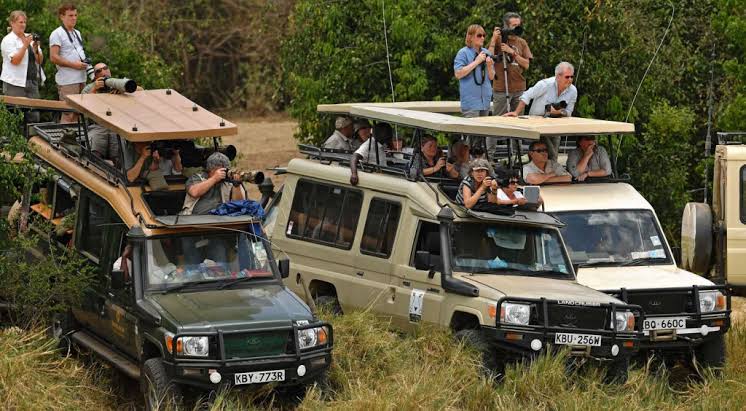
Will you be sharing your sightings with a dozen other vehicles? This depends heavily on where and when you go, but the underlying pattern favors Tanzania for solitude. Kenya draws roughly 2 million tourists a year against Tanzania’s 1.5 million, and Kenya’s safari circuit is more concentrated: the Masai Mara’s core viewing area is small relative to its popularity, so during peak migration season, especially at well-known river-crossing points, it’s common to see ten or more vehicles parked around a single sighting.
Tanzania’s Serengeti, at roughly nine times the Mara’s size, spreads visitors more thinly across a far larger area. Independent comparisons of the migration’s river crossings have found the Serengeti side seeing as much as 60 percent fewer vehicles than equivalent Mara crossings during the same weeks. Ngorongoro Crater is the exception to Tanzania’s spacious reputation; its rim road and crater floor are relatively contained, and it can feel busy during peak months.
The good news is that crowding is manageable in both countries if you plan around it. In Kenya, booking into the Mara Triangle or one of the private conservancies bordering the reserve, Mara North, Naboisho, or Olare Motorogi among them, buys you exclusive traversing rights and far fewer vehicles than the main reserve. In Tanzania, avoiding the crater’s peak midday hours and choosing camps in the less-visited western or southern Serengeti over the main crossing points achieves something similar. If avoiding other vehicles matters more to you than almost anything else, Tanzania’s scale gives you a structural advantage, but a well-chosen conservancy in Kenya can close most of that gap.
Accommodation Styles: Lodges, Camps, and What You’re Paying For
What kind of place will you actually be staying in? Both countries offer everything from simple tented camps to properties that rival five-star hotels, but the center of gravity differs. Kenya’s decades-long tourism history has produced an unusually wide range: large-scale lodges with pools and multiple restaurants, mid-range tented camps, and small owner-run properties, all coexisting at price points from budget-friendly to ultra-premium. This depth of choice makes Kenya especially forgiving for travelers who want to mix comfort levels across a single trip, or who are booking on a defined budget.
Tanzania leans further toward the high end, particularly in the Serengeti and Ngorongoro, where remote locations and higher operating costs push most properties toward the luxury tented camp category. A genuine budget lodge is harder to find near the Serengeti’s best game-viewing areas than it is near the Mara.
What you get in exchange is often a more intimate, immersive experience: many of Tanzania’s camps are small, sometimes fewer than a dozen tents, semi-permanent structures that can be dismantled without a lasting footprint, and staff-to-guest ratios that create a genuinely personal stay rather than a hotel-style operation.
Neither style is objectively better; the difference is really about scale and atmosphere. A lodge, common in both countries but more prevalent in Kenya, gives you permanent buildings, more facilities, and a slightly more conventional feel. A luxury tented camp, Tanzania’s specialty, puts you closer to the bush itself, often with only canvas between you and the sounds of the savannah at night. If budget flexibility matters most, Kenya’s range serves you better. If an intimate, deeply immersive camp experience is the priority regardless of cost, Tanzania’s camps set the standard.
Scenery:
Does the scenery actually look different between the two countries? Yes, more than most first-time visitors expect. The Masai Mara’s landscape is classic East African savannah: rolling grassland, scattered acacia trees, and the Oloololo Escarpment rising along its western edge, instantly recognizable from a hundred wildlife documentaries. It’s dramatic in a familiar way.
Tanzania’s northern circuit offers more variety within a single trip. The Serengeti’s plains stretch to a horizon that genuinely looks endless, especially in the south around Ndutu during calving season. Ngorongoro Crater delivers something neither country has an equivalent for: a self-contained ecosystem inside a collapsed volcanic caldera, viewed from a rim road roughly 600 meters above the crater floor before you descend into it. Add Lake Manyara’s groundwater forest and flamingo-lined shallows, and Tarangire’s baobab-studded plains, and Tanzania’s circuit reads as more visually varied from one day to the next.
If you want the iconic, familiar safari landscape, the Mara delivers it precisely. If you want a trip where the scenery itself changes dramatically day to day, Tanzania’s combination of crater, endless plains, and baobab country has the edge.
Beach Extension: Zanzibar, Diani, or Both
Can you end the trip on a beach? Both countries make this easy, though Tanzania has a natural advantage. Zanzibar sits just off Tanzania’s coast, a short domestic flight, typically 20 to 30 minutes from Arusha or a similar hop from the Serengeti’s airstrips, making it the default beach add-on for a Tanzania safari and one of the most popular combinations in East African travel. White sand beaches, warm Indian Ocean water, and Stone Town’s UNESCO-listed old quarter give you a genuinely different second half of the trip rather than just more heat and sand.
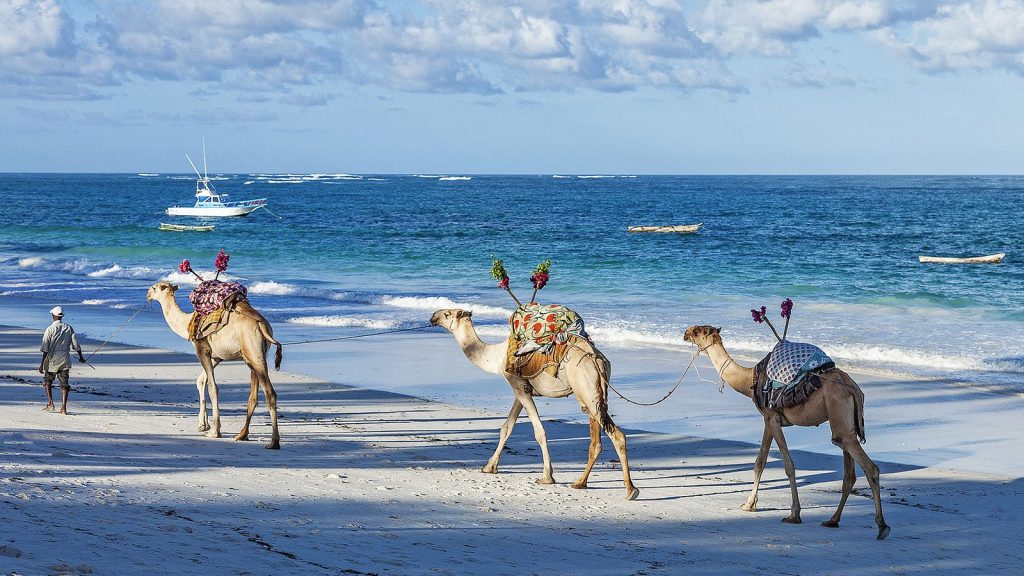
Kenya has its own coastline, Diani Beach and Watamu chief among them, both reachable by a short flight from Nairobi and offering excellent beaches with a more laid-back, less touristed feel than Zanzibar in places. Kenya-based travelers can also fly to Zanzibar directly; it’s a well-worn route, typically connecting through Nairobi, so a Kenya safari doesn’t rule out a Zanzibar finish either.
If beach time is a firm requirement and you want the shortest, simplest connection, Tanzania’s proximity to Zanzibar is hard to beat. If you’d rather stay within one country for simplicity, or want a quieter beach scene, Kenya’s own coast is a legitimate and often overlooked alternative. Either way, adding three or four beach days onto the end of a safari is one of the easiest upgrades to build into an itinerary, and we build this combination more often than almost any other add-on.
Can You Do Both? Combining Kenya and Tanzania in One Trip
Can you actually combine Kenya and Tanzania into one trip? Yes, and for travelers with enough time, it’s often the best answer to the entire country debate. The two countries share a land border near the Mara-Serengeti ecosystem, and a growing number of itineraries link them directly, typically flying between the Mara and the Serengeti’s northern reaches, rather than routing back through Nairobi or Arusha each time.
The trade-off is time and cost. A trip that does justice to both countries, rather than rushing through a token day or two in each, generally needs at least 10 to 12 days on the ground, and often longer once a beach extension is added. Shorter combination trips are possible but tend to feel like a checklist rather than a considered safari; three days is not enough to appreciate either the Mara or the Serengeti properly, let alone both.
A well-built combination itinerary typically opens in Kenya’s Masai Mara for three or four nights, crosses into Tanzania (either by light aircraft or, for the adventurous, overland via the Serengeti’s northern reaches in dry season), continues through the Serengeti and Ngorongoro Crater for another four to five nights, and finishes with three or four nights on a Zanzibar beach. This structure lets you experience the Mara’s density and Kenya’s more developed lodges alongside the Serengeti’s scale and Ngorongoro’s crater, without needing to choose.
Budget accordingly. Because you’re paying two sets of park fees, likely at least one internal flight between the countries, and often a higher-end camp category on the Tanzania side, a combined Kenya-Tanzania-Zanzibar trip usually costs more overall than a single-country safari of similar length, even though neither leg individually costs more than its single-country equivalent. For travelers with 10 or more days and genuine interest in both ecosystems, though, this is consistently one of the most satisfying itineraries we build, because it removes the either/or question entirely.
Related Posts