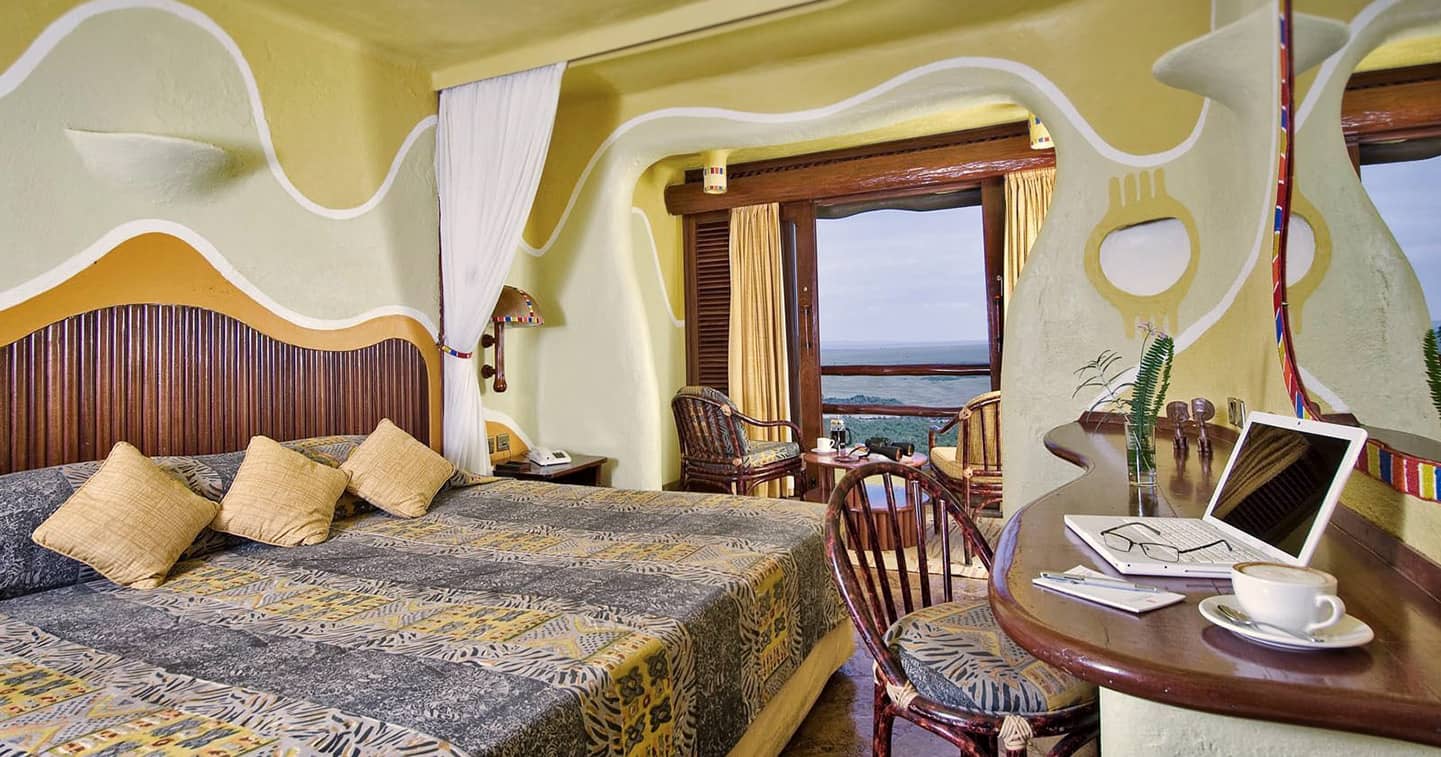
Mara Serena Safari Lodge | Maasai Mara, Kenya Mara Serena Safari Lodge holds a unique…
Best Time to Visit Maasai Mara National Reserve
Best Time to Visit Maasai Mara National Reserve | A Month-by-Month Guide
Generally the best time to visit Maasai Mara National Reserve is when you can witness the world-famous annual wildebeest migration, which is from August to November. The annual wildebeest migration, also known as the Great Migration, is one of nature’s most thrilling spectacles. This phenomenal event involves 2 million wildebeests together with thousands of zebras and gazelles on their annual trek from Tanzania’s Serengeti National Park to the plains of Maasai Mara National Reserve in search of water and green pasture.
Because of the varying rainfall patterns, the exact timing varies year to year; however, some years the rains might be early and the herds will arrive and deepen sooner, while other years the late rains mean the wildebeests arrive in the Mara plains late and you will still be able to find stragglers.
However, due to the abundant resident wildlife in Maasai Mara National Reserve coupled with the temperate climate, the reserve is considered an excellent year-round safari destination.
Best Time to Visit Maasai Mara National Reserve:
January to March
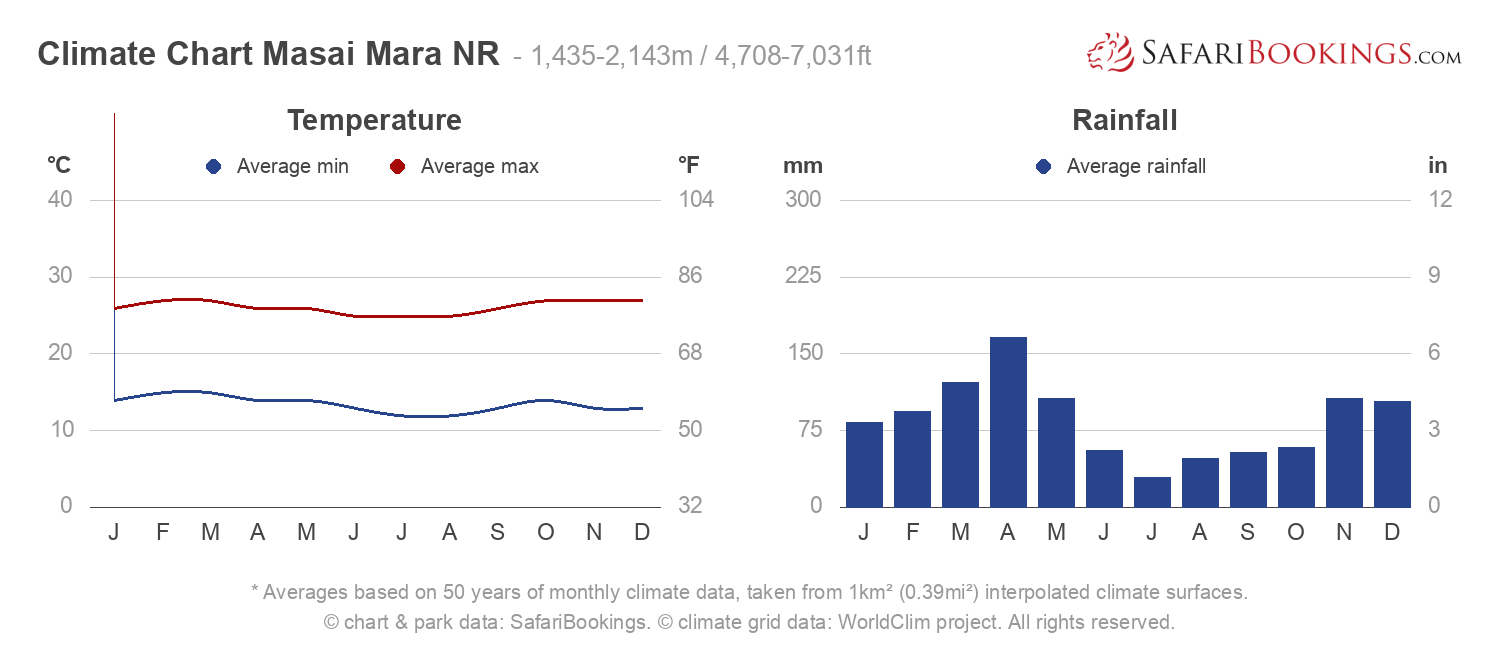
The first three months of the year are the warmest time of the year in Maasai Mara National Park, with January experiencing an average of 15 years of rainfall throughout. In January, it does not rain as much as in December, but if it does, it is usually just a short-burst shower in the afternoon—not strong enough to disrupt your experience.
January is the best time to visit Maasai Mara National Reserve for a birding safari, as the migratory species from North Africa and Europe are present in the park. Also, this month is the calving (birthing) season and is a time when new life is abundant in the Mara plains.
In February, thousands of babies are born in a day in the plains of the Masai Mara. The birthing season carries through until March. This is the best time to visit Maasai Mara National Reserve if you want to avoid the crowds and witness Africa’s remarkable wildlife as they stalk the plains. Additionally, this is a fantastic time for photographers, as they will often have massive tracts of land and incredible sightings all to themselves, especially in the private conservancies of Maasai Mara.
In March, the rains arrive in the Maasai Mara National Reserve, with most days experiencing afternoon thundershowers and these conditions can cause flooding. Some camps and lodges begin to close for the low season.
April and May
April marks the start of a low season in Maasai Mara National Reserve; this month experiences more rainfall than any other time of year in the reserve and it is slightly cooler than March but still, it is warm. This period is the long rains and some of the lodges and camps in Maasai Mara close to attend to general maintenance and refurbs and to also give their staff a long and well-deserved break.
May has less rainfall, but still it is one of the wettest times of the year in Maasai Mara National Reserve; this period of the year marks the start of the slightly cooler months in the reserve as well as Kenya at large, lasting until September. In this season expect sticky mud on the dirt roads, flooding rivers at their banks, and the persistent drizzle with a sunny gap. However, predicting rain in this period is hard, as May experiences rain and June is dry.
June to August
The long rains in Maasai Mara National Reserve come to an end in June and mark the start of the busy season; it is a much drier month and the days are far cooler than any other time of the year.
The vegetation cover is still lush and dense due to the rainfall and even though the animals can be sometimes hard to spot, it is still considered one of the best times to visit Maasai Mara National Reserve. Most of the migrating herds taking part in the Great Migration are yet to arrive and preparations are well underway for their imminent appearance.
By July, the wildebeest herds may start to arrive in the plains of the Maasai Mara National Reserve as part of their annual odyssey from the Serengeti. Daytime conditions are very pleasant with warm weather, but the evenings and early mornings can get cold.
July is the driest month of the year; keep the wildlife around the watering holes. July is the best time for a Kenya safari, but it is one of the busiest months of the year. Expect the Maasai Mara Safari prices to go up and crowded sightings in the national reserve.
August is another dry month in Maasai Mara National Reserve, experiencing cooler temperatures that are similar to July, especially at night. This month is a popular time of the year to witness the Great Migration as well as the nerve-wracking Mara River crossings.
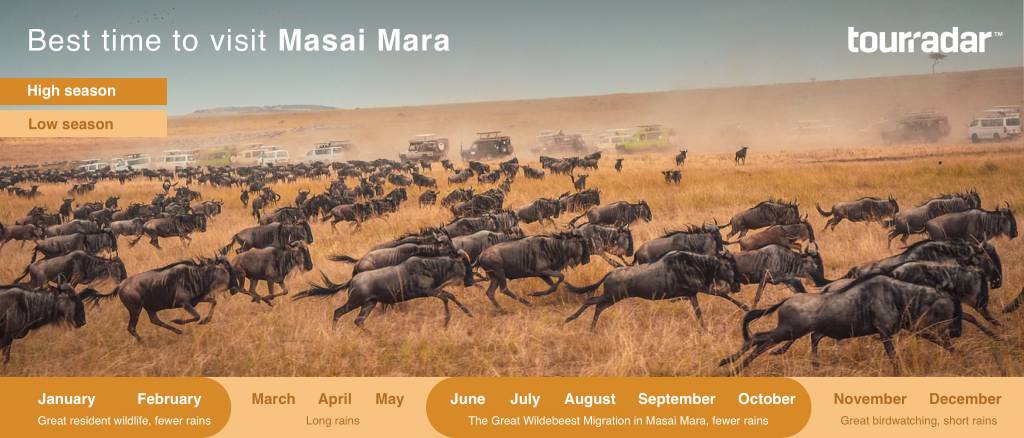
September and October
Maasai Mara National Reserve is slightly warmer in September than in August, with high daytime temperatures and cooler nights. Still, it is the dry season, which makes for exceptional game viewing and it is still a great month to see the Great Migration in full swing. As it heats up in the Maasai Mara National Reserve during October, it is one of the hottest months of the year.
By October, most of the wildebeest herds are still in and around the Maasai Mara National Reserve.
November and December
The short rains arrive in November in the Mara Plains, triggering the last leg of the annual wildebeest migration, when the wildebeests embark on a journey south to their calving grounds in Serengeti National Park in Tanzania. The only downside of the rain can be the thundershowers, which are usually short afternoon bursts followed by clear skies.
The first weeks of December are less busy than during the peak season months, but it gets busy during the festive season period.
From the perspective of an experienced travel consultant, the best time to visit Maasai Mara National Reserve is during the long cool dry season, which is from July to October. However, the other periods of the year still offer incredible sightings depending on what you intend to see during your Maasai Mara safari.
Related Posts