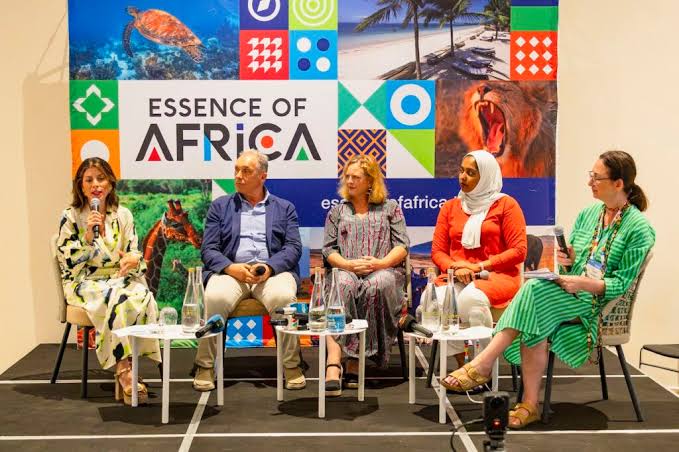
Essence of Africa 2026 in Zanzibar Essence of Africa is a trade forum, which means…
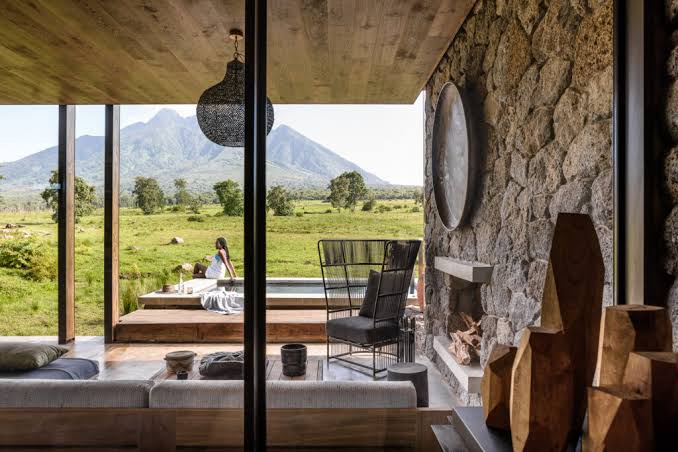
Best Eco-Friendly Lodges in East Africa
Best Eco-Friendly Lodges in East Africa | Sustainable Travel
Best Eco-Friendly Lodges in East Africa; Every safari brochure now uses the word “eco-friendly.” After years of building itineraries across East Africa, we’ve learned that the properties worth recommending are the ones where sustainability shows up in the ownership structure, the payroll, and the conservation budget, not just the marketing copy.
This guide is built around that distinction. We’ve selected ten lodges and camps across Kenya, Tanzania, Rwanda, and Uganda that combine genuine environmental stewardship with a strong guest experience, and we’ve explained exactly what each one does that earns it a place on this list — reforestation numbers, community ownership stakes, renewable energy systems, anti-poaching funding, and independent certifications.
We’ve also included a range of price points, because sustainable travel in East Africa is not exclusively a luxury pursuit; some of the most impactful lodges on this list are also among the more accessible ones.
If you’re comparing eco-lodges as part of planning a trip, treat this as a working reference: a comparison table for a fast overview, detailed profiles for the depth you need to choose confidently, and planning guidance for how sustainability affects cost, comfort, and logistics along the way.
What “Eco-Friendly” Actually Means on Safari
The term gets used loosely enough that it’s worth pausing on what it should mean before you start comparing properties. A genuinely sustainable safari lodge typically does several of the following, not just one: generates its own renewable power, treats and recycles its water, employs and trains people from the surrounding community, channels a meaningful share of revenue into conservation or land-lease payments, and was built using materials and methods that limit disturbance to the site. The strongest properties on this list do most or all of these at once.
It’s a fair question to ask whether eco-friendly is code for basic. It isn’t, and the properties below prove it – Wilderness Bisate Lodge in Rwanda and Singita Kwitonda Lodge, both reforestation pioneers, sit comfortably among the most architecturally striking and highly rated lodges on the continent. Solar power and low-impact building no longer mean compromise; they mean better-engineered infrastructure, quieter camps because there are no diesel generators running through the night, and often a more interesting guest experience because you’re staying somewhere with a genuine conservation story to tell over dinner.
How to Evaluate a Lodge’s Sustainability Claims
Before you take any lodge’s word for it, there are a handful of concrete things you can check. These are the same criteria we use when vetting properties for our own itineraries.
Independent certification. Ecotourism Kenya’s Eco-Rating Certification Scheme is the most credible seal of approval in the region properties are audited against energy sourcing, water management, waste handling, staff welfare, and community engagement and awarded Bronze, Silver, or Gold. A Gold rating (held by several Porini camps, among others) means a lodge meets nearly all established benchmarks, not just the easy ones. Elsewhere in East Africa, look for Global Ecosphere Retreat Standard certification, Rainforest Alliance verification, or membership in bodies like the Long Run Alliance, as seen at Chumbe Island Coral Park in Zanzibar.
Ownership and land-lease structure. The most durable conservation model in East Africa is the community conservancy, where a lodge leases land directly from Maasai, Samburu, or other indigenous landowners and pays them whether or not the camp is full. Sarara Camp in Samburu and Campi ya Kanzi in the Chyulu Hills are both built on this model — the community, not an outside investor, is the ultimate landlord, and lodge fees fund schools, clinics, and grazing management.
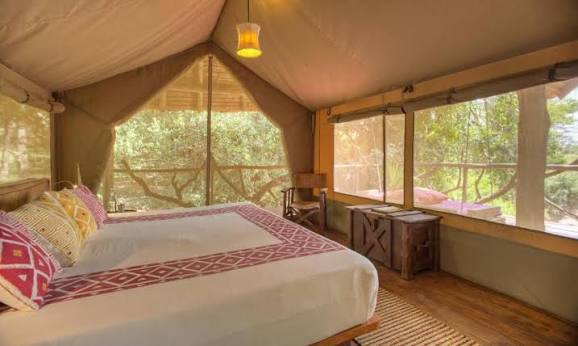
Community employment and local sourcing. Ask what percentage of staff is hired locally and whether produce, building materials, and services come from nearby communities. Basecamp Masai Mara draws over 70 percent of its staff from local Maasai communities and runs the Basecamp Maasai Brand, a beading cooperative employing close to 200 women artisans.
Water and energy systems. Solar power is now standard at the properties on this list, but the more telling detail is what happens to waste. Emboo River Camp in the Mara recycles 100 percent of its wastewater through constructed wetlands; Nkuringo Bwindi Gorilla Lodge harvests rainwater on a site with no grid connection at all.
Conservation and community fees, and where the money goes. Many lodges add a nightly conservation or community fee on top of the room rate Volcanoes Safaris charges $50 per guest per night through its Partnership Trust, funding reforestation and schools around its lodges in Uganda and Rwanda. A trustworthy operator will tell you exactly what that fee funds; vague answers are a red flag.
At a Glance: Ten Eco-Lodges Across East Africa
Use this table to narrow down your shortlist by country, budget, and priority, then read the full profiles below for the detail you’ll want before booking.
| Lodge / Camp | Country / Region | Standout Sustainability Feature | Best For |
| Sarara Camp | Kenya — Samburu | Community-owned, 100% off-grid solar; funds Reteti Elephant Sanctuary | Culture-focused travelers, honeymooners wanting remote wilderness |
| Campi ya Kanzi | Kenya — Chyulu Hills | Fully solar-powered; conservation fees fund Maasai schools and clinics | First-timers wanting an authentic conservancy stay |
| Basecamp Masai Mara | Kenya — Masai Mara | Gold Ecorating; funds Mara Naboisho Conservancy and women’s beadwork co-op | Budget-conscious travelers, families, first safaris |
| Chem Chem Lodge | Tanzania — Tarangire/Manyara | Restored the Kwakuchinja wildlife corridor; funds lion-conflict scouts | Serious wildlife watchers, couples wanting privacy |
| Dunia Camp | Tanzania — Central Serengeti | Women-led camp; solar power and a strict zero-waste policy | Travelers who value community impact and migration access |
| Chumbe Island Coral Park | Tanzania — Zanzibar | World’s first self-financing marine protected area; multiple global sustainability awards | Honeymooners and snorkellers wanting a beach add-on |
| Wilderness Bisate Lodge | Rwanda — Volcanoes NP | 100,000+ indigenous trees replanted; profit-sharing with local farming cooperative | Gorilla trekkers wanting five-star comfort with real impact |
| Singita Kwitonda Lodge | Rwanda — Volcanoes NP | Akarabo Nursery restoring gorilla habitat; locally sourced construction | Design-conscious travelers, conservation donors |
| Nkuringo Bwindi Gorilla Lodge | Uganda — Bwindi (Nkuringo) | Solar power, rainwater harvesting; funds the Nkuringo Conservation & Development Foundation | Budget-conscious gorilla trekkers, small groups |
| Volcanoes Safaris (Bwindi & Mount Gahinga Lodges) | Uganda & Rwanda border | $50/night Partnership Trust fee funds reforestation and schools | Repeat visitors, families doing a Uganda-Rwanda combo |
Kenya
1. Sarara Camp — Namunyak Conservancy, Samburu
Sarara sits inside the 850,000-acre Namunyak Wildlife Conservancy in northern Kenya’s Mathews Range, and it is one of the clearest examples of community-owned tourism working as intended. The camp is owned and driven by the Samburu community, operates entirely off-grid on solar power, and its presence directly funds the Reteti Elephant Sanctuary, a locally run orphan-elephant rescue center that has become a conservation success story in its own right. Namunyak was practically empty of wildlife after two decades of poaching when the conservancy was established in 1995; it now holds Kenya’s second-largest elephant population and large numbers of endangered Grévy’s zebra and reticulated giraffe.
The six tented rooms are simple but comfortable, each with solar-heated outdoor showers and uninterrupted views of the Mathews Range, and the two-bedroom Sarara House suits families or friends traveling together. What sets a stay here apart isn’t the room, though — it’s access to the Sarara Singing Wells, where Samburu warriors water their cattle by hand while singing traditional chants, a ritual that predates the camp by generations and that guests are invited to witness respectfully rather than as a staged performance.
Best for: travelers who want their safari to include real cultural depth, not just game drives, and who don’t mind traveling to a genuinely remote part of Kenya to get it. Northern Kenya is a longer transfer than the Mara, so this suits a second or third safari more than a rushed first trip.
2. Campi ya Kanzi — Chyulu Hills, near Amboseli
Campi ya Kanzi sits on the 283,000-acre Kuku Group Ranch, Maasai-owned land bordering Amboseli and Tsavo, and it was one of the first camps in Kenya to prove that a lodge could be fully solar-powered without asking guests to give anything up. Every dollar of the conservation fee built into a stay goes back into the Maasai Wilderness Conservation Trust, which funds a clinic, schools, and anti-poaching rangers drawn from the local community. It’s a model built on a long-term lease rather than land ownership, which means the incentive to protect wildlife sits with the people who live there year-round.
The setting, in the volcanic Chyulu Hills with views toward Kilimanjaro, is quieter and less visited than the Mara or Serengeti, and the camp keeps guest numbers deliberately low. Game drives here run alongside walking safaris and cultural visits to nearby Maasai villages, which gives the wildlife watching a context that a pure game-drive itinerary sometimes lacks.
Best for: first-time safari-goers who want an authentic, low-density conservancy experience without traveling as far as Samburu, and honeymooners looking for privacy with a Kilimanjaro backdrop.
3. Basecamp Masai Mara — Talek River, Masai Mara
Basecamp Masai Mara is proof that eco-friendly does not have to mean expensive. The camp sits along the Talek River just outside the Masai Mara National Reserve, runs on solar power, and has held a strong Ecorating from Ecotourism Kenya for its energy, water, and waste practices. It was also the founding force behind the Mara Naboisho Conservancy, a 20,000-hectare community conservancy established in 2010 that has become one of the best wildlife-viewing areas adjoining the Mara, with far lower vehicle density than the main reserve.
Over 70 percent of the camp’s staff come from the surrounding Maasai communities, and guests can visit the Basecamp Maasai Brand workshop, where close to 200 women artisans produce beadwork and leather goods using traditional techniques. The 17 tents are simple and comfortable, with en-suite bathrooms and private terraces facing the river, rather than styled as ultra-luxury—which is exactly the point.
Best for: budget-conscious travelers, families, and first-time safari-goers who want a credible eco-certified stay without paying luxury-camp rates. It’s also a strong choice for anyone who wants to combine wildlife viewing with a tangible, visitable community project.
Tanzania
4. Chem Chem Lodge — Between Tarangire and Lake Manyara
Chem Chem occupies 20,000 hectares of private land across the Kwakuchinja Wildlife Corridor, the migration route connecting Tarangire and Lake Manyara National Parks. That corridor was nearly lost to poaching and habitat loss before the Chem Chem Association began restoration work in 2009; elephants returned to the area for the first time in four decades as a direct result, and the lodge now runs anti-poaching patrols and a lion-conflict program that trains local scouts and fits lions with GPS collars to reduce clashes with livestock herders.
The lodge itself is built from natural materials, solar-powered, and fitted with greywater recycling but the headline reason to stay here is the corridor restoration itself, which is one of the more measurable conservation wins in northern Tanzania. Community work extends to school infrastructure upgrades and English-language courses for youth and women across ten partner villages.
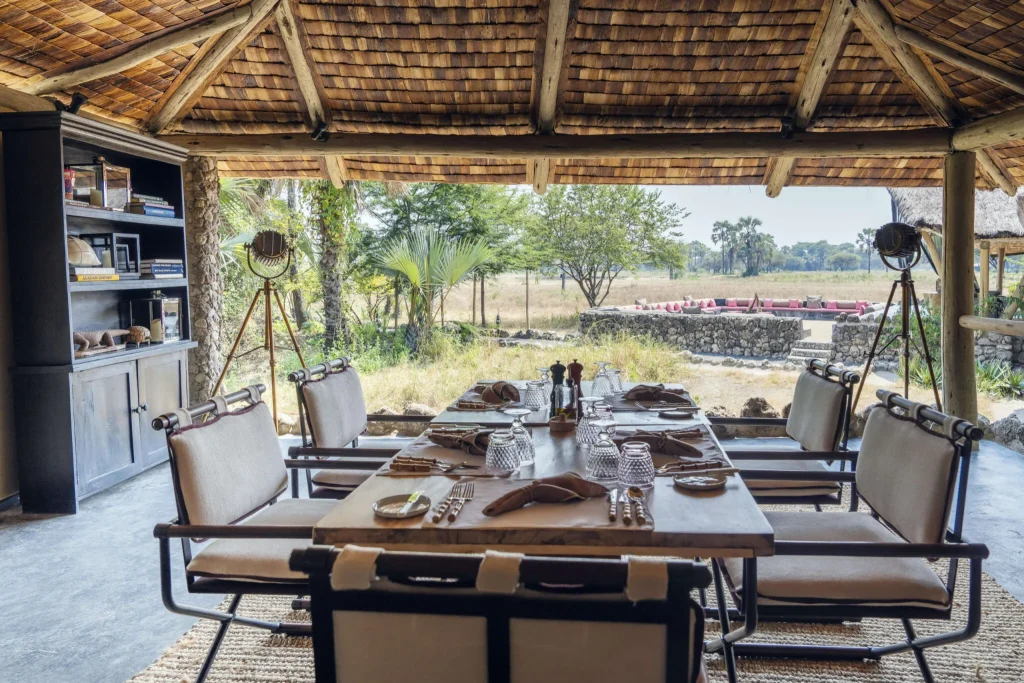
Best for: serious wildlife watchers and couples who want a private, low-traffic safari base between two major parks, with a conservation story that’s backed by two decades of measurable results rather than recent rebranding.
5. Dunia Camp — Central Serengeti
Dunia, run by Asilia Africa, is one of the few camps on the continent staffed and led almost entirely by women, a deliberate choice in an industry where guiding and camp management have traditionally been male-dominated. It runs on solar power, follows a strict zero-waste policy, and uses biodegradable materials throughout camp operations. Its central Serengeti location keeps it within reach of the wildebeest migration for a large part of the year, without the scale and crowds of some of the bigger lodges near the park’s main circuits.
The tented rooms are comfortable rather than opulent, in keeping with Asilia’s broader approach across its Tanzania portfolio, which favors lower environmental footprint over maximalist design.
Best for: travelers who want their lodge choice to say something about gender equity in the safari industry, and anyone prioritizing migration access with a lighter environmental footprint over the most lavish room categories.
6. Chumbe Island Coral Park — Zanzibar
Chumbe Island is a different kind of eco-lodge entirely — a marine conservation project that happens to have seven guest bungalows. Established in 1992, it created the world’s first privately managed marine park, and when the eco-lodge opened in 1998 it became the first financially self-sustaining marine protected area anywhere. The reef sanctuary around the island protects more than 90 percent of East Africa’s hard coral species and over 400 types of reef fish, and lodge revenue funds the park’s rangers, environmental education programs for local schools, and ongoing coral research.
The property has collected an unusual number of independent sustainability awards over three decades, including the Global Ecosphere Retreat Standard certification as a Long Run destination, the SKAL Sustainable Tourism Award, and a UNDP Global 500 Award for Outstanding Environmental Achievement. Bungalows are simple, solar-powered, and designed with zero environmental impact rather than five-star excess think open-air bathrooms and rainwater systems rather than plunge pools.
Best for: honeymooners and snorkelers looking for a beach extension after a mainland safari, and anyone who wants their beach days to fund something more than a hotel chain’s balance sheet.
Rwanda
7. Wilderness Bisate Lodge — Volcanoes National Park
Bisate is regularly named among Africa’s best safari lodges, and it earns that status on conservation grounds as much as design ones. The lodge sits inside a 42-hectare former farmland site that Wilderness Safaris bought back from 115 local farmers across 172 plots, and has replanted with more than 100,000 indigenous trees as part of a broader reforestation effort to restore gorilla habitat around the eroded volcanic amphitheater the lodge occupies. The purchase itself put capital directly into the local community, funding home upgrades and other investments for the families who sold their land.
A partnership with the Tuzamurana Cooperative extends that relationship beyond the initial land purchase, directing an ongoing share of lodge profits into community projects. The six domed suites, built into the hillside using local volcanic stone and thatch, are architecturally among the most distinctive in the region, and gorilla trekking access from the lodge is as good as anywhere in Rwanda.
Best for: gorilla trekkers who want five-star comfort and design alongside a genuinely transformative land-restoration story — this is a splurge property, but one where the spend is easy to account for.
8. Singita Kwitonda Lodge — Volcanoes National Park
Singita Kwitonda takes a similar approach to its neighbor Bisate, with sustainability built into the site from the ground up rather than added afterward. The lodge operates the Akarabo Nursery, a large-scale indigenous tree nursery and ecosystem restoration project that is actively expanding forest habitat around Volcanoes National Park to support the long-term survival of the mountain gorilla population. Construction leaned on traditional building techniques and locally sourced materials to keep the lodge’s footprint as light as possible.
Community partnerships here focus on economic development and cultural exchange alongside the environmental work, and the lodge’s location gives guests some of the shortest transfer times to gorilla trekking trailheads in the park.
Best for: design-conscious travelers and conservation-minded donors who want to see restoration infrastructure, not just a plaque, as part of their stay, paired with easy trekking logistics.
Uganda
9. Nkuringo Bwindi Gorilla Lodge — Nkuringo Sector, Bwindi
Nkuringo sits on a ridge above the Nkuringo sector of Bwindi Impenetrable National Park, built from volcanic stone and local wood and run on solar power with rainwater harvesting, since the site has no grid connection at all.
The lodge employs locally and channels support to the Nkuringo Conservation and Development Foundation (NCDF), which funds education and reforestation projects in the communities bordering the park. A community ownership structure means a portion of lodge profits supports local schools and health initiatives directly, rather than through a separate foundation with looser accountability.
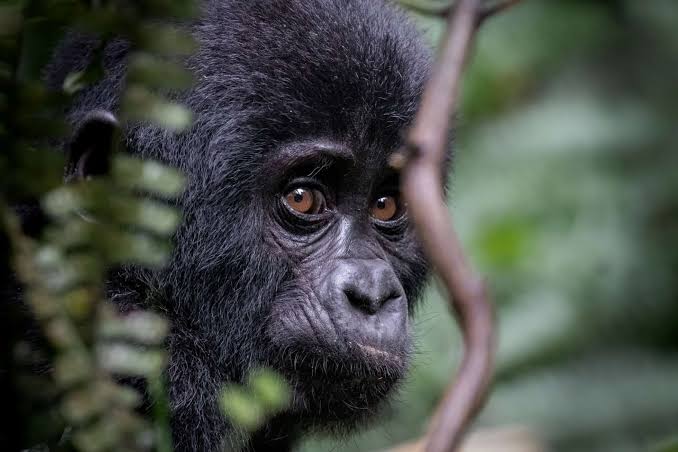
Rooms are comfortable rather than lavish, with the main draw being direct trailhead access to Nkuringo’s gorilla families and sweeping views into the forest and across to the Virunga volcanoes on a clear day.
Best for: budget-conscious gorilla trekkers and small groups who want a shorter walk to their trekking start point and a lodge whose community fund they can point to specifically.
10. Volcanoes Safaris — Bwindi Lodge and Mount Gahinga Lodge
Volcanoes Safaris operates a small collection of lodges across Uganda and Rwanda, and its sustainability work is organized through the Volcanoes Safaris Partnership Trust, funded by a $50 per guest, per night community and conservation fee added across its properties.
That fee has financed reforestation projects and school construction around Bwindi and Mgahinga National Parks for close to two decades, giving it one of the longer track records of any operator-run trust in the region.
Bwindi Lodge overlooks the forest from the Buhoma sector, while Mount Gahinga Lodge sits at the base of the Virunga volcanoes near the Uganda-Rwanda border, making the pair a natural fit for travelers combining gorilla and golden monkey trekking with a Rwanda extension.
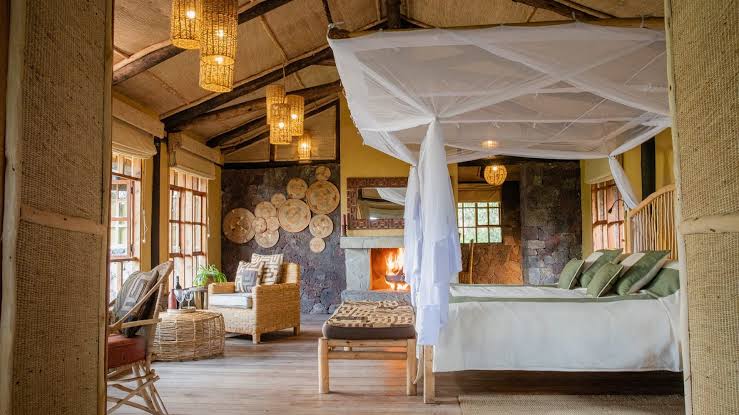
Both properties balance comfort with a genuine sense of place — cottages built with local materials, log fires in the evening, and staff drawn heavily from surrounding villages.
Best for: families and repeat visitors doing a combined Uganda-Rwanda primate safari who want consistency of ownership and impact across both legs of the trip.
Practical Planning: Timing, Cost, and Trade-Offs
Best Time to Visit Each Region
Masai Mara and Serengeti (Kenya and Tanzania): the dry season from June through October is the strongest window, with thinner vegetation and animals concentrated around water sources. July through October also covers the wildebeest migration’s presence in the Mara, which is worth building an itinerary around if that’s a priority.
Amboseli, Chyulu Hills, and Samburu (Kenya): these areas follow the same broad dry-season pattern, June to October and again December to February, though Samburu’s more arid landscape means good game viewing is possible across more of the year than in wetter regions.
Tarangire, Lake Manyara, and Zanzibar (Tanzania): June to October is peak dry season on the mainland; Zanzibar’s beach weather is best from June to October and again from December to February, avoiding the long rains in April and May.
Bwindi and Volcanoes National Park (Uganda and Rwanda): gorilla trekking runs year-round, but June to August and December to February bring drier trails, which matters more here than in open savanna since trekking involves steep, often muddy forest terrain.
How Eco-Lodges Affect Cost and Logistics
Community conservancies and private concessions almost always carry a conservation or bed-night fee on top of the room rate, and that fee is doing real work — it’s what pays conservancy rangers, funds schools, and keeps land out of agricultural conversion. Expect this to add anywhere from $30 to $100 per person per night depending on the property, and expect operators to itemize it clearly. A lodge that can’t tell you what its fee funds is not one we’d recommend.
Remote conservancies in Samburu or the Chyulu Hills also typically require a light aircraft transfer rather than a road drive, which adds cost but cuts transit time significantly compared with self-drive or shared-vehicle transfers. Gorilla trekking in Uganda and Rwanda carries its own separate permit fee, currently $800 per person in Rwanda and $800 in Uganda for foreign non-residents, which is unrelated to lodge choice but should be budgeted alongside it.
Related Posts