Essence of Africa 2026 in Zanzibar Essence of Africa is a trade forum, which means…
How Many Days Should You Spend in Uganda? A Local Guide to Planning a Slow Safari Journey
How Many Days Should You Spend in Uganda? A Local Guide to Planning a Slow Safari Journey
There is a question we hear almost every week.
“How many days do I really need in Uganda?”
It usually comes from someone planning their first safari. They’ve looked at a map, compared flight prices from Europe and penciled in a week. It seems sensible. Uganda isn’t as vast as Kenya or Tanzania, and the country’s headline attractions appear close enough together.
Then they arrive. By the second day, expectations begin to shift.
The drive from Entebbe winds through bustling roadside towns before opening into rolling hills stitched together by banana plantations and tea estates. Women balance baskets of fresh produce with effortless grace. Long-horned Ankole cattle graze beside the road. Children in bright school uniforms wave enthusiastically as vehicles pass. Somewhere between the Equator and the western highlands, the pace changes.
People stop looking at their watches. Uganda has a quiet way of slowing you down. That may be its greatest luxury.
Unlike destinations where travelers hurry from one famous landmark to the next, Uganda reveals itself gradually. One day begins in tropical rainforest, another beside the world’s longest river, another in open savannah where elephants move almost silently through morning mist. The landscapes change so often that every drive feels like another chapter rather than a transfer between attractions.
For travelers arriving from Europe, the surprise isn’t only how much there is to see. It’s how different each part of the country feels.
The mountain forests of Bwindi have little in common with the wide plains of Murchison Falls National Park. Kibale’s ancient rainforest echoes with chimpanzee calls, while Queen Elizabeth National Park stretches from volcanic crater lakes to the wildlife-rich Kazinga Channel. Even the light changes as you travel.
Trying to experience all of that in a few days would be like rushing through a great novel by reading every third chapter.
Five Days: Enough to Meet the Gorillas, Not Enough to Know Uganda
If your only goal is to see mountain gorillas, five days can work. Many travelers fly into Entebbe, continue to Bwindi Impenetrable National Park by road or domestic flight, complete their gorilla trek and return home. It’s entirely possible. It’s also a little unfortunate. Because Bwindi is far more than the place where gorillas live.
The name itself hints at what awaits. Bwindi means “place of darkness”, a reference to the dense rainforest that blankets these ancient hills. Some of the trees have stood here for centuries, creating one of Africa’s oldest surviving forest ecosystems. More than 350 bird species, countless butterflies, forest elephants and primates share this landscape with the mountain gorillas that draw visitors from around the world.
Bwindi forest was already ancient when the first humans settled these hills.Walking through it has a way of making time feel irrelevant.
Gorilla trekking begins early.
At the Uganda Wildlife Authority briefing point, small groups gather while rangers explain the rules that protect both visitors and gorillas. There is no rehearsed performance here. Every decision, from limiting the number of permits issued each day to restricting visits to a single hour, is shaped by decades of conservation science.
It wasn’t always this way.
In the 1980s, mountain gorillas faced an uncertain future. Habitat loss, poaching and regional instability pushed populations to dangerously low levels. Today, they represent one of the world’s most encouraging conservation stories. According to the latest international census, mountain gorilla numbers have slowly increased, making them the only great ape whose wild population is currently growing.
That recovery didn’t happen by chance. It happened because governments, conservation organisations, researchers and local communities chose a different path. Tourism became part of the solution.
Every gorilla permit purchased in Uganda contributes directly to conservation. Revenue helps fund Uganda Wildlife Authority ranger patrols, veterinary care, habitat protection and community development projects in villages surrounding the park. Families living beside the forest increasingly benefit from protecting wildlife rather than competing with it for land and resources.
That connection becomes easier to understand when you meet the people behind the experience. Your ranger may have spent years tracking individual gorilla families.
The porter helping you climb a muddy hillside may have grown up in a nearby village and now earns a living through tourism. Local women sell handwoven baskets and coffee to visitors, while community-owned lodges create employment that extends well beyond the park gates.
The gorillas are the reason most people come. The people are part of the reason conservation works. Then comes the moment you’ve travelled across continents to experience.
Bwindi forest falls quiet.
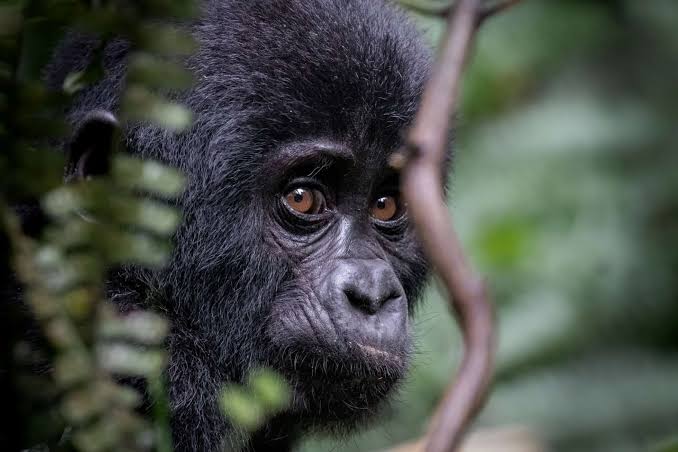
A silverback sits calmly beneath a tangle of vines, occasionally pulling fresh leaves towards him with surprising gentleness. Young gorillas wrestle through the undergrowth with the carefree energy of children in a playground. Mothers watch patiently, occasionally glancing towards the visitors before returning to their morning routine.
Nobody speaks much. There isn’t really anything to say. The official viewing time lasts just sixty minutes. It feels shorter. As you leave, most people realise something unexpected. The trek wasn’t simply about seeing gorillas. It was about understanding why protecting places like Bwindi matters.
The Sweet Spot: Eight to Ten Days
This is where Uganda begins to reveal its character.
With eight to ten days, your safari becomes something more than a checklist of famous wildlife encounters. You have time to linger over breakfast while colobus monkeys move through the trees outside your lodge. Time to stop at crater lakes that don’t appear in many guidebooks. Time to enjoy the drives instead of treating them as distances to overcome.
You begin to notice the details. The smell of freshly harvested tea near Fort Portal. The roadside stalls stacked with sweet pineapples, jackfruit and enormous avocado. The conversations with guides who explain how local communities and national parks have learned, sometimes imperfectly, to live alongside one another. That extra time changes everything. Instead of arriving, ticking off an experience and moving on, you start to understand the country itself. And that’s when Uganda quietly gets under your skin.
Where Uganda’s Wild Heart Begins
Leave Bwindi behind and turn the vehicle north. The scenery changes almost by the hour.
The thick rainforest gradually gives way to open valleys, crater lakes shimmer beneath the afternoon sun, and the jagged outline of the Rwenzori Mountains begins to dominate the western horizon. Known locally as the Mountains of the Moon, their highest peaks remain snow-capped throughout the year, something few first-time visitors expect when they think of East Africa.
This is one of Uganda’s greatest strengths. No two parks feel alike. Each has its own rhythm, its own wildlife and, increasingly, its own conservation story.
Kibale Forest: Listening Before You Look
Most people think gorillas are Uganda’s only great ape experience. They aren’t.
Kibale National Park protects one of the largest remaining blocks of tropical rainforest in East Africa and is home to thirteen species of primates, including more than 1,500 chimpanzees.
Unlike gorilla trekking, chimpanzee tracking is wonderfully unpredictable. You hear them before you see them. A distant scream. Branches shaking high in the canopy. Then movement. The forest suddenly feels alive.
Chimpanzees rarely sit still for long. They argue, groom one another, chase through the trees and disappear almost as quickly as they arrive. Rangers often joke that tracking chimps is less like watching wildlife and more like trying to keep up with a group of energetic teenagers. It is exhilarating.
Kibale is also one of Africa’s most important centers for primate research. Scientists have spent decades studying chimpanzee behavior here, helping improve our understanding of everything from communication to social relationships and disease transmission between humans and great apes.
That research has practical value.
The health protocols visitors follow today, keeping a safe distance, staying away if unwell and limiting viewing times, exist because scientists and conservationists continue to learn how vulnerable great apes are to human illnesses. Even a common cold can pose a serious risk. It’s a reminder that responsible tourism isn’t simply about protecting habitats. Sometimes it’s about protecting what we cannot see.
Queen Elizabeth National Park: Where Wildlife and People Share the Same Landscape
Continue south and the forest slowly opens into wide savannah. Queen Elizabeth National Park feels almost like another country.
Golden grasslands stretch towards distant volcanic hills. Acacia trees punctuate the horizon. Salt lakes catch the afternoon light, while the Kazinga Channel quietly connects Lake George and Lake Edward through one of the richest wildlife corridors in East Africa.
This is where Uganda’s biodiversity truly reveals itself. Elephants browse beneath fig trees. Buffalo gather in enormous herds. Uganda kob move cautiously through open plains, always alert for predators. Then there are the tree climbing lions. Particularly those in the Ishasha sector.
Unlike almost anywhere else in Africa, these lions have developed the unusual habit of resting in large fig trees during the hottest hours of the day. Researchers are still studying exactly why they do it. Shade almost certainly plays a role, but no one can say with complete certainty.
That mystery is part of their appeal. Spotting one stretched across a thick branch is a moment few travelers forget. Behind those memorable sightings lies years of careful conservation work.
Uganda Wildlife Authority works alongside researchers, conservation organisations and neighbouring communities to reduce conflict between wildlife and people living around the park. Elephants don’t recognise park boundaries. Lions occasionally prey on livestock. Managing those realities requires constant dialogue, compensation initiatives, education programs and anti-poaching patrols.
Conservation here isn’t a finished project. It’s an ongoing conversation. Tourism helps keep that conversation moving in the right direction. Every park entrance fee contributes towards protecting these landscapes, supporting ranger teams who patrol vast areas every day and ensuring Uganda’s national parks remain places where wildlife can thrive.
An Afternoon on the Kazinga Channel
If there’s one activity visitors consistently underestimate, it’s the boat safari. People arrive expecting a pleasant cruise. They leave wondering why they almost skipped it. The Kazinga Channel has an extraordinary way of bringing wildlife to the water’s edge.
Hippos crowd together in noisy pods, occasionally surfacing with a loud snort before disappearing again. Nile crocodiles lie motionless along muddy banks, mouths open to regulate their body temperature. African fish eagles call from tall trees while pied kingfishers hover above the water before diving with remarkable precision.
Towards evening, elephants begin to appear. One family. Then another. They move slowly down to drink, often accompanied by curious calves still learning the routines of the herd. Nobody rushes them. The light softens. Conversations become quieter. Sometimes the most memorable wildlife moments are also the calmest.
Why the Journey Matters as Much as the Destination
Many first-time visitors ask whether they should fly between Uganda’s parks. The answer depends on how much time you have. Domestic flights certainly save hours and can be a sensible option for shorter itineraries. But travelers with a little more flexibility often choose the road, even when flying is available. Not because it’s faster, because it tells a different story.
You stop for fresh Rolex, the popular Ugandan street food made with eggs and chapati, from a roadside stall. You watch tea pickers moving steadily across emerald-green plantations near Fort Portal. You pause at small craft markets where hand-carved wooden sculptures sit beside colorful woven baskets made by local women’s cooperatives.
These aren’t scheduled attractions. They’re simply part of travelling through Uganda. And they often become the moments people remember most. The wildlife may fill your camera. The road fills your understanding of the country.
Contact me Salt Holidays for your Uganda safaris
Related Posts