Open Park Days in Uganda : A Park-by-Park Breakdown Once a year, Uganda's Wildlife Authority…
What You Didn’t Know About Uganda
What You Didn’t Know About Uganda
What You Didn’t Know About Uganda? Most people arrive in Uganda through one of two doors: gorilla trekking or a general sense that it is somewhere in East Africa near Kenya. Both are true but barely scratch the surface of a country that holds the actual source of the world’s longest river, sits directly on the equator, and boasts a level of biodiversity that punches dramatically above its physical size.
We put this list together for our own curiosity as much as anything, pulling from geographic, historical, and ecological facts rather than recycling the same five generic bullet points every other Uganda article repeats.
Many of these facts surprise even travellers who have already visited once, simply because a standard gorilla-focused itinerary leaves so much of the country’s broader story untouched.
Whether you are planning a trip or simply curious about a country that rarely gets the international attention its history and geography deserve, these facts cover geography, wildlife, history, and the practical realities of a country. Winston Churchill once called the Pearl of Africa a nickname that, once you know the full range of what backs it up, feels considerably less like marketing and more like an honest description.
Should You Read This Before Your Trip?
Short answer: yes, a bit of background context enriches what you see and experience once you are actually on the ground, turning passing scenery into something with real historical or ecological weight.
Understanding why Uganda holds such disproportionate biodiversity, or the actual history behind its most famous nickname, changes how you experience the country beyond simply checking off gorilla trekking and a few game drives. A quick stop that might otherwise register as a pleasant, forgettable moment can become something worth remembering once you know the story behind it.
Geography and Natural Wonders
- Uganda straddles the equator, with a marked crossing point on the Kampala-Masaka road at Kayabwe, letting visitors stand with one foot in the northern hemisphere and one in the southern.
- The source of the Nile is in Uganda, at Jinja, where the river begins its roughly 6,650-kilometer journey to the Mediterranean Sea, making it a stop of historical and geographic significance.
- Uganda contains part of Africa’s largest lake, Lake Victoria, shared with Kenya and Tanzania, and Africa’s largest lake by volume within a single country’s borders in its section of Lake Albert’s basin.
- The Rwenzori Mountains hold Africa’s third-highest peak, Margherita Peak at 5,109 meters, and one of the continent’s few remaining glacier systems, an unusual combination this close to the equator.
- Uganda’s nickname, “Pearl of Africa,” is credited to Winston Churchill, who described the country in his 1908 book “My African Journey,” struck by its landscape variety and natural richness.
- Uganda has more than 60 native ethnic groups, each with distinct languages, traditions, and histories, making it one of the most linguistically and culturally diverse countries in Africa relative to its size.
- Lake Bunyonyi is one of the deepest lakes in Africa, with depths estimated at over 900 meters in places, and is free of bilharzia and crocodiles, unlike many of Uganda’s other major lakes.
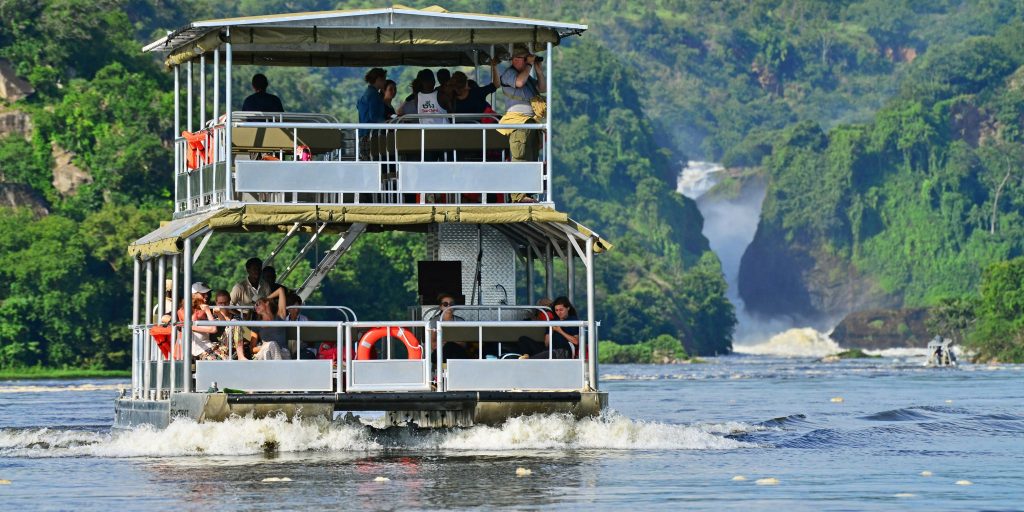
- Murchison Falls forces the entire Nile through a gap barely seven meters wide, creating one of the most dramatic and forceful waterfalls on the continent despite its relatively modest height.

Boat Cruise on Murchison Falls Park
Wildlife and Biodiversity
- Uganda holds roughly half of the world’s remaining mountain gorilla population, split between Bwindi Impenetrable Forest and Mgahinga Gorilla National Park.
- Uganda is one of the few countries where you can see tree-climbing lions, a distinctive behavior observed in Queen Elizabeth National Park‘s Ishasha sector, where lions regularly rest in fig tree branches during the heat of the day.
- Uganda hosts over 1,000 recorded bird species, roughly ten percent of the world’s total bird species, packed into a country smaller than the state of Oregon.
- The shoebill stork, one of the most sought-after birds among serious birders worldwide, is reliably found in Uganda’s wetlands, particularly around Murchison Falls and Mabamba Swamp near Lake Victoria.
- Kibale Forest has one of the highest primate densities in Africa, home to thirteen primate species, including chimpanzees, in a relatively compact protected area.
- Uganda’s Kidepo Valley National Park hosts wildlife species found nowhere else in the country, including cheetahs and ostriches, reflecting its ecological connection to the drier landscapes of neighboring Kenya and South Sudan rather than the rest of Uganda.
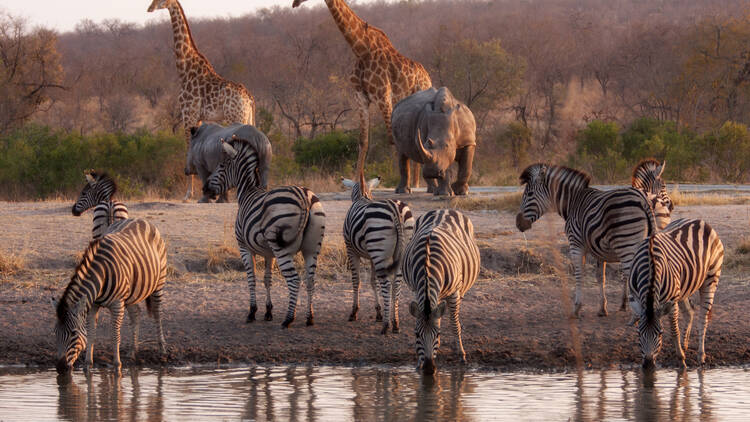
- Lake Mburo National Park is Uganda’s only park with zebra as a resident species, a distinctive feature setting it apart from the country’s other, more forest-dominated protected areas.
History and Culture
- The Buganda Kingdom, one of Uganda’s traditional monarchies, still exists today, with a ceremonial king, the Kabaka, maintaining cultural and traditional authority alongside Uganda’s modern republican government.
- Uganda gained independence from British colonial rule in 1962, and Kampala’s National Independence Monument commemorates this transition.
- Uganda was briefly considered by the British as a potential site for a Jewish homeland in the early 1900s, a proposal known as the Uganda Scheme, which was ultimately rejected by the Zionist movement in favor of Palestine.
- English and Swahili are both official languages of Uganda, alongside Luganda, reflecting the country’s colonial history and its position within the broader East African Community.
- Uganda’s currency, the Ugandan shilling, has circulated since 1966, replacing the East African shilling that was previously shared across several British colonial territories in the region.
Surprising Practical Facts
- Uganda’s official language for business and government is English, making it one of the more linguistically accessible East African destinations for English-speaking travelers.
- Kampala is built across seven hills, similar in geographic concept to Rome, giving the city a undulating, layered urban landscape.
- Uganda’s time zone is East Africa Time, UTC+3, the same as Kenya, Tanzania, and Rwanda, simplifying multi-country East Africa itinerary planning.
- Uganda is a landlocked country, bordered by Kenya, South Sudan, DR Congo, Rwanda, and Tanzania, with all international trade goods passing through neighboring countries’ ports.
- Coffee, not tourism, remains one of Uganda’s largest export earners, with the country ranking among Africa’s top coffee producers, alongside Ethiopia.
Common Misconceptions Worth Correcting
A handful of persistent misunderstandings about Uganda come up often enough in conversations with first-time travellers that they are worth addressing directly, since a couple of them can shape expectations before a trip even begins, sometimes discouraging a visit for reasons that simply do not hold up once the facts are laid out clearly.
- Misconception: Uganda is mostly desert or arid savannah-like parts of Kenya. In reality, Uganda is predominantly green, fertile, and well-watered, with lush forest, wetland, and agricultural land covering much of the country, a landscape closer to tropical highland than dry savannah.
- Misconception: Uganda and Rwanda are essentially interchangeable for gorilla trekking. While both offer mountain gorilla trekking, they differ meaningfully in permit pricing, terrain, accessibility, and surrounding tourism infrastructure, covered in more depth elsewhere in our guides.
- Misconception: Uganda has no significant history before European colonization. Uganda held several sophisticated, centralized kingdoms, including Buganda, Bunyoro, and Toro, with complex political and cultural structures for centuries before British colonial involvement began in the late 19th century, structures that in several cases still hold real cultural authority today.
- Misconception: All of East Africa looks the same. Uganda’s combination of glaciated mountains, dense rainforest, savannah, and wetland gives it a different visual and ecological character from Kenya’s plains or Tanzania’s more singular savannah identity, a range of terrain within one country that surprises many first-time visitors who expected a single, uniform landscape throughout.
Facts That Should Actually Shape Your Itinerary
| Fact | Itinerary Implication |
| Uganda holds roughly half the world’s mountain gorillas. | Gorilla trekking deserves priority booking given permit demand and limited daily family access. |
| Over 1,000 bird species recorded | Dedicated birding time at Mabamba Swamp or Murchison Falls rewards planning, not just incidental sightings. |
| Kibale Forest has thirteen primate species. | Consider a dedicated Kibale visit beyond just chimpanzee trekking to appreciate the fuller primate diversity. |
| The Rwenzori holds rare equatorial glaciers. | A worthwhile addition for serious hikers, though requiring multi-day commitment |
| Buganda Kingdom still functions today | A Kampala cultural stop, including the Kasubi Tombs, adds meaningful historical depth to a wildlife-focused trip. |
More Facts Worth Knowing
- Uganda’s Bwindi Impenetrable Forest is one of the oldest rainforests in Africa, estimated at over 25,000 years old, having survived as a refuge through past ice ages when much of the surrounding region’s forest cover receded.
- Lake Victoria is shared by three countries, Uganda, Kenya, and Tanzania, and is the largest lake in Africa by surface area, though not by volume.
- Uganda’s population is one of the youngest in the world by median age, with a majority of the population under 30 years old, reflecting a high birth rate and rapid population growth.
- Kampala was not always Uganda’s capital, with Entebbe having served as the administrative center during the colonial period before Kampala took over as the seat of government after independence.
- Uganda’s flag features a grey crowned crane, the national bird, chosen for its gentle nature and reportedly a favorite of Uganda’s first colonial administrators, and it remains a distinctive, unusual choice for a national flag centrepiece.
- Uganda is one of the only countries where you can combine gorilla trekking, chimpanzee trekking, and a Big Five safari within a single road-connected itinerary, without needing an international flight between activities, a rare combination anywhere in Africa.
- The Ankole cattle breed, with its enormous, distinctive horns, is native to western Uganda, kept historically as much for prestige and cultural significance as for milk or meat production, and remains a common sight across rural Ankole communities today.
- Uganda’s Semuliki National Park sits at one of the lowest, hottest points in the country, part of the Albertine Rift Valley floor, hosting hot springs and a lowland forest ecosystem quite different from the cooler, higher-altitude parks most visitors associate with Uganda.
Why These Facts Matter for Your Trip
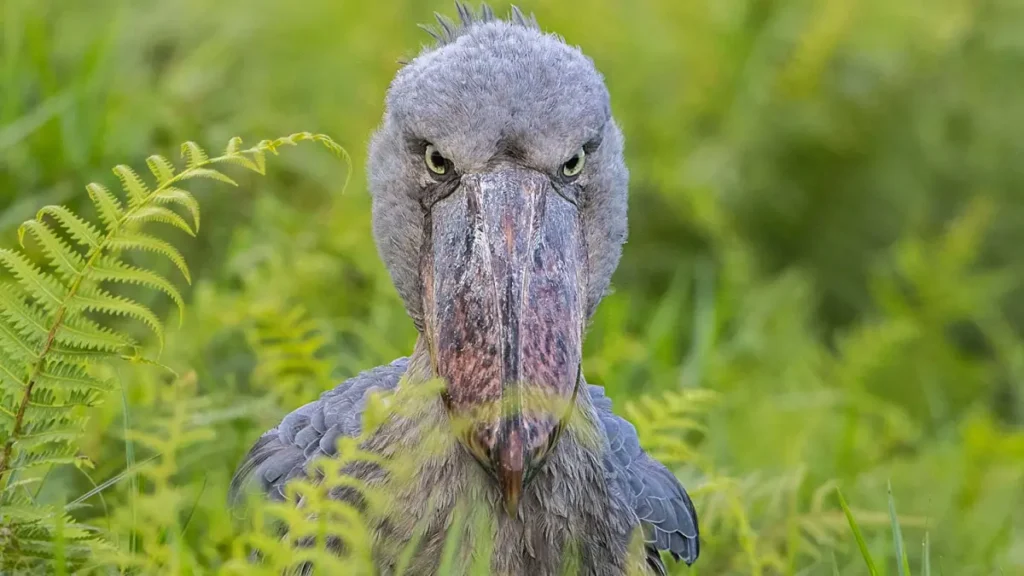
Beyond satisfying curiosity, several of these facts have practical relevance for trip planning. Knowing Uganda’s exceptional bird diversity might justify extending your itinerary specifically for birding at Mabamba Swamp or within Murchison Falls National Park.
Understanding the source of the Nile’s historical significance adds real weight to what might otherwise be a quick photo stop in Jinja.
And knowing that half the world’s mountain gorillas live within Uganda’s borders puts the gorilla trekking experience itself into a rare, global conservation context rather than simply another wildlife encounter on a checklist. None of these facts require extra effort to appreciate; they simply reward a traveler who arrives already knowing them.
Frequently Asked Questions
Is Uganda safe for tourists?
Yes, Uganda’s tourist areas, including its national parks and major cities, see a steady flow of international visitors with a generally strong safety record. Standard travel precautions around valuables and reputable transport apply, as they would anywhere.
What language should I expect to communicate in during my trip?
English is Uganda’s official language for government, business, and most tourism interactions, making communication straightforward for English-speaking travellers throughout the country.
Is Uganda’s biodiversity unusual for its size?
Yes, hosting roughly ten percent of the world’s bird species and thirteen primate species within Kibale Forest alone represents disproportionate biodiversity relative to Uganda’s physical size, a product of its position at the intersection of several distinct African ecosystems.
Can I actually see both hemispheres at once at the equator crossing?
You can stand with one foot on each side of the marked line at Kayabwe, a popular and straightforward photo opportunity along the Kampala-Masaka road.
Does Uganda still have a functioning traditional kingdom?
Yes, the Buganda Kingdom maintains a ceremonial king and cultural institutions alongside Uganda’s national government, a living continuation of pre-colonial governance structures still culturally significant today.
Is it true that Uganda was considered a Jewish homeland?
Yes, the so-called Uganda Scheme was a early 20th-century proposal discussed within the British government and the Zionist movement, though it was ultimately rejected in favor of establishing a homeland in Palestine, and the plan never proceeded to implementation.
How does Uganda’s bird diversity compare to other African safari destinations?
Uganda’s bird count exceeds most other single African countries, including Kenya and Tanzania, despite its considerably smaller land area, largely due to its position at the meeting point of several distinct ecological zones, forest, savannah, and wetland, within a compact territory.
Bringing These Facts Into Your Uganda Trip
Uganda rewards travelers who arrive with a bit more context than “gorillas and game parks,” and the facts above hopefully add some depth to how you experience the country’s landscapes, wildlife, and history once you are actually there. From the source of the Nile to tree-climbing lions to a traditional kingdom still operating within a modern republic, Uganda holds far more than its tourism marketing typically conveys. Even travellers who have already done the standard gorilla trekking circuit often find they have only scratched the surface of what the country actually offers.
If any of these facts have sparked a specific interest, whether birding at Mabamba Swamp, exploring Buganda Kingdom history in Kampala, or simply standing at the equator, our team can build these into your itinerary alongside the wildlife experiences that first drew you to Uganda, so your trip reflects the full breadth of what the country actually offers rather than the shortened version most itineraries default to.
Related Posts