Essence of Africa 2026 in Zanzibar Essence of Africa is a trade forum, which means…
Best Places to See Lions in Uganda
Best Places to See Lions in Uganda
This guide covers all three of Uganda’s lion habitats – Best Places to See Lions in Uganda : Queen Elizabeth National Park including the Ishasha sector, Murchison Falls National Park, and Kidepo Valley National Park. It covers where to find lions in each park, what the sighting experience is like, and what to combine your lion safari with to build a complete Uganda itinerary.
Lions in Uganda — What to Know Before You Go
Uganda’s lion population is estimated at between 400 and 500 individuals distributed across the country’s three main savannah parks. This is a relatively small national population by African standards, but the density of lions in the game drive areas of Murchison Falls and Kidepo is significant enough that sightings are fairly consistent for visitors who spend two or more days in either park.
Queen Elizabeth’s lion population is smaller, with around 130 individuals in the park, but the Ishasha tree-climbing behavior gives it a quality of sighting that numbers alone cannot capture.
Uganda’s lions are not heavily habituated to tourist vehicles. This sounds like it might make them harder to see, and in one sense it does: you cannot rely on the immediate, close-range vehicle approach that the Masai Mara’s habituated prides sometimes allow. But the other side of low habituation is that when you find a pride in Uganda, you are watching lions that are behaving naturally rather than through a well-worn response to a familiar human stimulus.
The morning game drive on the Buligi tracks at Murchison Falls when a pride is active before the heat arrives, or the afternoon in Ishasha when you pull up beneath a fig tree and count six lions looking down at you from the branches, has a different quality from sitting with a lion pride that barely registers the vehicle because they have seen fifty today.
Lions in Uganda are protected under the Uganda Wildlife Authority, and the Uganda Carnivore Project, which is a long-running research program working with Uganda Wildlife Authority to monitor and protect the country’s carnivore populations, operates lion tracking and research programs accessible to visitors in Queen Elizabeth National Park.
The project has collared individual lions to track their movements and provide data on population health, territory size, and inter-pride dynamics. Visitors who join the lion tracking program at Queen Elizabeth travel with researchers, which gives a layer of insight into individual animals and their histories that a standard game drive cannot provide.
Queen Elizabeth National Park—Kasenyi Plains and the Ishasha Tree-Climbing Lions
Queen Elizabeth National Park covers nearly 2,000 square kilometers in western Uganda and is the country’s most visited national park. It is also home to Uganda’s most famous lion sighting, which takes place in the Ishasha sector in the south of the park, two hours by road from the main Mweya area. The park’s resident lion population is around 130 individuals, making it Uganda’s second-largest in terms of numbers but its most well-known in terms of the behavior its lions display.
The Kasenyi Plains — Northern Queen Elizabeth
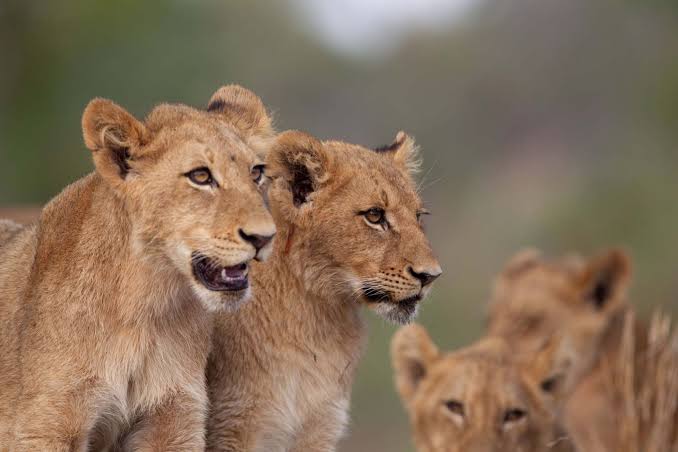
The Kasenyi Plains in the northern sector of Queen Elizabeth National Park are the primary game drive area for most visitors to the park. The open grassland here covers the area between the park gate and the Kazinga Channel, and the savannah is where the lion prides of the northern sector hunt, rest, and move between territories.
Game drives on the Kasenyi circuit depart from lodges near Mweya in the early morning, typically at 6:30 AM, and the first two hours of the day are the most productive for lion activity.
The prides tend to rest through the middle of the day in whatever shade is available, most often in Euphorbia trees on the edge of the grassland, and become active again in the late afternoon as the temperature drops.
The lions of the Kasenyi Plains have a large prey base. Ugandan kobs are present in very high numbers across the plains, and the kob breeding grounds that operate as leks, where males gather and compete for females, provide predictable hunting opportunities for the lion prides that have learned the location of these grounds. Watching a pride work the edges of a kob lek in the early morning is one of the better predator-prey interactions available on a Queen Elizabeth game drive.
The Ishasha Sector — Uganda’s Tree-Climbing Lions
The Ishasha sector sits in the southern part of Queen Elizabeth National Park, bordering the Democratic Republic of Congo. It is reached from the park’s south via the Kihihi Gate, approximately two hours from the main Mweya area on internal park roads.
Most visitors to Queen Elizabeth National Park do not include Ishasha in their itinerary, partly because the distance requires either an additional night at Ishasha or a long day of driving and partly because until relatively recently the tree-climbing lion behavior was not as widely known internationally as it deserves to be.
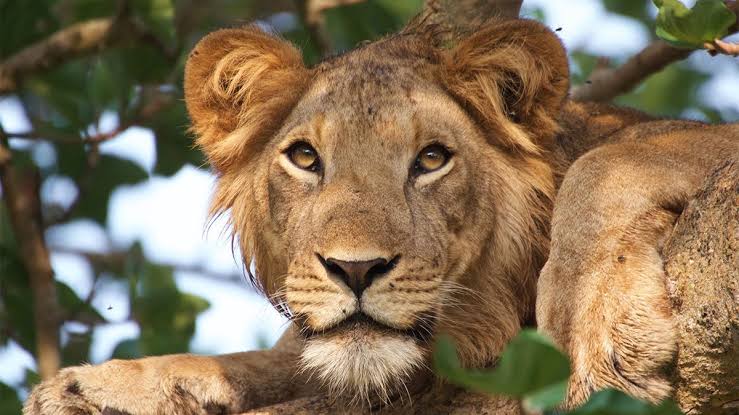
The lions in the Ishasha sector behave differently from lions anywhere else in Uganda and almost anywhere else in the world. They climb trees. Not just young cubs or small individuals, but full adult lions, including large females and in some cases adult males, climb into the upper branches of large sycamore fig trees and rest there through the middle of the day.
The fig trees of the Ishasha plains, some of which are large enough to hold an entire pride of a dozen or more animals in their branches simultaneously, are the defining feature of this section of the park.
Why they climb trees is not definitively established. The most widely supported explanations are a combination of temperature regulation, relief from the ground-level tsetse fly and other biting insects that are more numerous on the Ishasha plains than in the northern park, and a better vantage point for monitoring the surrounding savannah for prey and competitors.
Whatever the reason, the result is a wildlife sighting that exists almost nowhere else. Pulling up below an Ishasha fig tree and counting eight or ten adult lions distributed through the branches above you, tails hanging, heads resting on horizontal branches, occasionally looking down at your vehicle with the same composed lack of concern they direct at everything, is genuinely different from any other lion encounter available in Africa.
The Ishasha sector has four main prides, and the park authorities monitor their movements. Your guide or lodge can usually get current information on where the prides were last seen, which significantly improves your chances of a sighting on any given morning or afternoon.
Ishasha Wilderness Camp is the main luxury accommodation in the sector, and its guides have detailed knowledge of the individual lions and their territories built up over years of observation. The sector is much quieter than the Mweya area, with far fewer vehicles on any given day, which adds to the quality of the sighting when you find the lions.
Murchison Falls National Park
Murchison Falls National Park in northwestern Uganda is the country’s largest protected area and holds its largest lion population. Current estimates put the number of lions in Murchison at around 250 individuals, which represents more than half of Uganda’s total lion count.
The park covers 3,840 square kilometers of savannah, woodland, and Nile riverine habitat, and the open grassland of the Buligi circuit in the northern sector is the primary game drive area where lions are most consistently found.
The Buligi tracks run north of the Victoria Nile from the Paraa ferry landing toward the Albert Nile and cover approximately 120 kilometers of game drive circuit across the open savannah.
The landscape here is characterized by grassland dotted with Borassus palm trees, whose tall straight trunks and spreading crowns give the Murchison savannah a distinct visual character from the acacia-dominated landscapes of the southern parks.
Lions in this setting are visible from a distance when they are moving, and the guide can usually position the vehicle well ahead of a moving pride to allow a sustained viewing without vehicle chasing.
Murchison Falls lions are known for being most active early in the morning, before sunrise to roughly 9:00 AM, and again in the late afternoon and evening. The midday hours are typically spent resting in whatever shade the grassland offers.
Night game drives, which are available for visitors sleeping inside the park, give access to the nocturnal activity of the prides that is simply not visible during the day: stalking, hunting, and the long territorial movements that the lions make between waterholes and prey areas in the dark. The lions of Murchison are often described by guides as more active and less rested-looking than the Queen Elizabeth lions, which reflects both the larger population and the more expansive territory the pride ranges over.
Kidepo Valley National Park
Kidepo Valley National Park in Uganda’s far northeast is the most remote of the country’s three lion habitats and, for the visitors who make the journey, often the most rewarding for sheer quality of sighting. The park sits in the semi-arid Karamoja region on the borders with South Sudan and Kenya, and its landscape is completely different from the western parks.
The Narus Valley, which is the primary game viewing area, is a sweeping open plain ringed by mountains and rocky escarpments, with a permanent water source in the valley floor that concentrates wildlife during the dry season. CNN named Kidepo the best park in Africa for experiencing the continent as it was fifty years ago, and the description is not an exaggeration.
Kidepo currently holds around 130 lions, a population that has been growing steadily over recent surveys. The park receives a fraction of the visitors that Queen Elizabeth and Murchison Falls attract, which means that when you find a lion pride here, you are almost certainly the only vehicle at the sighting.
Lion encounters in Kidepo have a different atmosphere from the same encounter in a busier park: the absence of other vehicles, the silence of the surrounding landscape, and the rawness of the Karamoja bush give the experience a quality that is hard to describe but very easy to remember.
The lions of Kidepo are known to use the rocky outcrops and kopjes at the edges of the Narus Valley as lookout points, in the same way that the Ishasha lions use the fig trees: for elevated vantage, relief from insects, and surveillance of the surrounding territory. Spotting a pair of lions on a kopje with the Nyangea-Napore Hills behind them and nothing else moving in the valley below is one of Uganda’s most striking wildlife scenes. Kidepo also holds the only cheetah population in Uganda, which adds another predator dimension that the western parks cannot offer.
Planning a Uganda Lion Safari
The most efficient itinerary for seeing lions in Uganda combines at least two of the three parks. The western circuit covering Queen Elizabeth National Park and Murchison Falls National Park covers both the tree-climbing lions of Ishasha and the largest lion population in the country.
The drive between the two parks takes approximately four to five hours via Fort Portal and Kampala. Building two nights at each park gives enough time for multiple game drives and maximizes the probability of lion sightings at each location.
Adding Kidepo Valley National Park to the itinerary requires more time, as the park is far from both Queen Elizabeth and Murchison Falls. The most practical approach for visitors with two weeks is to cover the western parks first and then fly from Entebbe to Kidepo Airstrip rather than attempting the road journey between the western parks and Kidepo, which would add a further full day of travel each way. For visitors with ten days or fewer, choosing between the western circuit and Kidepo rather than attempting all three is the more sensible approach.
The Ishasha sector is on the road between Queen Elizabeth National Park and Bwindi Impenetrable Forest, which makes it a natural addition to any itinerary that combines gorilla trekking at Bwindi with game drives at Queen Elizabeth.
Approaching from the south via the Kihihi Gate allows visitors to spend a morning or afternoon in Ishasha before continuing north to the main Mweya area. A one-night stay at Ishasha Wilderness Camp gives two game drives in the sector and significantly increases the chance of finding the tree-climbing prides compared to a single afternoon visit.
Related Posts