Essence of Africa 2026 in Zanzibar Essence of Africa is a trade forum, which means…
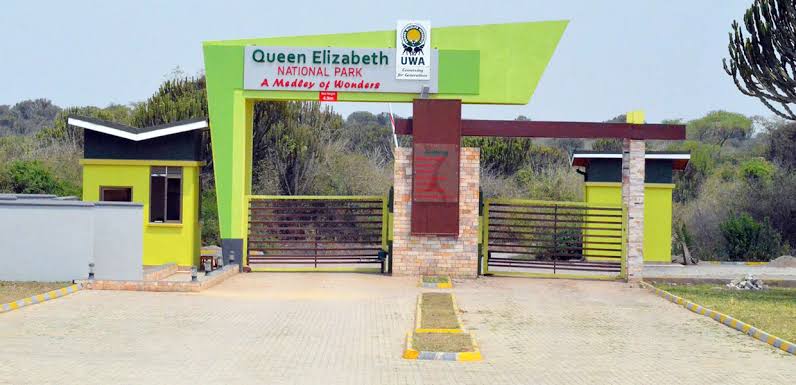
Park Entry Fees for Queen Elizabeth National Park
Park Entry Fees for Queen Elizabeth National Park
Park Entry Fees for Queen Elizabeth National Park; Queen Elizabeth National Park is Uganda’s most visited national park and one of the most biodiverse protected areas in Africa. Spread across nearly 2,000 square kilometres in the southwest of the country, it sits across the Albertine Rift Valley on the border of Uganda and the Democratic Republic of Congo, with the snow-capped Rwenzori Mountains visible from the park’s western edge on clear mornings.
The landscape inside the park covers open savannah, acacia woodland, crater lakes, the famous Kazinga Channel, and sections of the Rift Valley escarpment that drop toward Lake Edward in the west and Lake George in the north.
The park draws visitors for several reasons that coexist in a way that is hard to find elsewhere in Uganda. The game drives on the Kasenyi Plains in the north of the park produce lions, elephants, buffaloes, and large herds of Uganda kob.
The Kazinga Channel boat cruise connects Lake George to Lake Edward through a waterway lined with the highest concentration of hippos in Africa and elephants and buffaloes that come to the banks to drink. The Ishasha sector in the south is one of the only places in the world where lions regularly climb trees and rest in the branches of large fig trees. And the Kyambura Gorge, also in the park, holds a habituated chimpanzee community that can be tracked on a permit separate from the main park entry.
Planning a Queen Elizabeth National Park safari requires understanding the full range of fees before you arrive. The Uganda Wildlife Authority sets and manages all park fees, and the structure covers individual entry, vehicle fees, annual passes, activity permits, and camping. This guide covers every charge category in clear detail so you can budget your Queen Elizabeth National Park safari accurately and confirm with your tour operator that the costs in your package reflect the correct current rates.
Daily Park Entry Fees — Per Person
Park entry fees are charged per person for a 24-hour period. All visitors must present valid identification at the gate before an entry permit is issued. Foreign non-residents present their passports. Foreign residents present a valid work permit of at least one year.
East African Community citizens present their national identity cards. Arriving without the appropriate identification means you will be charged at the foreign non-resident rate regardless of your actual status.
Children under five years of age do not pay an entry fee. Children aged five to fourteen years pay a reduced child rate. The standard adult rate applies from age fifteen.
| Visitor Category | Foreign Non-Residents (USD) | Foreign Residents (USD) | EAC Citizens (UGX) |
| Adult (15 years and above) | USD 40 | USD 30 | UGX 20,000 |
| Child (5 to 14 years) | USD 20 | USD 10 | UGX 5,000 |
| Child (under 5 years) | Free | Free | Free |
| Ugandan Student (with school letter) | — | — | UGX 3,000 |
| Tertiary Student (with institution letter) | — | — | UGX 5,000 |
| Uganda Wildlife Club Member | — | — | UGX 2,000 |
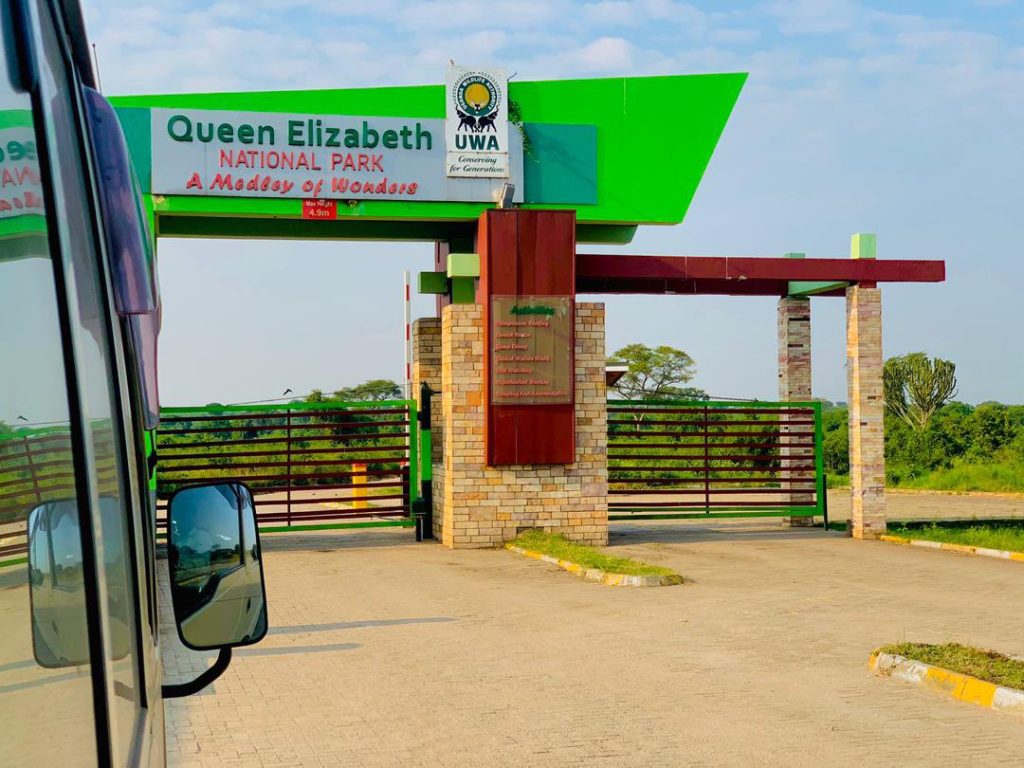
Park entry permits are issued at all Queen Elizabeth National Park entrance gates, including Kabatoro Gate, which is the main entry point for visitors approaching from Kasese and Kampala, and Katungulu Gate in the southern sector near Ishasha. Permits are valid from the time they are stamped at the gate where you enter, and the 24-hour clock starts from that moment.
Annual Park Entry Passes
Annual passes allow unlimited entry to Queen Elizabeth National Park throughout a full year and are available to foreign residents with valid work permits of at least one year duration and to East African Community citizens. They are not available to foreign non-resident tourists on short-stay visas. Annual passes do not cover activity fees such as the boat cruise, guided game drives, nature walks, or chimpanzee trekking permits, which are charged separately on each visit.
| Annual Pass Category | Foreign Residents (USD) | EAC Citizens (UGX) |
| Individual Annual Pass | USD 350 | UGX 150,000 |
| Couple Annual Pass | USD 500 | UGX 200,000 |
| Family Annual Pass (maximum 4 children) | USD 700 | UGX 300,000 |
| Corporate Group Annual Pass | USD 1,500 | UGX 2,500,000 |
| Safari Guide Annual Pass | — | UGX 100,000 |
| Driver Annual Pass | — | UGX 100,000 |
Safari guides employed by licensed Ugandan tour operators are exempt from paying the annual guide pass and enter the park free of charge. Drivers employed by licensed tour operators also receive free entry. Independent East African community citizen guides and drivers must hold the annual pass. Foreign resident guides pay USD 50 annually to enter the park for professional purposes.
Vehicle Entry Fees
All vehicles entering Queen Elizabeth National Park pay a separate vehicle entry fee in addition to the per-person entry permits. Vehicle fees are charged per entry, not per 24-hour period. If the vehicle exits and re-enters the park on the same day, the fee applies again. Vehicle charges are based on vehicle type and country of registration.
| Vehicle Type | Foreign Registered (USD) | Uganda Registered (UGX) |
| Motorcycle | USD 30 | UGX 10,000 |
| Saloon Car | USD 40 | UGX 20,000 |
| Pick-up / 4WD Safari Vehicle | USD 50 | UGX 30,000 |
| Minibus / Omnibus | USD 50 | UGX 30,000 |
| Tour Company 4WD / Safari Vehicle | USD 150 | UGX 30,000–50,000 |
| Bus / Lorry | USD 150 | UGX 150,000–200,000 |
| School Bus (Uganda registered) | — | UGX 50,000 |
| Helicopter (per landing) | USD 100 | UGX 250,000 |
Visitors on self-drive safaris should confirm the registration status of their rental vehicle before budgeting for park entry. A foreign-registered tour vehicle carrying four passengers pays USD 150 in vehicle entry fees, while a Uganda-registered tour vehicle with the same passengers pays UGX 30,000 to 50,000. This difference is significant for self-drive visitors whose vehicle is registered outside Uganda. Aircraft landing at Mweya Airstrip inside the park require prior clearance and are subject to landing and parking fees through the UWA aviation coordination process.
Activity Fees Inside Queen Elizabeth National Park
The park entry fee gives you access to drive the main game tracks and view wildlife from your vehicle. All organized activities beyond that carry separate fees payable at the activity booking points inside the park, at the UWA offices near the gate, or in advance through a licensed tour operator. The main activities and their current fees are covered below.
Game Drives — Day and Night
The Kasenyi Plains game drive circuit in the northern sector is Queen Elizabeth’s primary wildlife viewing area and one of Uganda’s best game drive routes. The open grassland holds large herds of Uganda kob, topi, warthogs, and buffaloes, with lion prides that regularly patrol the kob breeding grounds and elephants that move through from the Kazinga Channel banks in the morning. The circuit can be driven in a private vehicle without an additional guide fee, but hiring a UWA ranger guide significantly improves the quality of wildlife spotting.
Day-guided game drives with a UWA ranger cost USD 30 per person for foreign non-residents and foreign residents and UGX 30,000 for East African citizens. Night game drives are available for visitors sleeping inside the park and cost USD 30 to USD 40 per person depending on the vehicle arrangement.
Night drives give access to nocturnal wildlife, including leopards, hyenas, civets, genets, and various owl species that are not visible on daytime drives. Night drives operate on specific permitted routes and must be arranged through the lodge or UWA rangers at the park offices.
Kazinga Channel Boat Cruise
The Kazinga Channel boat cruise is the single most popular activity in Queen Elizabeth National Park and one of the most productive wildlife experiences in Uganda. The channel is a 32-kilometer natural waterway connecting Lake George in the north to Lake Edward in the west, and it holds one of the densest hippopotamus concentrations in Africa.
The cruise follows the channel from the Mweya jetty, passing pods of hippos in the water alongside the boat, buffaloes and elephants drinking at the bank edges, Nile crocodiles on exposed mud flats, and a rich waterbird community, including African skimmers, herons, kingfishers, and pelicans. Boats depart from Mweya jetty at 9:00 AM and 2:00 PM daily.
The Kazinga Channel boat cruise costs USD 30 per person for both foreign non-residents and foreign residents. East African citizens pay UGX 30,000. This fee is paid at the Mweya jetty and is charged on top of your standard park entry fee for the day.
| Activity | Foreign Non-Residents | Foreign Residents | EAC Citizens |
| Day Game Drive (guided, with UWA ranger) | USD 30 | USD 30 | UGX 30,000 |
| Night Game Drive | USD 30–40 | USD 30–40 | UGX 30,000–40,000 |
| Kazinga Channel Boat Cruise | USD 30 | USD 30 | UGX 30,000 |
| Nature Walk (guided) | USD 20 | USD 20 | UGX 20,000 |
| Chimp Trekking — Kyambura Gorge | USD 50 | USD 50 | UGX 50,000 |
| Chimp Habituation — Kyambura Gorge | USD 150 | USD 150 | UGX 150,000 |
Chimpanzee Trekking — Kyambura Gorge
Kyambura Gorge, sometimes called the Valley of Apes, is a dramatic forest gorge that cuts through the savannah of Queen Elizabeth National Park in the north. A habituated chimpanzee community lives in the gorge forest, and trekking them here is one of the most unusual primate experiences in Uganda because the contrast between the open savannah above and the dense riverine forest below gives the encounter a very different character from forest parks like Kibale. The gorge itself is visually striking, with the forest canopy sitting deep below the savannah edge, and the descent into it on foot is part of the experience.
The Kyambura Gorge chimpanzee trekking permit costs USD 50 per person for foreign non-residents and foreign residents, and UGX 50,000 for East African citizens. This is significantly cheaper than Kibale National Park’s chimpanzee permit at USD 250, which reflects the smaller and less fully habituated community in the gorge.
Success rates for finding the chimps at Kyambura are lower and more variable than at Kibale, which is why the permit price is lower and why many visitors who specifically prioritise a strong chimp encounter choose Kibale over Kyambura. For visitors who are at Queen Elizabeth for the game drives and boat cruise and want to add a primate activity, Kyambura works well as an add-on at an accessible price.
A chimpanzee habituation experience at Kyambura Gorge costs USD 150 per person and gives a full-day observation with the semi-habituated group alongside researchers. This is also cheaper than the equivalent experience at Kibale, again reflecting the difference in the size and status of the gorge community.
Ishasha Sector — Tree-Climbing Lions
The Ishasha sector in the southernmost part of Queen Elizabeth National Park is Uganda’s best location for seeing tree-climbing lions. The lions here regularly rest in the branches of large fig trees, a behavior that is documented in only a handful of locations globally. Ishasha is accessed from the south via the Kihihi Gate, approximately two hours from the main Mweya area.
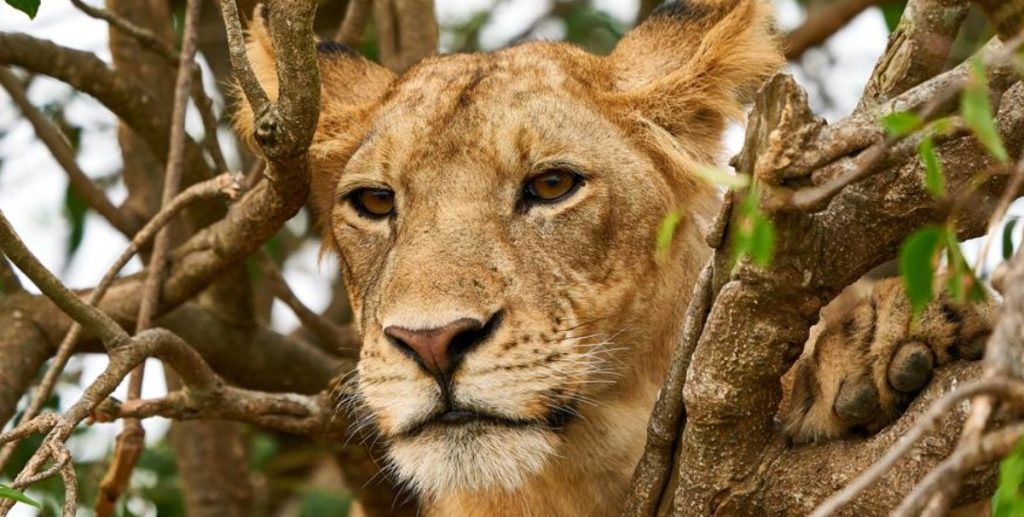
The driving circuit through the Ishasha sector covers open plains and riverine trees where the lion prides are commonly found. No additional permit is required beyond the standard park entry fee and vehicle entry charge for accessing Ishasha. The sector is within the park boundary, and the general daily entry fee covers access.
Nature Walks and Guided Activities
Guided nature walks at Queen Elizabeth National Park are available on designated routes near the Mweya Peninsula and in other sectors of the park. Walks are led by armed UWA rangers and allow visitors to move through the park on foot, observing smaller wildlife, plants, and bird species that are harder to appreciate from a vehicle.
The Mweya Peninsula walk follows the channel edge with views across the water and through the acacia and euphorbia vegetation above the Kazinga Channel banks. A guided nature walk costs USD 20 per person for foreign visitors and UGX 20,000 for East African citizens, paid on top of the standard park entry fee.
Birdwatching in Queen Elizabeth National Park is exceptional, with over 600 recorded bird species across the varied habitats. The papyrus swamps, open savannah, forest edges, channel shores, and crater lake margins each hold different bird communities.
The park is on the African Great Lakes migratory corridor, which brings additional waterbird species through between November and April. A birdwatching guide can be hired through the UWA at the Mweya offices at a daily or half-day rate. The Maramagambo Forest in the park’s southern sector and the Kyambura Gorge edge are among the better dedicated birding spots for forest species.
Camping Fees at Queen Elizabeth National Park
The Uganda Wildlife Authority manages public campsites at several points within the park. These sites offer basic facilities including pit latrines, water access, firewood, and a night warden on duty. Camping inside the park means your entry permit covers the night, and you pay the camping fee separately on top of the daily entry permit.
| Camping Category | Foreign Visitors | EAC Citizens |
| UWA Public Campsite (per person per night) | USD 30–40 | UGX 40,000 |
| Wilderness Camping (where permitted) | USD 40 | UGX 40,000 |
Private lodges and tented camps inside and adjacent to the park offer accommodation ranging from budget guesthouses near the Mweya Peninsula to luxury lodges with channel views. These are priced separately and are not managed by UWA. Visitors sleeping at a lodge inside the park still pay the standard daily entry fee for each day they are in the park.
Related Posts