Kidepo Valley National Park Safari Guide: Wildlife, Wilderness, Costs & Travel Tips Introduction: Uganda's Far…
Best Time to Climb Kilimanjaro
Best Time to Climb Kilimanjaro: Weather, Crowds and Summit Conditions
Find the best time to climb Kilimanjaro. Month-by-month weather, temperatures, crowds, full moon climbs, route choices by season, packing advice and how to pick your dates. This guide explains Kilimanjaro’s seasons month by month, how weather changes with altitude, how crowds vary, which routes work best in each season and how to pick the right dates for your climb.
Is There a Best Time to Climb Kilimanjaro?
Yes. The two main dry seasons, January to early March and June to October, are generally considered the best times to climb. They offer the most stable weather, clearer views and the highest summit success rates.
How Kilimanjaro’s Weather Works
Kilimanjaro sits just south of the equator, so it does not have summer and winter in the usual sense. Its seasons are defined by rainfall. Two rainy seasons bring moisture from the Indian Ocean: the long rains from March to May and the short rains in November. Between them lie the drier periods.
Altitude has a greater effect on temperature than the time of year.
| Zone | Approx. altitude | Day temperature | Night temperature |
| Rainforest | 1,800 to 2,800 m | 20 to 25°C | 10 to 15°C |
| Heath and moorland | 2,800 to 4,000 m | 10 to 20°C | 0 to 5°C |
| Alpine desert | 4,000 to 5,000 m | 5 to 15°C | -5 to 0°C |
| Summit | Above 5,000 m | Around -5 to 0°C | -10 to -20°C with wind chill |
Month-by-Month Guide
| Month | Weather | Crowds | Summit conditions | Verdict |
| January | Dry, warm days, clear skies | Moderate | Very good, possible snow | Excellent |
| February | Dry, warm, clear | Moderate | Very good | Excellent |
| March | Rains begin later in the month | Quieter | Good early, wetter later | Good early in month |
| April | Long rains, heavy showers | Very quiet | Snow and cloud common | Difficult |
| May | Long rains, muddy | Very quiet | Snow and cloud common | Difficult |
| June | Drying, colder | Increasing | Good | Very good |
| July | Dry, cold nights | Busy | Excellent | Excellent |
| August | Dry, cold | Busiest | Excellent | Excellent |
| September | Dry, clear | Busy | Excellent | Excellent |
| October | Dry, warmer | Moderate | Very good | Excellent |
| November | Short rains | Quiet | Variable | Fair |
| December | Drying, busy at holidays | Busy late month | Good | Good |
The Dry Seasons Explained
January to early March
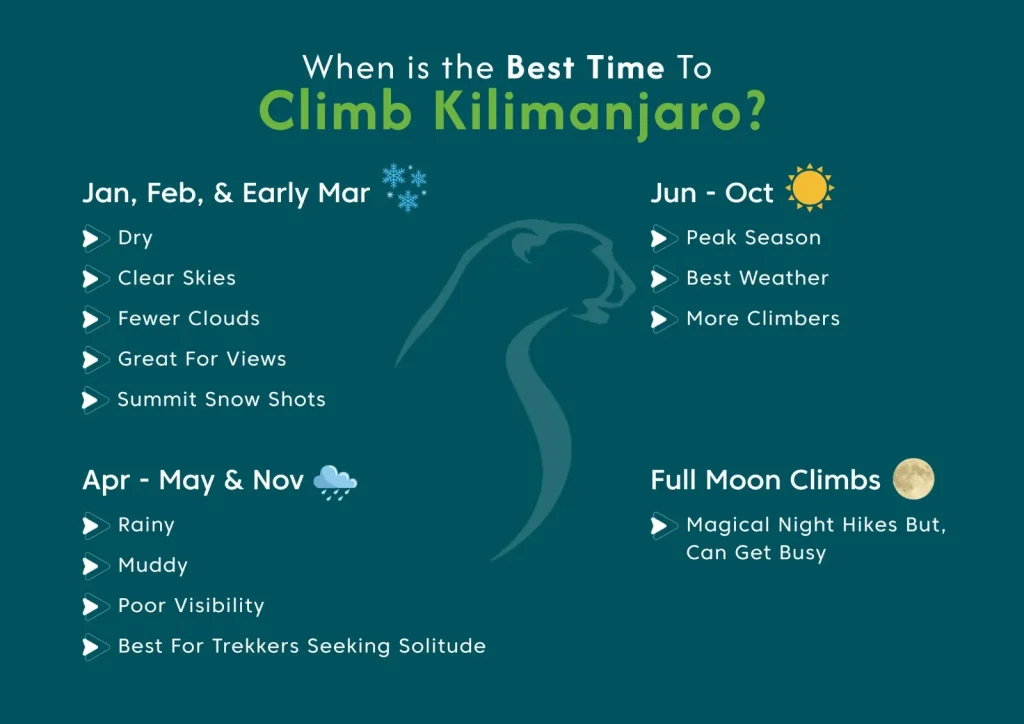
This is a favourite period for many climbers. Days are warmer than in the mid-year season, skies are often clear and the chance of snow near the summit adds a beautiful touch to photographs. Crowds are moderate. Afternoon clouds can build, but heavy rain is less common.
Best for: climbers who want good weather with fewer crowds than July and August.
June to October
The longest dry period is also the most popular. Conditions are generally dry and stable, though nights are colder, especially in July and August. Trails are firmer, views are clear and summit success rates are typically high. Popular routes such as Machame and Marangu can be busy.
Best for: climbers who prioritize stable weather and are happy to share trails.
The Rainy Seasons Explained
April and May: the long rains
These are the wettest months. Rain is frequent, especially on the southern routes, and trails become muddy and slippery. Cloud often obscures views, and snow is common near the summit. Some operators reduce departures. The advantage is solitude; you may have entire camps to yourself.
Best for: experienced trekkers seeking quiet trails who accept wet, cold conditions.
November: the short rains
The short rains are lighter and less predictable than the long rains. Some days are dry, others wet. Crowds are low, and prices may be more flexible.
Best for: flexible climbers who prefer quiet trails and can cope with some rain.
Crowds: When Is Kilimanjaro Busiest?
| Period | Crowd level | Notes |
| Late June to September | Highest | European and North American summer holidays |
| Late December to early January | High | Christmas and New Year |
| January to February | Moderate | Pleasant balance |
| October | Moderate | Good weather, fewer crowds |
| March, November | Low | Shoulder months |
| April to May | Very low | Wet season |
Full Moon Climbs
Many climbers plan their summit night to coincide with the full moon. Moonlight illuminates the upper slopes, making head torches almost unnecessary and offering a magical view of the glaciers and clouds below. Full moon dates are popular, so book early. New moon nights offer a different reward: a sky filled with stars.
Best Routes by Season
| Season | Recommended routes | Why |
| Dry seasons | Lemosho, Machame, Northern Circuit | Classic scenery and good conditions |
| Long rains (April to May) | Rongai, Marangu | Rongai’s northern side receives less rain; Marangu’s huts offer shelter |
| Short rains (November) | Rongai, Lemosho, Northern Circuit | Quieter trails, northern routes drier |
| Peak crowds | Lemosho, Northern Circuit, Rongai | Fewer climbers than Machame and Marangu |
How the Season Affects Summit Night
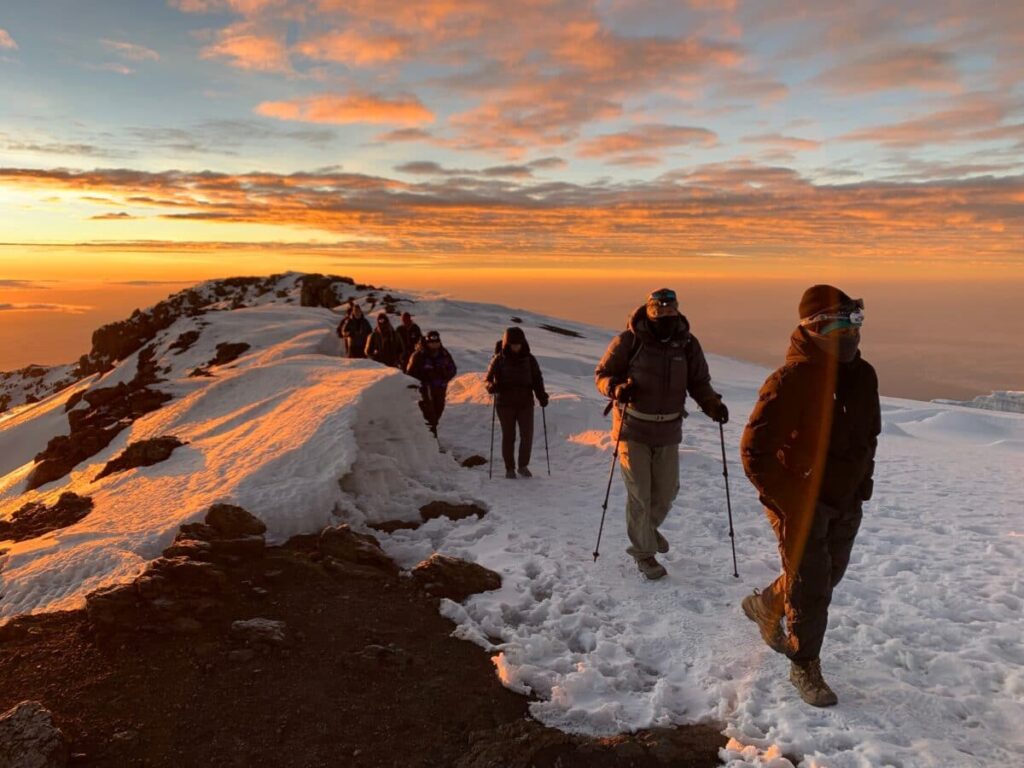
Summit night is cold in every season, but wind and snow vary. In the dry months, the main challenge is extreme cold, especially in July and August. In January and February, slightly warmer temperatures make the summit more pleasant, though fresh snow is possible. In the rainy months, snow, ice and cloud can make the final ascent harder and the views less reliable.
Packing by Season
| Item | Dry season | Wet season |
| Waterproof jacket and trousers | Essential | Essential, high quality |
| Gaiters | Recommended | Essential |
| Down jacket | Essential | Essential |
| Sleeping bag | Rated to -10°C or lower | Rated to -10°C or lower |
| Extra dry bags | Recommended | Essential |
| Sun protection | Essential | Still essential at altitude |
| Spare socks and base layers | Recommended | Essential |
Combining Kilimanjaro With a Safari by Season
| Months | Safari highlights |
| January to March | Serengeti calving season in the south |
| June to October | Classic dry-season safaris; Great Migration in the northern Serengeti from about July |
| November to December | Green season with fewer crowds |
| April to May | Low season, lush landscapes, some lodges closed |
Practical Advice for Choosing Dates
Book early for peak months. Popular dates, especially full moon departures, fill months in advance.
Avoid tight schedules. Leave at least one spare day after your climb before international flights.
Consider shoulder months. Early March, early June, late October and December can offer good conditions with fewer crowds.
Choose a longer itinerary in any season. Weather is unpredictable; extra days improve acclimatisation and flexibility.
Prepare for cold regardless of season. The summit is always freezing at night.
Temperature Extremes: What to Expect Each Day
One of the surprises of Kilimanjaro is how much temperatures change within a single day. In the alpine desert zone, a sunny midday can feel warm enough for a T-shirt, while the same camp drops below freezing after sunset. On summit night, wind chill can make it feel like -20°C or colder. Understanding this pattern helps you dress correctly: start each day with layers, remove them as the sun warms you and add them back quickly when clouds roll in or you stop to rest.
Sun exposure is another factor. At high altitude, ultraviolet radiation is intense, and snow or pale rock reflects light. Sunburn is common, even in cloudy weather. High-factor sunscreen, lip balm, sunglasses and a wide-brimmed hat are essential in every season.
Rain Patterns on Different Sides of the Mountain
Kilimanjaro’s southern slopes face the moist winds from the Indian Ocean and receive the most rain. The northern slopes, facing Kenya, are noticeably drier. This is why Rongai, approaching from the north, is often recommended in the wet seasons, and why southern routes such as Machame and Umbwe can be very muddy in April and May.
In the forest zone, rain is possible on any day, even in the dry seasons. Afternoon showers are common in the rainforest, while higher zones see less rainfall overall. Packing waterproof clothing and keeping gear in dry bags is essential year-round.
Choosing Dates Around Holidays and Events
Climbing during school holidays or around Christmas and New Year means sharing camps with more climbers, but it can also bring a festive atmosphere. Some climbers specifically aim to summit on New Year’s Day. If you want quieter trails, consider the weeks either side of peak periods, such as early June, late October or mid-January.
Booking well in advance is important for peak periods, as experienced guides and quality equipment are in high demand. For shoulder months, operators can often accommodate shorter notice.
Weather Uncertainty and Flexibility
Even the best forecasts cannot guarantee conditions on Kilimanjaro. Storms can arrive in dry months, and clear days can appear in wet months. The most effective way to manage weather is to choose a longer itinerary, which provides more flexibility and better acclimatisation. Experienced guides also adjust timings, such as starting summit night earlier or later, depending on conditions.
Climbers who arrive with realistic expectations, good gear and a flexible mindset usually cope best with whatever the mountain brings.
A Closer Look at the Shoulder Months
Shoulder months deserve more attention than they usually get. Early March often still enjoys dry weather before the long rains begin, with fewer climbers than February. Early June marks the end of the long rains; trails are drying, the forests are lush and crowds have not yet peaked. Late October and early November can offer warm, clear days before the short rains arrive, and December before the holidays is often pleasant. Climbers who choose these windows frequently enjoy quieter camps and good conditions, though they should still pack for rain.
Our Experience With Seasonal Planning
Guides who climb Kilimanjaro throughout the year often say there is no bad month, only better-prepared and less-prepared climbers. Those who arrive in April with excellent rain gear and a positive attitude often enjoy quiet, atmospheric climbs. Those who arrive in August without warm enough clothing can struggle with the cold. Matching your gear and expectations to the season is as important as the dates themselves.
Our Recommendations
- Best weather and fewer crowds: January to February.
- Most stable conditions: July to September, on a less crowded route.
- Budget and solitude: November or early December on Rongai or Lemosho.
- Photographers: January and February for clear skies and possible summit snow.
- Combining with the Great Migration: July to October.
Frequently Asked Questions About the Best Time to Climb Kilimanjaro
What is the best month to climb Kilimanjaro?
January, February, July, August and September are among the best months.
Can I climb Kilimanjaro in the rainy season?
Yes, but trails are muddy, views limited and conditions colder and wetter.
When is Kilimanjaro least crowded?
April, May and November are the quietest months.
Is it colder in July than in January?
Yes. July and August nights are generally colder than January and February.
Does it snow on Kilimanjaro?
Yes, especially near the summit and in the rainy seasons, though snow can fall at any time of year.
Should I climb during a full moon?
Many climbers enjoy the extra light, but full moon dates are busier and should be booked early.
What is the weather like on summit night?
Expect temperatures well below freezing, often between -10°C and -20°C with wind chill, in every season.
Is February too hot to climb?
No. February days are warm at lower altitudes, but summit night is still very cold.
Is June a good month?
Yes. June marks the start of the long dry season, with drying trails and fewer crowds than July and August.
Related Posts