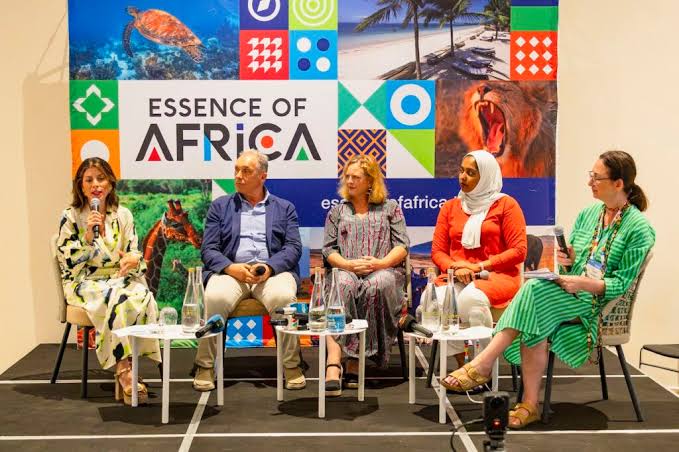
Essence of Africa 2026 in Zanzibar Essence of Africa is a trade forum, which means…
Budget Uganda Safaris: Affordable Wildlife Adventures
Budget Uganda Safaris: Affordable Wildlife Adventures
A budget safari in Uganda does not mean you have to choose between seeing wildlife and being comfortable. It means deciding where your money matters. You might stay in a simple lodge outside Queen Elizabeth National Park rather than a luxury property overlooking the savannah. You might share a 4×4 with other travelers instead of having the vehicle to yourself. You might spend a little longer on the road rather than taking a domestic flight.
But you can still wake before sunrise for a game drive. You can still watch elephants crossing the Kasenyi plains, take a boat safari along the Kazinga Channel, and walk into Kibale Forest tracking chimpanzees. And if gorillas are the reason you came to Uganda, you can build the rest of the trip carefully enough that the permit does not make the entire holiday unaffordable.
That is really what a budget Uganda safari is about. Not doing everything as cheaply as possible, but spending deliberately.
Current 2026 market estimates commonly place budget Uganda safaris around US$150–300 per person per day, although the actual price depends heavily on group size, route, accommodation, season and activities. These figures are useful for planning rather than promises of what a particular operator will charge.
And there is an important distinction. A cheap safari and a good-value safari are not always the same thing.
How Much Does a Budget Uganda Safari Cost?
For a first calculation, you can think in terms of roughly US$150–300 per person per day for a budget safari on the ground in Uganda. That usually means simpler accommodation, shared or cost-efficient transport, meals and the core safari activities included in the itinerary. International flights are normally outside that figure, as are major primate permits.
So, very roughly:
| Safari length | Approximate budget range |
| 3 days | US$450–900 per person |
| 5 days | US$750–1,500 per person |
| 7 days | US$1,050–2,100 per person |
| 10 days | US$1,500–3,000 per person |
These are planning ranges, not fixed package prices.
A five-day private safari for two people can cost more per person than a five-day group safari for four or six people because the vehicle, guide and fuel costs are spread across fewer travelers.
And a five-day trip that includes gorilla trekking will sit in a different price category because the gorilla permit is a substantial additional cost. This is why asking simply, “How much is a Uganda safari?”, rarely produces a useful answer. The better question is: What kind of Uganda safari can I build with my budget?
What Are You Actually Paying For?
A safari quotation can look complicated until you separate it into its main parts. There is accommodation, the safari vehicle and driver-guide, fuel, park entry fees, activities such as boat safari or chimpanzee trekking, meals, and the big-ticket permits if gorillas or chimpanzees are part of the itinerary.
This matters because some costs are flexible and some are not. You can choose a simpler room, share a vehicle, reduce the number of destinations, and travel during a quieter period. But you cannot simply negotiate away a government-set wildlife permit.
Uganda Wildlife Authority (UWA) published tariff structure separates activities such as gorilla tracking and chimpanzee tracking from ordinary park access. The published 2024–2026 tariff, for example, listed gorilla tracking at US$800 for foreign non-residents and Kibale chimpanzee tracking at US$250; UWA’s current rates page now points travelers to a new 2026–2027 tariff, so your operator should confirm the applicable rate for your dates before you pay.
Where You Can Save Without Ruining the Safari
The easiest place to save is usually accommodation. Uganda has everything from simple camps and guesthouses to high-end safari lodges. You do not need an expensive room to have a good game drive. In fact, on many safari days you will leave before breakfast and return in the afternoon or evening.
A clean, comfortable lodge with good food and a sensible location can therefore make more financial sense than spending several hundred extra dollars for facilities you will barely use. This is particularly true when you are travelling between several parks. Saving US$100 a night on accommodation can make a meaningful difference over a ten-day trip. Saving US$10 by choosing an inconvenient lodge can be a false economy if it adds hours of unnecessary driving. Location is part of value.
Kibale: An Affordable Way into Uganda’s Primate Country
Kibale is one of the strongest choices for travelers who want something different from a conventional savannah safari. The road into the forest takes you towards the Fort Portal area, where the landscape becomes greener and more wooded.
At Kanyanchu, chimpanzee tracking takes you into the forest itself. You may hear the chimpanzees before seeing them, follow calls through the canopy. You may spend part of the morning watching movement high above you while your guide and trackers work out where the chimps are heading. That experience does not become less interesting because you slept in a budget lodge.
Under the previous Uganda Wildlife Authority tariff, foreign non-resident chimpanzee tracking at Kibale was US$250, with the ranger guide fee included and the Kibale park entrance fee included. Chimpanzee habituation was listed separately at US$300.
Because the activity itself is a significant expense, it makes sense to save elsewhere. Choose a simple lodge. Stay two nights instead of moving constantly. Combine Kibale with Queen Elizabeth. And, if you have time, consider a community experience around Bigodi rather than filling the itinerary with expensive extras. The forest is the attraction. You do not need a luxury room to appreciate it.
Queen Elizabeth National Park: A Strong Budget Choice
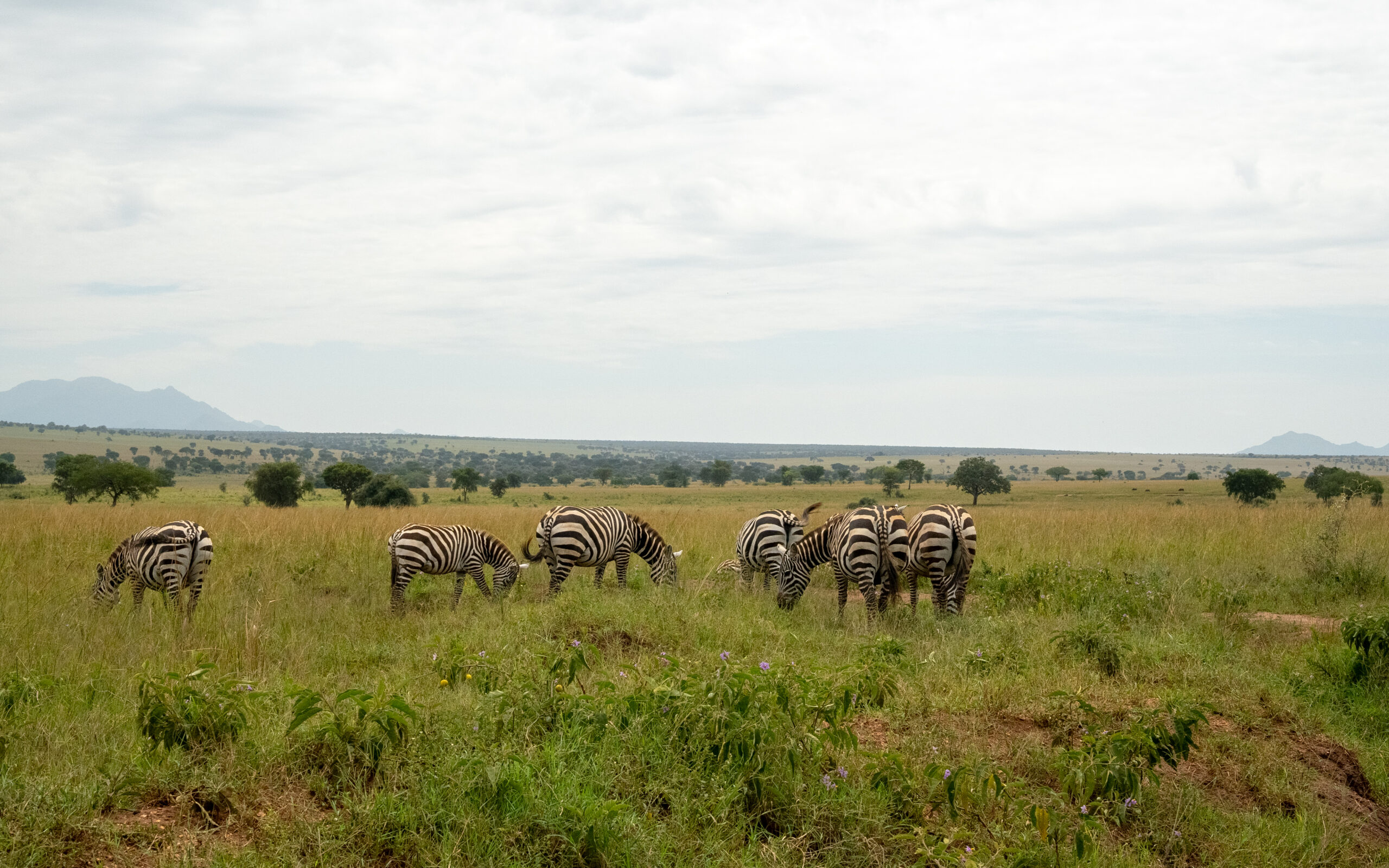
Queen Elizabeth is one of the easiest parks to recommend to someone trying to keep safari costs reasonable. It gives you a classic wildlife experience without requiring you to travel to the far end of the country. The landscape around the Kasenyi plains is open enough for game drives, while the Kazinga Channel provides an entirely different perspective.
A typical day might begin before sunrise. You leave the lodge while the light is still soft. The roads are quiet. The animals are beginning to move. Later, after the heat has built up, you can take a boat safari along the Kazinga Channel.
Hippos are usually the most obvious residents, but crocodiles, elephants and numerous bird species make the riverbanks worth watching. You can have all of that while staying in straightforward accommodation. That is why Queen Elizabeth works well for budget travelers. You are not paying for the park experience itself to become luxurious. You are paying to get into the park and experience it properly.
Murchison Falls: Spend on the Experience, Not the Room
Murchison Falls can also work well for a budget safari. The park is larger and requires more time to reach from Kampala or Entebbe, but once you are there, the combination of savannah and the Nile river gives you plenty to do.
A budget itinerary might include an early morning game drive, an afternoon boat cruise towards the falls and another game drive the following morning. The Nile is particularly valuable because the boat trip is not simply a sightseeing excursion.
You are travelling through a wildlife-rich stretch of river. Hippos sit in the water. Crocodiles wait along the banks. Elephants sometimes come down to drink. The falls themselves are the dramatic finish. Again, the accommodation does not have to be luxurious.
If your room is simple but your guide knows the park and your vehicle is reliable, the important part of the safari is still there.
Lake Mburo: The Short-Safari Option
If you only have a few days in Uganda, Lake Mburo deserves attention. It is particularly useful because of its position between the Kampala/Entebbe area and southwestern Uganda. That makes it possible to build a short wildlife experience without spending several days driving deep into the country.
Lake Mburo also offers activities that can change the rhythm of a safari. Depending on the current arrangements, visitors can experience guided walks and cycling in addition to conventional game drives.
For a budget traveler, that matters. You do not necessarily have to pay for another full day of vehicle-based safari. You can spend part of the trip walking, looking at smaller wildlife, birds and landscapes at a slower pace.
For a three- or four-day Uganda trip, Lake Mburo can therefore be much more practical than trying to reach several distant parks.
What about Bwindi and Gorilla Trekking?
This is where the phrase “budget safari” needs a little explanation. You can have a budget-style gorilla safari. But gorilla trekking itself is not a low-cost activity. The permit is a fixed conservation-related expense, and accommodation, transport and meals are additional.
Uganda Wildlife Authority published 2024–2026 tariff listed the foreign non-resident gorilla permit at US$800 and stated that the rate included the guide fee, that day’s park entrance and a community development contribution. The tariff has since moved into a new 2026–2027 period, so travelers should confirm the current price before booking.
This changes how you should approach the budget. Don’t try to make the gorilla experience itself cheap. Make everything around it efficient. Stay in a good-value lodge. Choose accommodation close to your trekking sector. Use road transport where practical. Avoid unnecessary domestic flights. Do not add five other destinations simply because they are available. If the gorilla trek is the main reason for your trip, let it shape the itinerary.
Buhoma, Ruhija, Rushaga or Nkuringo? Location Matters
Bwindi is not one small tourist centre. It is a large forest with different trekking sectors. That means your accommodation choice should be connected to where your trek has been allocated. For example, a traveler trekking from Buhoma should ideally stay around Buhoma rather than choosing a cheaper property that requires a long morning transfer.
The same principle applies to Ruhija, Rushaga and Nkuringo. This is one of the simplest examples of smart budget planning. Suppose one lodge costs US$30 more per night but saves you several hours of transfers over the course of your stay.
The more expensive room may actually be the cheaper decision. A budget safari is about the total cost of the experience, not just the room rate.
Sharing a Vehicle Can Change the Price Completely
This is one of the savings available to travelers who are comfortable with some flexibility. The safari vehicle is a major fixed cost. So is the driver-guide. Fuel is another. When two people use a vehicle, they carry those costs between two people. When four people share the same vehicle, the cost per person can fall substantially. This is why a small group can sometimes have a surprisingly affordable private safari.
For solo travelers, it is even more important to ask about group departures or shared vehicles. A solo private safari can become expensive simply because there is nobody else with whom to divide the fixed costs. The trade-off is obvious. You have less control. You may have to wait for other travelers.
You cannot necessarily decide that everyone should leave the lodge at 5:30 a.m. because you want to photograph sunrise. But if keeping the budget down is more important than having complete privacy, sharing can make sense.
Don’t Save Money on the Guide
Your driver-guide can make an enormous difference to the safari. A good guide knows the park. They understand animal behavior, when it is worth waiting. They can explain what you are seeing rather than simply pointing at it. And they know the practical realities of Uganda’s roads.
A cheap safari with an excellent guide can be a far better experience than an expensive safari with poor guidance. The same applies to the vehicle. Uganda’s park tracks can be rough. You want a vehicle that is properly maintained and appropriate for safari conditions.
The savings should come from sharing costs and reducing unnecessary luxury, not from compromising on basic reliability.
Road Trips or Domestic Flights?
Flying sounds like an expensive option. But sometimes it is the better-value option. Uganda is not a tiny country. A journey that looks manageable on a map can take most of a day by road. If you have fourteen days, that may be perfectly acceptable. If you have six days, it is a different calculation.
Suppose you are determined to visit Kidepo as well as the southwestern gorilla region. Driving between them can consume a substantial amount of your holiday. A domestic flight costs more, but it gives you back time. For a strict budget traveler, road travel will usually remain the logical choice.
For someone with a little more flexibility in the budget but very limited holiday time, a flight may actually be the smarter purchase. The cheapest itinerary is not always the best-value itinerary.
Budget Safari Accommodation: What Should You Expect?
Budget accommodation in Uganda varies considerably. Some properties are simple guesthouses. Others are camps with basic but comfortable safari rooms. Some have private bathrooms. Others may have more limited facilities.
The important questions are not simply: “How cheap is it?” Ask: Where is it? Is it inside or outside the park? Is breakfast included? Are dinner and lunch available? How far is it from tomorrow’s activity? Does it have reliable electricity? Can you get a hot shower? Is there a safe place to leave your luggage? Those details become much more important after you have spent five hours on the road.
Current 2026 market guides broadly place budget accommodation around US$80–100, although actual rates vary by property, room type, season and meal arrangement. For planning purposes, treat that as a guide rather than a promised rate.
When Is the Cheapest Time to Go?
Uganda can be visited throughout the year, but the seasons can affect both conditions and pricing. The drier months are generally popular because roads and trails are easier and wildlife viewing can be more straightforward. The wetter periods can bring more rain and muddier conditions, but they may also offer lower demand and greener landscapes.
For a budget traveler, that can create an opportunity. You might find better accommodation rates. You may have more flexibility. And some travelers genuinely prefer the quieter atmosphere. But don’t choose a month simply because someone calls it “cheap.” If gorilla trekking is your priority, ask about the current permit rules. If photography is your priority, think about light and weather. If you are planning a long road safari, consider road conditions. Cheap is useful only when the conditions still suit the trip you want.
A Realistic 4-Day Budget Uganda Safari
If you have very little time, don’t attempt the entire country.
One possible approach is:
Day 1 — Entebbe to Lake Mburo
Travel southwest and spend the afternoon exploring the park.
Day 2 — Lake Mburo to Bwindi
Continue towards Bwindi, with a picturesque stopover.
Day 3 — Gorilla trekking
Early morning Gorilla trekking and optional afternoon batwa cultural experience.
Day 4 — Return towards Entebbe or Kigali
It is a compact safari. You will not see everything Uganda has to offer. But that is the point. A short safari should be geographically sensible.
A 7-Day Budget Wildlife Safari
Within a week, you have more options.
One sensible route could be:
Entebbe → Kibale → Queen Elizabeth → Bwindi
Travel south towards Kibale Forest, Queen Elizabeth and Bwindi
Another option is:
Entebbe → Kibale → Queen Elizabeth → Bwindi
That gives you chimpanzees and classic wildlife safari and gorilla trekking within a relatively coherent western route.
Choose fewer destinations and experience them properly.
A 10-Day Budget Gorilla and Wildlife Safari
With ten days, you can build something considerably richer.
For example:
Day 1: Entebbe
Day 2: Travel to Kibale
Day 3: Chimpanzee trekking
Day 4: Kibale to Queen Elizabeth
Day 5: Game drive and Kazinga Channel
Day 6: Queen Elizabeth to Bwindi
Day 7: Gorilla trekking
Day 8: Bwindi/community experience
Day 9: Travel towards Lake Mburo
Day 10: Lake Mburo and return towards Entebbe
This is still an active itinerary. There are several long road journeys. But it gives the traveler three very different experiences: rainforest primates, savannah wildlife and mountain gorillas. If the budget is particularly tight, simplify it further rather than trying to add Murchison Falls or Kidepo.
What Should a Budget Traveler Pack?
You do not need expensive safari equipment. For most Uganda itineraries, the basics are more important.
Bring:
- Lightweight, breathable clothing
- A warm layer for early mornings
- Comfortable walking shoes
- Waterproof footwear for forest trekking
- Lightweight rain jacket
- Hat
- Sunscreen
- Insect repellent
- Reusable water bottle
- Small daypack
- Binoculars if you have them
- Headlamp or small torch
- Power bank
For gorilla or chimpanzee trekking, clothing that can handle mud and wet vegetation is more useful than expensive outdoor fashion. You are going into a forest. It may get dirty and that’s normal.
How to Save Money without Missing Uganda
There are a few simple principles that work repeatedly. Travel as a small group. Sharing a vehicle can reduce the per-person cost significantly.
Choose simple accommodation in the right place. Don’t pay for luxury you will barely use, but don’t choose somewhere so inconvenient that you spend the savings on transfers.
Keep the route tight. Every extra destination has a transport cost. Use road travel when time allows. Save domestic flights for journeys where they genuinely improve the itinerary.
Choose activities carefully. If you love chimpanzees, spend it on Kibale. If gorillas are your priority, budget for the permit. If wildlife is the priority, don’t spend your entire budget on accommodation.
Travel flexibly where possible.
Shoulder and lower-demand periods may offer more accommodation choice and potentially better rates, although conditions and permit policies should be checked for your dates.
Don’t Forget Tips and Personal Expenses
A safari quotation is not necessarily the amount you will spend from the moment you arrive until you fly home. Allow something for tips, drinks, souvenirs, laundry, personal purchases and optional activities.
Tips are discretionary, but it is sensible to have some local currency available. You may also want to hire a porter during gorilla trekking. That is not simply about carrying your bag.
For some travelers, having another person nearby on difficult terrain is useful, and the income provides a direct benefit to someone working in the community around the forest. Ask your operator about current etiquette and recommended amounts rather than assuming there is one universal figure.
How Conservation Fits Into the Cost of Your Safari
This is one part of the budget that deserves more attention. Wildlife tourism does not happen for free. National parks need rangers. Trails need maintenance. Wildlife needs monitoring. Communities around protected areas need to see some benefit from conservation.
UWA’s gorilla permit structure has explicitly included a community development contribution, and the authority has reported substantial revenue-sharing distributions to communities around Bwindi and Mgahinga. In June 2025, UWA announced more than UGX 2.19 billion in revenue-sharing funds for communities around the two gorilla parks.
So when you look at a safari quotation, some of the money is paying for access to a protected landscape that requires constant management. A budget safari should not mean trying to avoid those costs. It means keeping your flexible spending under control.
Budget vs Mid-Range vs Luxury: What Actually Changes?
The difference is not simply the number of stars.
| Budget | Mid-range | Luxury | |
| Accommodation | Simple lodge/camp | Comfortable lodge | Premium lodge/camp |
| Vehicle | Often shared | Usually private | Private |
| Guiding | Professional guide | More flexibility | Highly personalized |
| Meals | Full board/simple | Wider choice | Premium dining |
| Transfers | Mostly road | Road + selected flights | More flights/private transfers |
| Privacy | Lower | Moderate/high | High |
| Typical planning range | ~$150–300/day | ~$400–600+/day | ~$800–1,500+/day |
These are broad 2026 planning ranges, not fixed industry tariffs. And the middle category is worth considering.
If your budget allows it, moving from the cheapest option to a comfortable mid-range safari can sometimes produce a much larger improvement in comfort than moving from mid-range to luxury.
That is particularly true for couples and small private groups.
For Solo Travelers, Budgeting Works Differently
A solo traveler needs to understand one thing about safari pricing: You are paying for fixed costs almost by yourself. The vehicle still needs fuel. The guide still needs to be paid. The vehicle still has to travel the same distance.
So a US$200-per-day budget advertised for a group does not necessarily mean a solo traveler can book the same itinerary for US$200.Ask about scheduled group departures. If you are flexible about dates, joining other travelers can make a major difference.
For someone travelling alone, this may be the single most effective way to make a Uganda safari affordable.
What I Would Not Do on a Tight Budget
I would not attempt to visit every major park, choose accommodation purely because it has the lowest price, use an unreliable vehicle, and skip the main activity that brought me to Uganda.
And I would not spend six hours driving somewhere simply because it saves US$50 if I only have four days in the country. A budget safari should be efficient, not exhausting.
Is Uganda a Good Destination for a Budget Safari?
Yes, particularly if you are prepared to make choices. Uganda gives you something unusual. You can combine traditional wildlife viewing with chimpanzee trekking, gorilla trekking, forest walks, boat safaris and community experiences in the same country. You do not need to experience all of them. You only need to choose the ones that matter to you.
If you have three days, keep the route short. If you have a week, choose one region. If you have ten days, you can combine primates and wildlife. If gorillas are essential, accept that the permit will form a large part of your budget and save around it rather than trying to make the permit disappear. And if you are travelling with friends, use the group to your advantage.
Four people sharing one safari vehicle can have a very different per-person cost from one person travelling alone.
Planning an Affordable Uganda Safari with Salt Holidays
A good budget safari starts before anyone gets into the vehicle. It starts with looking at your dates, deciding what you most want to see, understanding how many days you actually have and then building the route around those priorities. That is where local planning becomes useful.
Salt Holidays can help work out whether Kibale, Queen Elizabeth, Bwindi, Murchison Falls or Lake Mburo make sense for your particular budget and timeframe, rather than simply adding every famous destination to an itinerary.
The goal is not to make a budget safari look luxurious. It is to make it work. A clean room in the right location. A dependable 4×4. A driver-guide who knows the terrain. The correct permits. A sensible number of park days. And enough time to stop when the wildlife gives you a reason to stop.
That is the difference between a cheap itinerary and a well-planned affordable safari. You may not have the biggest tent in the park. You may share the vehicle with other travelers. Your dinner may be simple.
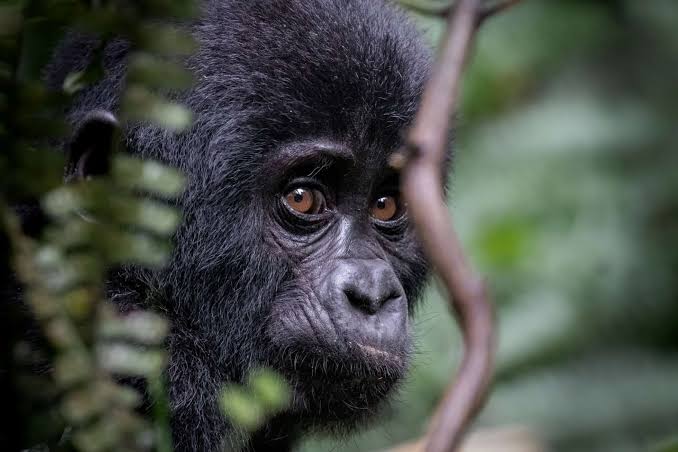
But when the sun comes up over Queen Elizabeth and an elephant walks across the track, none of that matters very much. The same forest still waits in Kibale. The same Nile still runs through Murchison Falls. The same chimpanzees still call from the canopy. And the same mountain gorillas live in the Bwindi forest.
A budget Uganda safari is not about seeing less. It is about choosing carefully what you spend money on, and making sure the money you do spend gets you closer to the experience you actually came for.
Related Posts