Fishing Trips in Uganda This guide covers where to fish in Uganda, what species you…
Lion Tracking vs Gorilla Trekking
Lion Tracking vs Gorilla Trekking: Which One Belongs on Your Safari?
Guests planning a Uganda safari almost always ask the same question once they see both activities on a sample itinerary: should we do the lion tracking experience, the gorilla trekking, or both? It is a fair question, because the two activities have almost nothing in common beyond both taking place in the same country. One puts you in an open vehicle alongside a wildlife researcher following a radio signal across open savannah.
The other has you hiking through dense rainforest, sometimes for hours, to spend sixty quiet minutes a few meters from a wild mountain gorilla family. They cost different amounts, demand different fitness levels, and satisfy different kinds of curiosity.
We get asked to explain the difference often enough that it makes sense to put the full comparison in one place, including where each experience happens, what it actually costs, how physically demanding it is, and which one, or both, makes sense for your particular trip.
Should You Do One, the Other, or Both?
Short answer: if your Uganda itinerary already includes Queen Elizabeth National Park and Bwindi Impenetrable Forest, do both, because they sit on the same general travel route and complement each other well.
Lion tracking and gorilla trekking are not competing for the same travel budget or the same days in most well-built Uganda itineraries, because Queen Elizabeth National Park and Bwindi Impenetrable Forest are roughly four to five hours apart by road, and many travelers already pass through both regions on a 7 to 10 day safari loop.
The real decision point is usually time rather than preference: if you only have five or six days in Uganda, you may need to choose one experience over the other rather than compress both in without enough buffer for road transfers.
If you are choosing between the two because of budget rather than time, gorilla trekking should generally take priority for first-time Uganda visitors, simply because Uganda is one of only three countries on earth where wild mountain gorilla trekking is possible at all, while lion sightings, though excellent in Uganda, are also available in many other African safari destinations.
Why These Two Experiences Get Compared So Often
Both activities share a promotional halo as Uganda’s “signature” wildlife experiences, and both involve tracking a specific, identified animal group rather than a general game drive, which is part of why people naturally put them side by side. But the similarities largely end there.
Gorilla trekking is a conservation success story built around habituated family groups that rangers monitor daily, while lion tracking in Queen Elizabeth National Park is a genuine, ongoing research activity, where guests join Uganda Wildlife Authority researchers using radio telemetry collars to locate lions across the Kasenyi Plains for behavioural monitoring, not a staged encounter.
Where Each Experience Happens
| Experience | Location | Country |
| Lion Tracking | Kasenyi Plains, Queen Elizabeth National Park | Uganda |
| Lion Tracking (tree-climbing lions) | Ishasha sector, Queen Elizabeth National Park | Uganda |
| Gorilla Trekking | Bwindi Impenetrable Forest, Mgahinga Gorilla National Park | Uganda |
| Gorilla Trekking | Volcanoes National Park | Rwanda |
| Gorilla Trekking | Virunga National Park | DR Congo |
Uganda is unusual in offering both experiences within a realistic single itinerary. If you are building a Rwanda-based trip instead, note that Rwanda’s Akagera National Park has lion (reintroduced in 2015) but does not offer the same collared-lion research tracking experience that Uganda does, so the direct comparison in this article applies most cleanly to a Uganda safari.
When to Do Each Activity
Gorilla trekking runs year-round because permits are issued daily regardless of season, though the two dry seasons, December to February and June to September, bring firmer forest trails and are generally easier underfoot. The wet seasons are not a reason to avoid trekking; permits are easier to secure and rates sometimes drop, but expect muddier, more physically demanding trails.
Lion tracking in Queen Elizabeth National Park is also a year-round activity, but dry season months give clearer visibility across the open Kasenyi Plains and easier vehicle access, while the wet season can make some tracks temporarily impassable. Early morning sessions, typically starting around 6am, give the best chance of finding lions still active before the heat of the day pushes them into shade.
Comparing the Two Experiences Directly
| Factor | Lion Tracking | Gorilla Trekking |
| Physical demand | Low, mostly seated in a vehicle | Moderate to high, forest hiking from 1 to 8 hours |
| Group size | Small groups, shared vehicle | Maximum 8 people per gorilla group |
| Duration | 2 to 3 hour morning or evening session | Half to full day, includes trek plus 1 hour with gorillas |
| Permit cost (approx) | $50 to $60 per person | $800 in Uganda, $1,500 in Rwanda, $400 in DR Congo |
| Booking lead time | Can often be booked days in advance | Should be booked months in advance, especially July to September and December to January |
| Weather sensitivity | Moderate | High, rain significantly affects trail difficulty |
| Conservation angle | Direct funding of ongoing lion research | Funds ranger patrols and community conservation programmes |
What Each Experience Actually Costs
Lion tracking is genuinely affordable relative to most other wildlife experiences in East Africa, priced per person and bookable as an add-on to a standard Queen Elizabeth National Park game drive package. Gorilla trekking is a different category of expense entirely, and the permit price alone, before accommodation, transport, or park entry fees, is often the single largest line item in a Uganda or Rwanda itinerary.
The gap in price is not arbitrary. Gorilla permit revenue funds ranger salaries, anti-poaching patrols, veterinary monitoring of habituated groups, and community revenue-sharing programmes for villages bordering the parks, all of which are central to why mountain gorilla numbers have grown rather than declined over the past three decades, one of very few positive population trends among the world’s great apes.
Where You Will Stay
Accommodation near Kasenyi Plains ranges from budget guesthouses in Kasese town to mid-range lodges inside Queen Elizabeth National Park with direct crater lake or savannah views. Around Bwindi, the choice is more binary: basic guesthouses close to the park gates for budget travellers, or a strong cluster of mid-range and luxury lodges positioned on ridgelines with forest views, many built specifically to serve gorilla trekking guests and priced accordingly.
- Queen Elizabeth National Park: mid-range lodges near Mweya Peninsula or Kasenyi put you closest to both lion tracking and the Kazinga Channel boat cruise.
- Bwindi (Buhoma sector): the most established sector with the widest lodge choice, good for first-time trekkers.
- Bwindi (Ruhija or Rushaga sectors): quieter, better suited to travellers who want fewer other visitors and are comfortable with a longer drive in.
How Physically Demanding Is Each One
This is where the two experiences diverge most sharply, and it is worth being direct about it rather than glossing over the difficulty of gorilla trekking, which is genuinely unpredictable. Trek duration to reach a gorilla family can range from a comfortable one-hour walk to an eight-hour trek through steep, sometimes muddy terrain at altitude, and rangers cannot guarantee which outcome you will get on a given day because it depends entirely on where the gorilla family has moved overnight.
Lion tracking asks far less of your body. You will be seated in an open safari vehicle for most of the session, occasionally standing to use the telemetry equipment or get a clearer view, which makes it accessible to travellers of nearly any fitness level, including those who might reasonably be advised against a full gorilla trek.
Practical implication: if you have concerns about fitness, mobility, or altitude tolerance, lion tracking removes that risk entirely, while gorilla trekking requires an honest conversation with your operator about porter hire and realistic fitness expectations.
Planning Advice
- Book gorilla permits first, then build the itinerary around the date. Permits are limited daily per gorilla family and sell out months ahead in peak season.
- Hire a porter for the gorilla trek regardless of fitness level. Porters are local community members, the fee is modest, and they materially reduce the physical strain of the trek while directly supporting the community around the park.
- Pair lion tracking with an early morning slot. Lions are most active and easiest to locate before mid-morning heat sets in.
- Budget a buffer day between the two parks. The road transfer between Queen Elizabeth National Park and Bwindi takes four to five hours, and arriving tired the night before a gorilla trek is not ideal preparation.
- Bring the right gear for each activity. Gorilla trekking demands waterproof boots, gaiters, and gardening gloves for grabbing vegetation; lion tracking needs little beyond a hat, sunscreen, and a good zoom lens.
Which One Fits Your Trip
| Traveller Type | Recommendation | Reasoning |
| First-time Uganda visitor with 7+ days | Both | The route naturally connects both parks without excessive backtracking |
| Travellers with limited mobility or fitness concerns | Lion tracking | Requires little physical exertion and remains rewarding |
| Budget-conscious travellers | Lion tracking | A fraction of the cost of a gorilla permit |
| Bucket-list primate travellers | Gorilla trekking | An experience unavailable outside three countries in the world |
| Photographers | Both, gorilla trekking especially | Close-range primate portraits are difficult to replicate elsewhere |
What the Experience Actually Feels Like
Numbers and comparison tables only tell part of the story, so it is worth describing what each morning actually involves, because that is usually what tips a traveller’s decision one way or the other.
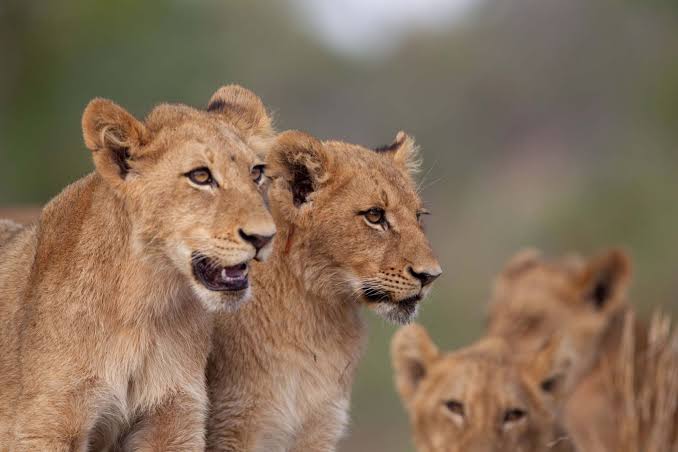
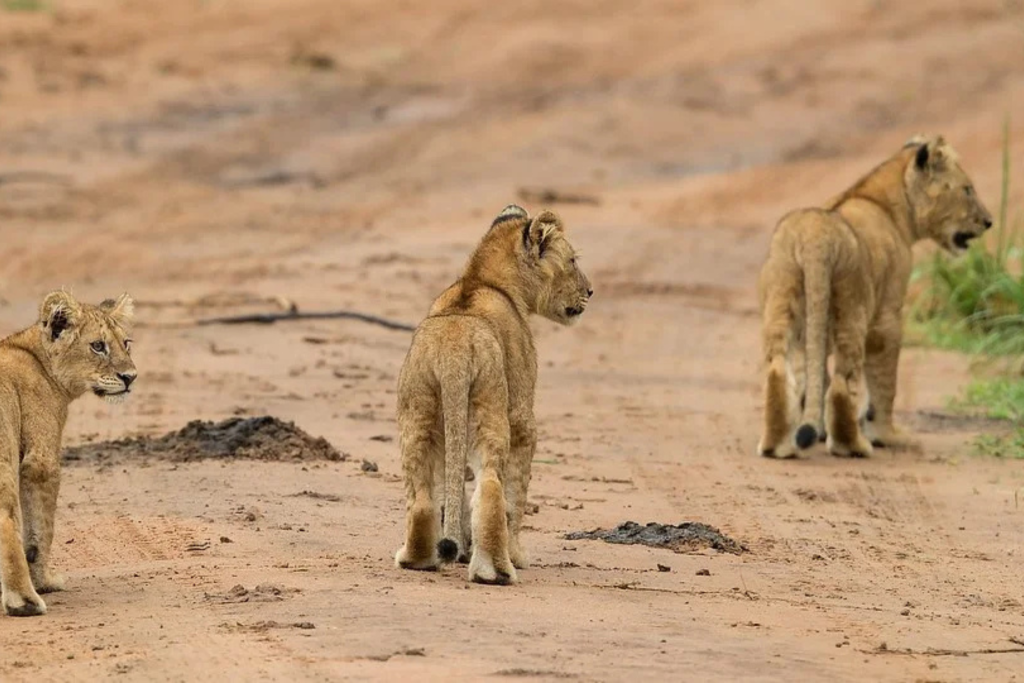
A lion tracking session starts before sunrise, when you meet the Uganda Wildlife Authority research team at a briefing point inside Queen Elizabeth National Park. You climb into an open-sided vehicle alongside a researcher carrying a handheld telemetry receiver, and the first thirty minutes are often spent driving in a slow, deliberate grid across the Kasenyi Plains while the receiver beeps faintly, growing louder as you close in on a collared lion’s location.
There is a quiet, detective-like tension to it that a standard game drive does not have, because you genuinely do not know where the search will end. When you do find the pride, often resting in long grass or shade under an acacia, the researcher will talk through what the team currently knows about that individual, its territory, and its recent behaviour, turning the sighting into something closer to a briefing than a photo stop.
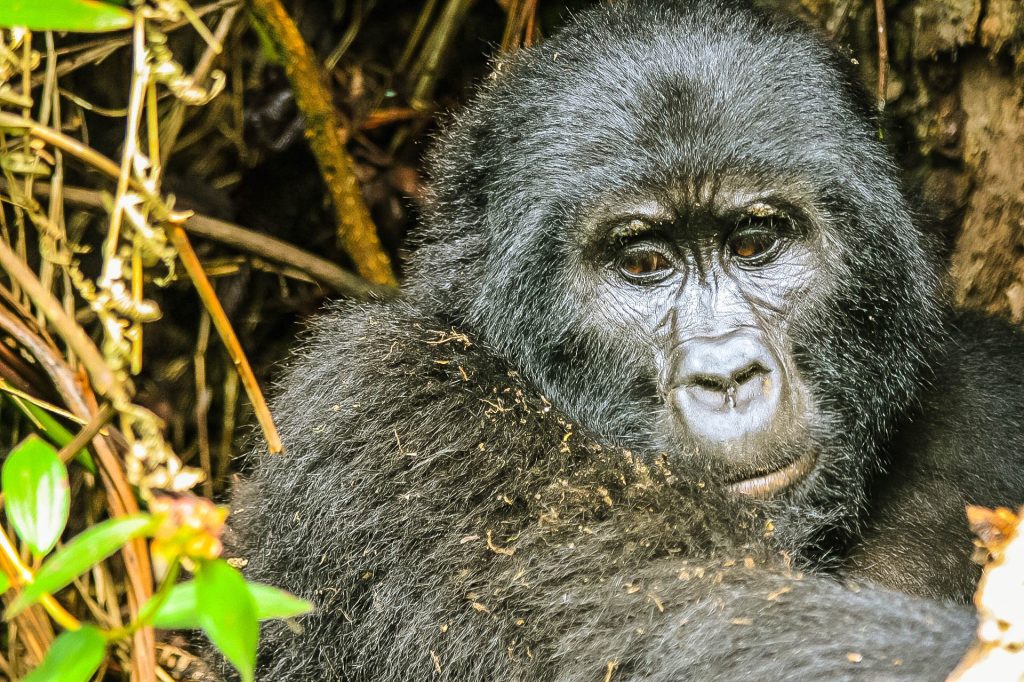
Gorilla trekking has a completely different rhythm. You gather at a park headquarters early in the morning for a briefing on the specific family group you have been assigned, then set off into the forest behind an armed ranger, a guide, and trackers who left before dawn to locate the group and radio back their position.
The hike itself is where most of the physical and mental experience happens: dense vegetation, uneven ground, the occasional stream crossing, and long stretches where conversation naturally stops because you are watching your footing.
The shift when you finally reach the family is abrupt. Rangers signal you to lower your voice, leave your walking stick behind, and approach slowly, and the hour that follows, watching a silverback move through his own territory a few metres away, indifferent to your presence, is the part almost every guest describes as worth every difficult step it took to get there.
Frequently Asked Questions
Can I do lion tracking and gorilla trekking on the same day?
No, the two locations are too far apart for the same day. Plan them on separate days within the same broader Uganda itinerary.
Is lion tracking guaranteed to find lions?
No wildlife sighting is ever fully guaranteed, but success rates in Queen Elizabeth National Park are high because researchers are actively following a radio signal from a collared individual, which is more reliable than a standard game drive search.
Do I need to be very fit for gorilla trekking?
You need reasonable fitness for uneven terrain, but age and moderate fitness levels are not disqualifying. Porters, walking poles, and a realistic pace set by your ranger team make the trek manageable for most healthy adults.
How far in advance should I book a gorilla permit?
Three to six months ahead for peak season travel (June to September, December to January) is a safe window. Shoulder season permits can sometimes be secured with only a few weeks’ notice.
Is the lion population in Uganda healthy?
Uganda’s lion population, particularly in Queen Elizabeth National Park, has faced real pressure from poisoning incidents linked to human-wildlife conflict in past years, which is part of why the ongoing research and tracking programme matters, both for conservation monitoring and for funding continued anti-poaching and community mitigation work.
Can children take part in either activity?
Lion tracking has no strict minimum age, though very young children may find the early start and long drives tiring. Gorilla trekking has a firm minimum age of 15, set by park authorities in Uganda, Rwanda, and DR Congo, largely due to the physical demands of the trek and disease-transmission concerns around young children and habituated gorilla groups.
What happens if it rains on the day of my trek or tracking session?
Both activities proceed in light rain. Gorilla trekking becomes noticeably harder underfoot in heavy rain, and your guide may adjust the route accordingly, but treks are rarely cancelled outright. Lion tracking vehicles may need to avoid certain flooded tracks, which can extend the search time slightly.
Making the Decision
Neither experience is objectively better than the other; they answer different questions about what you want from a safari. Lion tracking gives you an accessible, research-backed encounter with one of Africa’s most recognisable predators at a fraction of the cost and physical demand of gorilla trekking.
Gorilla trekking asks more of your body and your budget, and in return offers one of the rarest wildlife encounters left on the planet.
If your itinerary allows for both, we generally recommend building the trip that way rather than choosing. If time or budget forces a choice, tell us what matters most, whether that is cost, physical ease, or ticking off a genuine bucket-list moment, and we will build the itinerary around that priority.
Related Posts