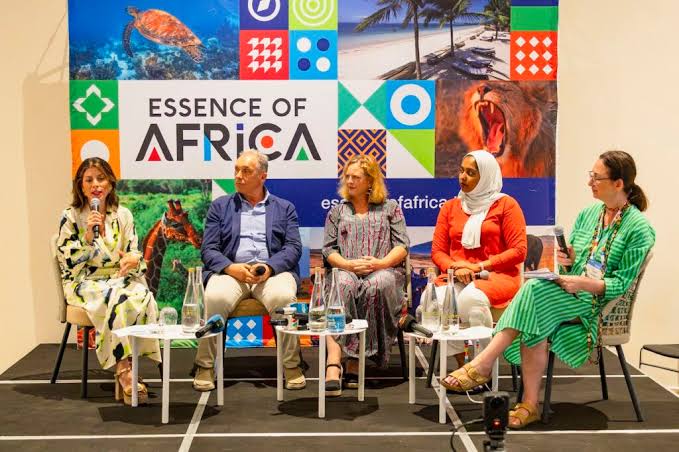
Essence of Africa 2026 in Zanzibar Essence of Africa is a trade forum, which means…
Uganda vs Rwanda Gorilla Trekking: Which Is Better?
Uganda vs Rwanda Gorilla Trekking: Which Is Better?
Every year, thousands of travelers planning an East African safari arrive at the same question: should you trek mountain gorillas in Uganda or Rwanda?
On paper, the two experiences look remarkably similar. Both countries protect endangered mountain gorillas, both limit the number of daily visitors to each habituated family, and both require visitors to spend only one carefully managed hour with the gorillas. Rangers, trackers and conservation teams follow almost identical protocols across the border because the animals themselves belong to the same fragile ecosystem.
Yet the journeys feel surprisingly different.
In Uganda, Bwindi gorilla trekking usually forms part of a longer safari through forests, savannahs and crater lakes. A typical itinerary may begin with chimpanzee tracking in Kibale National Park, continue through Queen Elizabeth National Park for game drives and boat safaris on the Kazinga Channel, before ending in Bwindi Impenetrable National Park. The gorilla trek becomes the highlight of a wider exploration of Uganda’s diverse landscapes.
Rwanda gorilla trekking offers a different rhythm. Many visitors fly into Kigali in the evening, spend the night in the city, and drive to Volcanoes National Park the following morning. Within three hours of leaving Kigali International Airport, they are standing at Kinigi Park Headquarters waiting for the ranger briefing. For travelers with limited time or those seeking a shorter luxury escape, the convenience is difficult to ignore.
Neither destination is objectively better. The better question is which country matches the kind of safari you want to experience.
The Mountain Gorillas Are the Same Species, but the Setting Is Different
One common misconception is that Uganda has “better gorillas” than Rwanda or vice versa. It is not true.
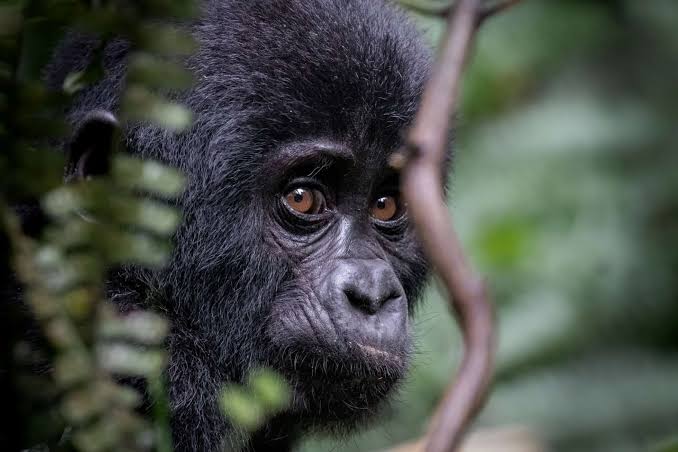
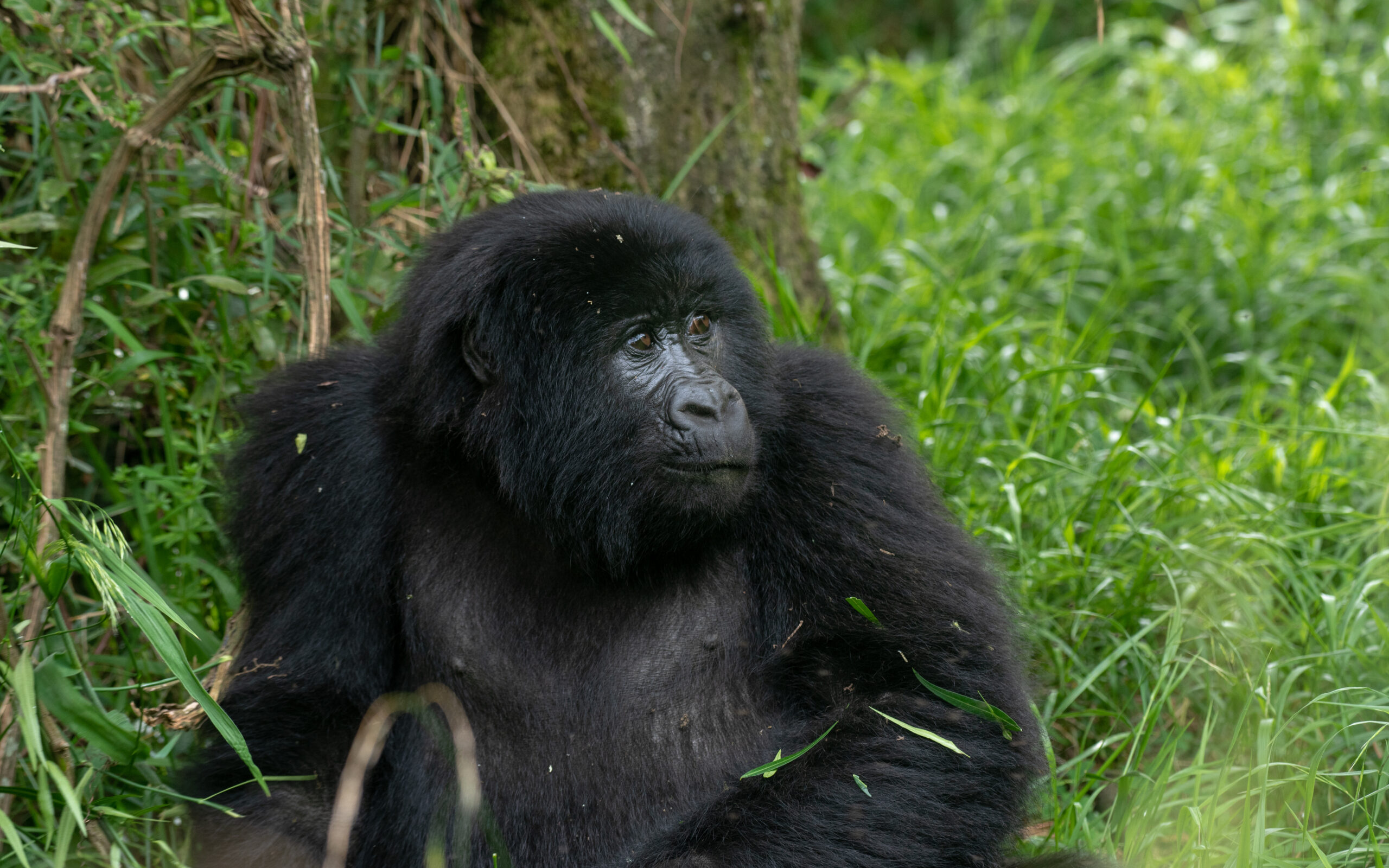
The mountain gorillas found in Uganda’s Bwindi Impenetrable National Park and Rwanda’s Volcanoes National Park belong to the same endangered species (Gorilla beringei beringei). Their behavior, family structure and daily routines are fundamentally the same. Whether you are watching a silverback feed on wild celery in Bwindi or observing a mother grooming her infant on the slopes of Mount Bisoke, the privilege of spending an hour with wild mountain gorillas remains equally extraordinary.
The difference lies in the landscape.
Bwindi is an ancient rainforest, estimated to be more than 25,000 years old, making it one of Africa’s oldest surviving forests. Walking here often means navigating thick undergrowth, giant tree ferns, moss-covered vines and steep valleys that seem to disappear into mist. The forest feels dense, humid and unpredictable. It is easy to understand why early explorers described it as “impenetrable.”
Volcanoes National Park has a very different character. The park lies across the Virunga volcanic chain, where extinct volcanoes dominate the skyline. Bamboo forests, open glades and giant lobelias replace some of the dense vegetation found in Bwindi. The scenery is dramatic in another way, with volcanic peaks rising above neatly cultivated farmland surrounding the park.
Both environments are beautiful. They simply tell different stories.
Getting There: The Journey Begins Before You Reach the Forest
One of the biggest practical differences between Uganda and Rwanda has nothing to do with gorillas. It begins with the journey from the airport to the national park.
For many European travelers, Rwanda is the more straightforward option. RwandAir operates direct flights from London Heathrow, Paris Charles de Gaulle and Brussels, while several other airlines connect Kigali with Amsterdam, Frankfurt and Istanbul. Kigali International Airport is modern, efficient and rarely overwhelming. Immigration is usually quick, luggage collection is smooth, and within a short time you are leaving the city behind.
From Kigali, the drive to Volcanoes National Park takes about two and a half hours. The road is fully paved and climbs steadily through Rwanda’s famously ordered countryside, passing tea plantations, eucalyptus groves and villages where bicycles loaded with milk cans share the road with coffee trucks. For travelers with limited time, this accessibility is one of Rwanda’s strongest advantages.
Uganda requires a little more patience, but the journey offers a broader introduction to the country.
Most international visitors arrive at Entebbe International Airport, located on the northern shores of Lake Victoria. From there, travelers heading to Bwindi generally have two options.
The first is to drive southwest, usually over one or two days depending on the itinerary. The route passes through the rolling hills of Kigezi, the Ankole cattle corridor, roadside fruit markets and the tea-growing districts before reaching the forests of Bwindi. It is a long journey of approximately ten hours, but one that gradually reveals Uganda’s beautiful changing landscapes.
The second option is to take a scheduled domestic flight with Aerolink Uganda from Entebbe to either Kihihi Airstrip, which serves Buhoma and Ruhija, or Kisoro Airstrip, the closest option for the southern sector of Bwindi – Rushaga, Nkuringo and Mgahinga Gorilla National Park. From either airstrip, a road transfer of about one hour thirty minutes completes the journey.
Interestingly, many travelers combine the two countries.
It has become increasingly common to fly into Kigali because of its international connections and then drive across the Katuna-Gatuna or Chanika border into southwestern Uganda. Depending on your gorilla trekking sector, the drive from Kigali to Rushaga or Nkuringo is shorter than travelling overland from Entebbe. Travelers with limited time often choose this route
Permit Prices: Looking Beyond the Numbers
Permit prices often dominate comparisons between Uganda and Rwanda. Even though they matter, they should not be the only factor guiding your decision.
As of 2026, a standard gorilla trekking permit costs:
- Uganda: US$800 per international visitor.
- Rwanda: US$1,500 per international visitor.
On paper, Uganda appears to offer a saving of US$700 per person. For a couple, that becomes US$1,400. For a family or a small group, the difference is substantial enough to reshape an entire itinerary. In practical terms, that saving could cover several additional safari experiences.
It might allow you to spend two nights in Queen Elizabeth National Park, add chimpanzee tracking in Kibale National Park, or include a boat safari beneath Murchison Falls. For photographers, it may mean an extra game drive. For birdwatchers, it could fund specialist guiding in Mabamba Swamp or Semuliki National Park.
On the other side, Rwanda has deliberately positioned itself as a premium, luxury tourism destination. The higher permit fee reflects a broader tourism strategy that prioritises smaller visitor numbers and high-value experiences. Revenue supports conservation, ranger training, habitat protection and community development around Volcanoes National Park.
Uganda follows a similar conservation philosophy but offers a lower permit price as part of a strategy to make gorilla tourism accessible to a wider range of international travelers while still maintaining strict limits on daily visitor numbers.
Both approaches have contributed to one of conservation’s rare success stories.
Mountain gorilla numbers have increased over the past few decades, thanks to coordinated conservation efforts involving Uganda, Rwanda and the Democratic Republic of Congo. Tourism revenue has been central to that progress, funding anti-poaching patrols, veterinary interventions, and research and community partnerships.
The permit is not simply an entrance ticket, but an investment in the long-term survival of one of the world’s most endangered great apes.
Which Trek Is More Difficult?
This is perhaps the comparison travelers ask guides most often. The honest answer is that no one can guarantee an easy trek in either country.
Mountain gorillas are wild animals. They respond to nature, they move in search of food, build new nests every evening and decide their own routes through the forest. Trackers locate each habituated family before visitors enter the park, but the walking distance changes from one day to the next.
That said, there are noticeable differences between the two destinations.
Uganda: Longer Forest Walks and Greater Variety
Bwindi Impenetrable National Park covers more than 320 square kilometres of rugged rainforest. The terrain is steep, with deep valleys and ridges that can make even short distances feel demanding.
The four trekking sectors: – Buhoma, Ruhija, Rushaga and Nkuringo, all have distinct landscapes.
Nkuringo, for example, sits high on a ridge overlooking the Albertine Rift Valley. The views are spectacular, but the climbs can be strenuous. Visitors often descend steeply into the forest before making the return journey uphill.
Rushaga offers a greater number of habituated gorilla families, increasing permit availability, but its network of hills and valleys also creates physically demanding treks depending on the family’s location that day.
Buhoma generally provides more moderate options, although nothing is guaranteed. Every morning begins with the same uncertainty. Where did the gorillas spend the night? The answer determines the hike.
Rwanda: Higher Altitude, More Predictable Access
Volcanoes National Park sits at a higher elevation than much of Bwindi, meaning some visitors notice the thinner air during the climb. Trails often begin across farmland before entering bamboo forest and ascending volcanic slopes.
Compared with Bwindi, the trailheads are usually easier to reach because of Rwanda’s well-developed road network. The walks themselves can still be demanding.
Tracking the Susa family, for example, has historically involved longer hikes because the gorillas often move higher up the slopes of Mount Karisimbi. Other families remain closer to the park boundary, making for shorter walks.
The experience varies from day to day. Neither country offers a guaranteed “easy” trek. What both provide are experienced rangers who adjust the pace to suit the group and prioritise safety throughout the hike. For most reasonably active travelers, the challenge becomes part of the reward. Very few people finish a gorilla trek wishing it had been easier. Most simply wish the hour with the gorillas had lasted longer.
Beyond the Trek: What Else Can You See?
For many travelers, gorilla trekking is the reason they book the trip. It should not be the only reason they come. This is where Uganda and Rwanda begin to diverge in a meaningful way. Both countries offer memorable wildlife experiences, but the breadth of what surrounds the gorilla trek is quite different.
Uganda: A Complete Safari Destination
Uganda’s greatest strength is diversity. Within a journey of ten to twelve days, it is possible to track chimpanzees in Kibale National Park, search for tree-climbing lions in the Ishasha sector of Queen Elizabeth National Park, cruise beneath Murchison Falls on the Nile, trek mountain gorillas in Bwindi, and end the trip beside Lake Bunyonyi. Each destination feels distinct.
Kibale’s rainforest echoes with the calls of chimpanzees and black-and-white colobus monkeys. Queen Elizabeth National Park shifts dramatically from open savannah to crater lakes, papyrus wetlands and the Kazinga Channel, where elephants, buffalo and hippos gather along the shoreline. Further south, the terraced hills around Bwindi rise into dense rainforest, while nearby Lake Bunyonyi offers a quieter conclusion to the journey with canoe trips and village walks.
These landscapes are connected by road, and although some drives are long, they reveal a side of Uganda that many visitors remember just as vividly as the wildlife. Passing long-horned Ankole cattle near Mbarara, stopping at roadside fruit stalls selling sweet pineapples and jackfruit, or watching tea pickers at work near Fort Portal gives context to the places between the national parks.
The gorilla trek becomes one chapter in a much larger story.
Rwanda: A Shorter, More Compact Journey
Rwanda’s tourism offering is more concentrated. Many itineraries focus on Volcanoes National Park, with additional time spent in Kigali or Akagera National Park or Nyungwe forest for chimpanzee tracking.
Kigali deserves more than a brief overnight stay. It is one of Africa’s cleanest and most organised capitals, with excellent restaurants, art galleries and museums that help visitors understand Rwanda’s history, culture and remarkable recovery. A visit to the Kigali Genocide Memorial often leaves a lasting impression and provides important historical context before travelling into the countryside.
Akagera National Park, in eastern Rwanda, has undergone one of Africa’s most successful conservation recoveries. Lions and black rhinos have been successfully reintroduced, and today the park supports the Big Five alongside giraffes, zebras, elephants and a growing predator population. Nyungwe Forest National Park, in the southwest, offers chimpanzee tracking, canopy walks and one of the largest remaining montane forests in Central Africa.
The distances between these destinations are relatively short compared with many African countries, making Rwanda an attractive choice for travelers with limited holiday time.
Accommodation: Forest Lodges or Contemporary Luxury?
Accommodation often reflects the personality of each destination.
Uganda’s Forest Lodges
Many lodges around Bwindi blend into their surroundings rather than dominate them.
In Buhoma, wooden cottages overlook the forest canopy, where guests occasionally wake to find black-and-white colobus monkeys moving through nearby trees. In Nkuringo, many properties face the Virunga volcanoes, with morning mist slowly lifting from the valleys below. Rushaga and Ruhija offer a growing selection of eco-lodges that emphasise local materials, community employment and low-impact tourism.
Luxury certainly exists in Uganda, but it often feels understated. The emphasis is on location, hospitality and connection to the landscape rather than elaborate design.
Many lodges source vegetables from neighboring farms, serve freshly roasted Ugandan coffee and employ staff from nearby communities, creating a stronger connection between tourism and local livelihoods.
Rwanda’s Luxury Market
Rwanda has deliberately developed a premium hospitality sector. Several internationally recognised luxury lodges near Volcanoes National Park have attracted travelers seeking high-end experiences, combining contemporary architecture with exceptional service.
These properties offer spacious suites, spa facilities, fine dining and curated cultural experiences alongside gorilla trekking. For honeymooners or travelers celebrating a significant occasion, Rwanda’s luxury accommodation can be a compelling reason to choose the destination.
That said, Uganda’s accommodation has evolved considerably over the past decade. Travelers looking for comfort, excellent guiding and thoughtful service will find outstanding options in both countries. The difference lies more in style than quality.
Conservation: Two Models with the Same Goal
The success of mountain gorilla conservation cannot be credited to one country alone.
Uganda, Rwanda and the Democratic Republic of Congo share responsibility for protecting one of the world’s most endangered primates through coordinated conservation efforts across the Greater Virunga Landscape and the Albertine Rift.
What differs is the way tourism has been positioned.
Rwanda has embraced a high-value, low-volume model. By maintaining a higher permit fee, it limits visitor numbers while generating substantial revenue for conservation and community development.
Uganda has chosen a model that balances accessibility with strict conservation controls. The lower permit cost allows more travelers to experience gorilla trekking while still limiting group sizes to a maximum of eight visitors per habituated gorilla family each day.
In both countries, permit revenue supports ranger salaries, habitat protection, veterinary care, scientific research and revenue-sharing programs that fund schools, health centers and community infrastructure around protected areas.
Without tourism, these conservation programs would be significantly more difficult to sustain. Choosing either destination contributes directly to protecting mountain gorillas.
Which Destination Is Better for Different Travelers?
Rather than asking which country is better overall, it helps to consider which one aligns with your travel priorities.
Uganda is often the better choice if you:
- Want to combine gorilla trekking with a classic African safari.
- Hope to track both gorillas and chimpanzees during the same trip.
- Prefer longer journeys with varied landscapes.
- Value excellent conservation experiences at a lower permit cost.
- Enjoy travelling beyond the main tourist centers.
Rwanda may suit you better if you:
- Have limited time available.
- Prefer shorter road transfers.
- Are looking for a luxury-focused itinerary.
- Want to combine gorilla trekking with Kigali and a few carefully selected destinations.
- Prioritise convenience over a longer multi-park safari.
A retired couple with two weeks available may find Uganda offers exceptional variety. A business traveler adding four days to a work trip in Kigali may discover Rwanda is the more practical option. The best choice depends on the journey you want to build, not simply the destination you choose.
It’s Also Possible to Experience Both
Increasingly, travelers are discovering that this comparison does not have to end with one country. Cross-border itineraries are becoming more common, particularly for visitors arriving through Kigali before continuing into southwestern Uganda.
A safari might begin with a night in Kigali, followed by gorilla trekking in Bwindi, game drives in Queen Elizabeth National Park and chimpanzee tracking in Kibale before returning to Entebbe for an international flight.
Others travel in the opposite direction, beginning with Uganda’s national parks before crossing into Rwanda for a final stay near Volcanoes National Park and a few days exploring Kigali.
The East African road network has improved considerably over the past decade, making these combinations increasingly practical. For travelers with ten days or more, there is no reason to think in terms of borders alone.
The mountain gorillas certainly do not. They remain part of one shared conservation landscape that extends beyond political boundaries, reminding visitors that nature rarely follows the lines drawn on a map.
Frequently Asked Questions About Gorilla Trekking in Uganda and Rwanda
By the time travelers compare Uganda and Rwanda, they are usually close to making a decision. The remaining questions are rarely about the gorillas themselves. Instead, they are about timing, logistics, and value and whether one experience genuinely offers something the other does not.
Here are the questions we hear most often from travelers planning their safari.
Are the gorillas easier to see in Rwanda than Uganda?
Not necessarily. Both countries protect habituated mountain gorilla families that are monitored daily by professional trackers. Before visitors leave the briefing centers each morning, trackers have already entered the forest to locate the gorillas and communicate their position by radio.
Once your group reaches the family, the viewing rules are almost identical.
You spend one hour observing the gorillas while maintaining a respectful distance, guided by trained rangers who ensure both visitor safety and the welfare of the animals.
The real difference is not visibility. It is the hike required to reach them.
In Rwanda, some gorilla families live relatively close to the park boundary, although others, such as those that move higher up the volcanic slopes, can require longer climbs.
In Uganda, Bwindi’s steep valleys and dense rainforest create greater variation. One group may reach the gorillas within an hour, while another spends several hours hiking through thick forest before finding them.
The gorilla encounter itself is equally rewarding in both countries.
Which country is better for first-time visitors to East Africa?
It depends on the type of holiday you are planning.
If gorilla trekking is your main objective and you have only four or five days available, Rwanda often makes practical sense. Kigali International Airport is close to Volcanoes National Park, reducing travel time and making a short itinerary possible.
If you have ten days or more, Uganda offers a broader introduction to East Africa.
A typical itinerary might include chimpanzee tracking in Kibale National Park, game drives and boat safaris in Queen Elizabeth National Park, gorilla trekking in Bwindi and a final night overlooking Lake Bunyonyi before returning to Entebbe.
Rather than concentrating on a single experience, Uganda allows visitors to appreciate how varied East Africa’s landscapes can be within one journey.
Which destination offers better value for money?
For most travelers, Uganda provides greater overall value.
The lower gorilla permit fee leaves more room in the budget for additional experiences, whether that means extending the safari, staying in higher-quality accommodation or adding activities such as chimpanzee tracking, community visits or birdwatching.
However, value should not be confused with price alone.
Some travelers place a higher value on convenience. Flying into Kigali, spending less time on the road and focusing on a shorter luxury itinerary may justify Rwanda’s higher permit cost.
The better value is the itinerary that delivers the experience you are looking for, rather than simply the lowest overall price.
Can I combine Uganda and Rwanda in one safari?
Yes, and for many travelers it is an excellent option.
Because southwestern Uganda borders northern Rwanda, crossing between the two countries is straightforward when all travel documents are arranged in advance.
Some visitors arrive through Kigali because international flight connections are convenient, then drive across the border to Bwindi for gorilla trekking before continuing through Queen Elizabeth National Park and Kibale.
Others begin their safari in Uganda and finish in Rwanda, allowing time to explore Kigali’s museums, restaurants and cultural attractions before flying home.
A cross-border itinerary often reduces unnecessary driving while allowing travelers to experience the strengths of both countries.
Is conservation different in Uganda and Rwanda?
The conservation approaches differ, but the goal is the same. Rwanda has developed a high-value tourism model centred on fewer visitors paying higher permit fees. Uganda has adopted a model that combines lower permit prices with carefully controlled visitor numbers.
In both countries:
- Gorilla families are carefully monitored.
- Visitor numbers are limited.
- Rangers patrol protected forests every day.
- Veterinary teams respond to injured or sick gorillas.
- Tourism revenue supports surrounding communities through education, healthcare and infrastructure projects.
The increase in mountain gorilla numbers over recent decades reflects years of cooperation between Uganda, Rwanda and the Democratic Republic of Congo rather than competition between them.
Every permit contributes to that shared conservation effort.
Which country is better for photographers?
Both destinations offer excellent opportunities, but the style of photography differs.
Uganda’s ancient rainforest creates atmospheric images filled with mist, filtered light and dense vegetation. Wide-angle landscape photography also benefits from viewpoints overlooking the Albertine Rift Valley, particularly around Nkuringo and the hills surrounding Lake Bunyonyi.
Rwanda’s volcanic landscape provides dramatic backdrops that can frame wildlife and portraits beautifully. The open farmland surrounding Volcanoes National Park also creates striking contrasts between cultivated landscapes and protected forest.
Whichever country you choose, patience is just as important as equipment. The best photographs often come from observing quietly rather than constantly repositioning yourself.
So, Which One Should You Choose?
Uganda and Rwanda have taken different paths towards the same conservation goal, and both have succeeded in protecting one of the world’s most endangered primates while creating meaningful economic opportunities for neighboring communities.
Uganda offers depth.
Its appeal lies in the journey as much as the destination. Gorilla trekking fits naturally into a wider safari that might include chimpanzees in Kibale, lions in Queen Elizabeth National Park, boat safaris on the Nile and quiet evenings overlooking Lake Bunyonyi. Travelers willing to spend more time on the road are rewarded with remarkable ecological diversity.
Rwanda offers efficiency.
Within a few hours of landing in Kigali, visitors can be at the edge of Volcanoes National Park. For travelers with limited time or those seeking a refined luxury experience centered on gorilla trekking, that convenience is difficult to overlook.
The mountain gorillas themselves do not recognise the border. Their habitat stretches across the forests and volcanoes of the Albertine Rift, reminding us that conservation is a shared responsibility rather than a national competition.
At Salt Holidays, we encourage travelers to look beyond headlines like “Uganda vs Rwanda: Which is better?” and focus instead on the experience they want to have. Whether that means exploring Uganda’s diverse national parks, enjoying the convenience of Rwanda, or combining both countries into one seamless East African journey, the goal is the same: to create a safari that is thoughtfully planned, responsibly managed and deeply memorable.
Because in the end, the most important decision is not which side of the border you choose. It is choosing to experience one of the world’s greatest wildlife encounters in a way that helps protect it for generations.
Related Posts