Essence of Africa 2026 in Zanzibar Essence of Africa is a trade forum, which means…
What Makes Kidepo Valley National Park Unique?
What Makes Kidepo Valley National Park Unique?
Kidepo Valley National Park is Uganda’s most remote national park, tucked into the far northeastern corner of the country in the rugged Karamoja region, and it looks and feels unlike anywhere else in the Pearl of Africa.
Kidepo Valley National Park is regularly ranked among the finest wilderness areas in Africa, and yet it remains one of Uganda’s least visited parks precisely because of how far away it is. That remoteness, which keeps the crowds away, is exactly what makes Kidepo so special.
Where Uganda’s more famous parks such as Queen Elizabeth, Murchison Falls, and Bwindi draw steady streams of visitors, Kidepo offers something increasingly rare: genuine, uncrowded wilderness where you can watch lions on a rocky outcrop or elephants crossing a dry riverbed with not another tourist vehicle anywhere near you. It is a park that rewards the effort it takes to reach it.
But Kidepo is not just about being remote and quiet. It holds wildlife found nowhere else in Uganda, a dramatic and distinctive landscape, and a rich cultural setting among the Karamojong and Ik peoples that no other Ugandan park can match.
This guide explores exactly what makes Kidepo Valley National Park unique compared with every other park in Uganda, from its animals and scenery to its culture and its atmosphere, and why, for those who make the journey, it so often turns out to be the highlight of their entire Uganda safari.
Uganda’s Most Remote and Untouched Wilderness
The first thing that sets Kidepo apart is its remoteness. Located roughly 700 kilometres from Kampala in the far northeast, bordering South Sudan and Kenya, Kidepo is the most isolated national park in Uganda. Reaching it means either a long drive of two days through northern Uganda or a light-aircraft flight, and this distance has kept visitor numbers low throughout the park’s history. While that isolation once had more to do with regional insecurity, the area is now peaceful and welcoming, yet it has retained the low-visitor character that makes it feel untouched.
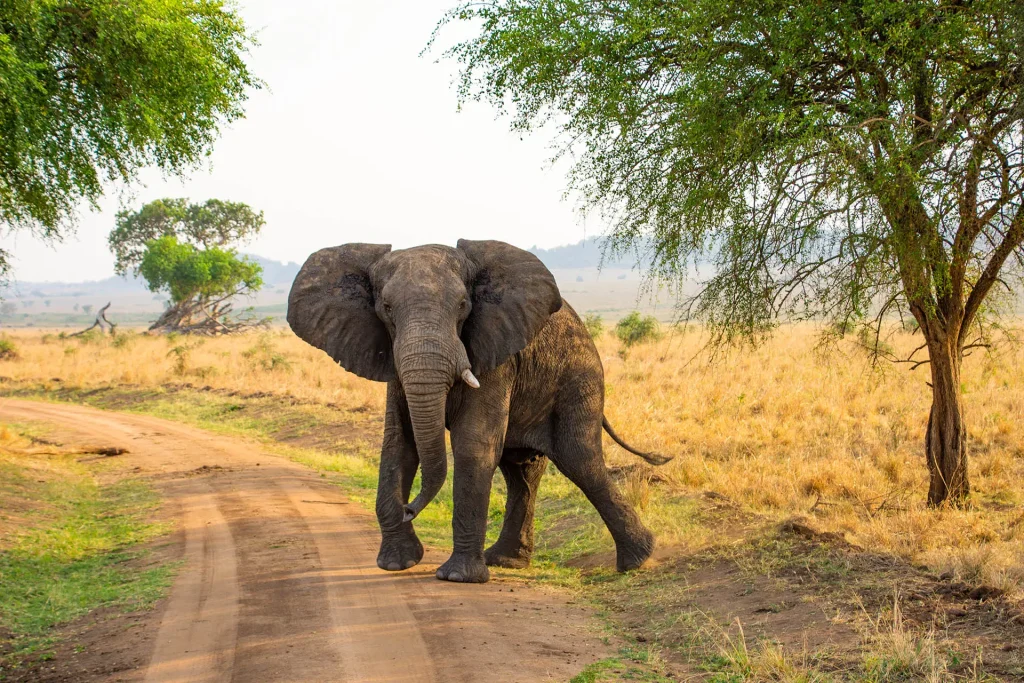
The practical result is an experience that has become hard to find elsewhere in East Africa: solitude. On a game drive in Kidepo you can go for hours without seeing another vehicle. Wildlife sightings feel private and unhurried, without the cluster of minibuses that can gather around a lion in busier parks. For travellers who value wilderness and genuine escape over convenience, this uncrowded quality is Kidepo’s single greatest asset, and it is something none of Uganda’s more accessible parks can truly offer.
Wildlife You Cannot See Anywhere Else in Uganda
Kidepo is a wildlife destination of the first rank, home to around 77 mammal species and over 470 bird species, but what truly distinguishes it is the number of animals that live here and nowhere else in Uganda. Because of its unique dry, semi-arid environment and its position on the edge of the East African savannah belt shared with Kenya and South Sudan, Kidepo hosts species that simply do not occur in the country’s other parks.
Species Unique to Kidepo in Uganda
- Cheetah: Kidepo is the only place in Uganda where cheetahs are reliably found, hunting across its open plains.
- Bat-eared fox: this distinctive small carnivore with oversized ears occurs in Uganda only in the Kidepo region.
- Aardwolf: a rarely seen, insect-eating relative of the hyena, found in Uganda only in the northeast.
- Striped hyena: distinct from the more widespread spotted hyena, the striped hyena reaches Uganda only here.
- Caracal, greater and lesser kudu, Guenther’s dik-dik and mountain reedbuck: dry-country species largely restricted to this corner of Uganda.
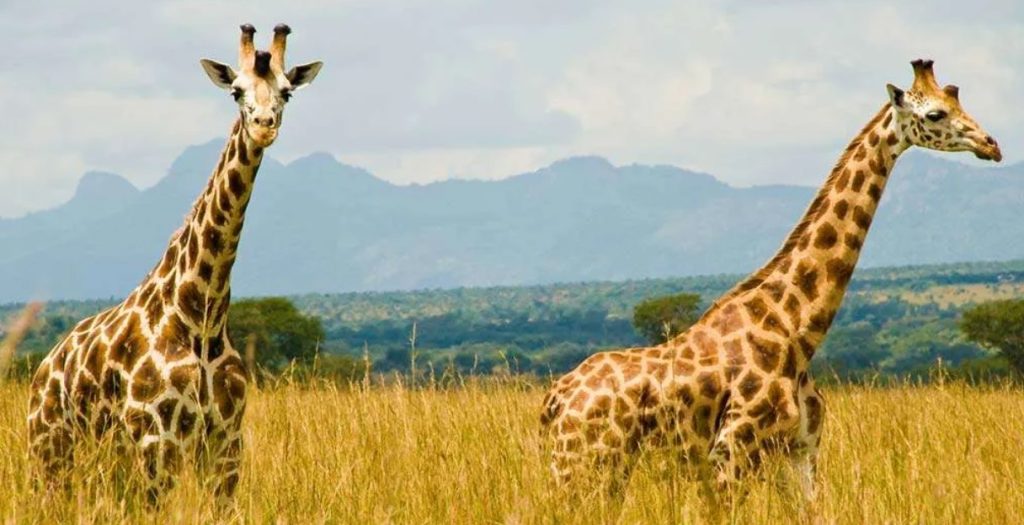
Alongside these specialities, Kidepo delivers the classic big game in abundance. Large prides of lions, some of which climb trees and rocks, roam the Narus Valley. Elephants, buffalo in enormous herds sometimes thousands strong, giraffes, zebras, elands, and leopards are all present. Ostriches stride across the plains, a sight you will not find in Uganda’s other savannah parks. This combination of iconic African wildlife and dry-country specialists gives Kidepo a species list with a character quite different from anywhere else in the country, and it is a major reason serious wildlife enthusiasts rate the park so highly.
A Landscape Like No Other Park in Uganda
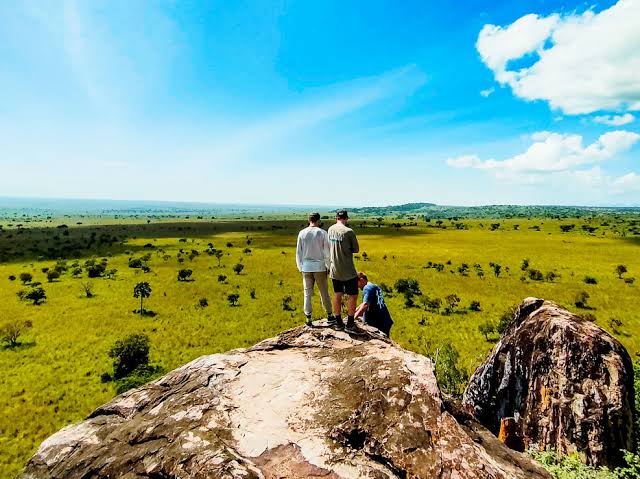
Uganda is famous for being green, lush, and mountainous, and most of its parks reflect that: the forests of Bwindi, the wetlands and channels of Queen Elizabeth, the riverine drama of Murchison Falls. Kidepo breaks that mould completely. Its scenery is the wide, open, golden savannah of the classic African imagination, ringed by rugged mountains and cut by two seasonal river valleys, the Narus and the Kidepo. This is a landscape more reminiscent of the plains of Kenya and Tanzania than of anywhere else in Uganda, and it gives the park an almost cinematic quality.
The park is built around its two valley systems. The Narus Valley in the southwest holds water for most of the year and is the park’s wildlife heartland, its grasslands and scattered waterholes drawing the greatest concentrations of animals, especially in the dry season.
The Kidepo Valley to the northeast is drier, defined by the wide sandy bed of the seasonal Kidepo River, lined with borassus palms, where you can walk on the sand of a river that flows only briefly each year. Surrounding it all are the Morungole Mountains and a horizon of distant peaks. Few landscapes in East Africa are as photogenic, and none of Uganda’s other parks look anything like it.
A Rich and Living Cultural Heritage
Another dimension that sets Kidepo apart is the extraordinary cultural landscape that surrounds it. The park lies in the heart of Karamoja, home to the Karamojong people, semi-nomadic pastoralists whose lives revolve around cattle and whose traditions have remained strong.
A visit to a Karamojong manyatta, a traditional fortified homestead, offers a window into a way of life quite unlike anything elsewhere in Uganda, with its distinctive dress, dances, cattle culture, and social structures.
Even more remarkable are the Ik people, one of the smallest and most unusual ethnic groups in Uganda, who live in the Morungole Mountains on the edge of the park. Reaching the Ik requires a demanding hike up Mount Morungole, and those who make it are rewarded with a genuinely rare cultural encounter with a community that has lived in isolation for generations.
This blend of wildlife and living traditional culture, easily woven into a Kidepo itinerary, is something none of Uganda’s other national parks can offer to the same depth. In Kidepo, the human story and the wild story sit side by side.
How Kidepo Compares With Uganda’s Other Top Parks
To understand what makes Kidepo unique, it helps to see it beside Uganda’s better-known parks. Each is superb in its own way, but Kidepo occupies a niche none of the others fill.
| Park | Signature Draw | Character |
| Kidepo Valley | Remote wilderness, cheetah, ostrich, uncrowded plains | Wild, isolated, dry savannah |
| Bwindi Impenetrable | Mountain gorilla trekking | Dense, misty rainforest |
| Queen Elizabeth | Tree-climbing lions, Kazinga Channel | Popular, varied, accessible |
| Murchison Falls | The Nile and its waterfall | Dramatic, river-focused |
| Kibale Forest | Chimpanzee trekking | Lush tropical forest |
| Lake Mburo | Zebras, walking safaris, close to Kampala | Small, gentle, convenient |
Where the other parks are relatively accessible and busy, Kidepo trades convenience for wilderness. Where they are green and forested or wetland-rich, Kidepo is golden, open, and dry. And where they share much of their wildlife with one another, Kidepo holds species found nowhere else in the country. It is not better or worse than Uganda’s other parks; it is genuinely different, and that difference is the whole point.
Things to Do in Kidepo Valley National Park
- Game drives: explore the Narus and Kidepo valleys for lions, elephants, buffalo, giraffes, cheetahs, and more across classic open plains.
- Guided nature walks: on foot with an armed ranger, experience the bush and its smaller details up close, including a walk on the sandy Kidepo riverbed.
- Cultural visits: spend time at a Karamojong manyatta or make the hike to meet the Ik people of the Morungole Mountains.
- Birding: with over 470 species, including many dry-country specials such as the ostrich and various birds of prey, Kidepo is a birder’s delight.
- Visit Kanangorok Hot Springs: near the South Sudan border, these remote springs are a scenic destination in the far north of the park.
- Photography: the light, the landscapes, and the wildlife make Kidepo one of the most rewarding photographic parks in Uganda.
Best Time to Visit Kidepo
Kidepo can be visited year-round, but the dry season from September to March is generally considered the best time for wildlife viewing. During these months animals concentrate around the permanent water in the Narus Valley, making them easier to find, and the roads within and to the park are more reliable. The dry landscape and clear skies also make for superb photography and long, uninterrupted game drives.
The wetter months from April to August bring the park to life in a different way, with fresh green grass, migratory birds, and dramatic skies, though some tracks can become difficult and access harder. Because Kidepo receives so few visitors at any time of year, there is never a crowded season here, so your choice comes down mainly to wildlife concentration and ease of travel rather than avoiding other tourists. For a first visit focused on big game, the dry months are the safer bet.
Getting There:
Reaching Kidepo is an adventure in itself, and part of what makes arriving so rewarding. By road, the journey from Kampala takes around ten to twelve hours and is usually split over two days, travelling through northern Uganda via towns such as Gulu or Kitgum, with the landscape changing steadily from green farmland to open northern savannah. It is a long drive, but it reveals a side of Uganda that most visitors never see.
For those short on time, scheduled and chartered light-aircraft flights connect Kidepo with Entebbe and other parks, turning a two-day drive into a flight of a couple of hours and making it far easier to combine Kidepo with a wider Uganda safari.
However you arrive, the sense of reaching a remote frontier is part of Kidepo’s magic. Unlike parks you can slip into on a quick weekend, Kidepo asks something of you to get there, and it repays that effort many times over. The journey filters out the casual crowds and leaves the park to those who truly want to experience it.
Related Posts