Essence of Africa 2026 in Zanzibar Essence of Africa is a trade forum, which means…
Why Lake Mburo National Park Is Best for Walking Safaris in Uganda?
Why Lake Mburo National Park Is Best for Walking Safaris in Uganda?
This guide explains why Lake Mburo National Park stands out as the best place for walking safaris in Uganda. It explores what makes the park so well suited to exploration on foot, the wildlife you can expect to encounter, what a walking safari here actually involves, the other activities that complement it, and the practical details that make Lake Mburo one of the most rewarding and accessible parks in the country. If you want to feel Africa rather than just watch it, this is where to go.
Most of Uganda’s famous parks do not permit walking among their wildlife, and for good reason. Where lions, elephants, and buffalo roam in large numbers, exploring on foot is simply too dangerous for casual visitors.
This is what makes Lake Mburo so special. Thanks to its unique mix of wildlife, its manageable size, and the notable absence of elephants and, for much of its history, large predator pressure, Lake Mburo is the one Ugandan national park where guided walking safaris are a genuine highlight rather than a rarity. It is Uganda’s premier destination for getting out of the vehicle and meeting the wilderness at ground level.
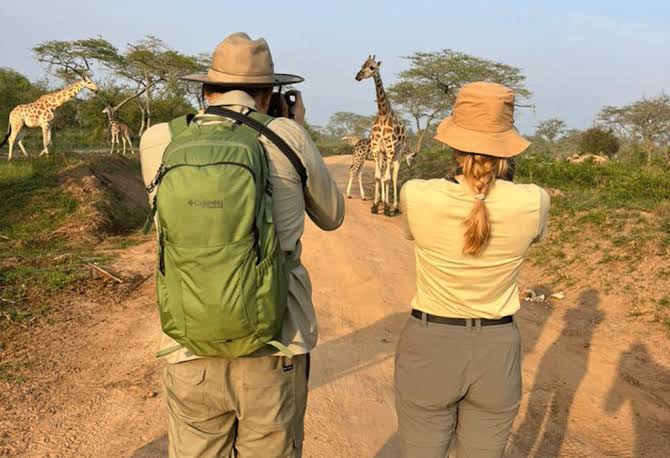
There is a particular kind of magic to experiencing the African bush on foot. In a vehicle, you watch wildlife from behind glass and metal, a spectator moving through the landscape. On foot, you become part of it. You feel the crunch of dry grass underfoot, catch the scent of wild herbs crushed by your boots, hear the alarm call of a bird warning of your approach, and feel your heart quicken as you round a thicket to find a herd of zebra grazing just ahead, aware of you, watching you as intently as you watch them. This is the walking safari, and in Uganda there is no better place to experience it than Lake Mburo National Park.
What Makes Lake Mburo Perfect for Walking Safaris
Several features come together to make Lake Mburo uniquely suited to walking safaris, setting it apart from every other national park in Uganda. Understanding them explains why guides and seasoned safari-goers consistently point to Mburo when asked where to walk with wildlife in the country.
A Safer Environment for Walking
The single most important factor is safety. Lake Mburo has no elephants and historically has had relatively few large predators compared with parks like Queen Elizabeth or Murchison Falls. Without herds of elephants to surprise or heavy lion pressure, walking among the park’s plains game is far safer and more relaxed than it would be elsewhere. You can approach zebras, impalas, elands, and buffalo on foot, accompanied by an armed ranger, in a way that would be unthinkable in Uganda’s big-predator strongholds. This is the core reason walking safaris are a signature activity here and a rarity elsewhere.
A Compact, Accessible Park
At around 370 square kilometres, Lake Mburo is one of Uganda’s smaller national parks, and that compactness works in its favour for walking. The varied terrain of open grassland, acacia woodland, rocky ridges, wetlands, and lakeshore is easy to explore on foot within a manageable area, and the park’s modest size means wildlife is often close at hand. You do not need to cover huge distances to encounter animals, making walking both practical and productive.
The Closest Savannah Park to Kampala
Lake Mburo is the nearest savannah park to Kampala and Entebbe, only around three to four hours’ drive to the west along a good road. This accessibility makes it an easy addition to almost any Uganda itinerary, whether as a first taste of safari on the way to the southwest and the gorillas, or as a final, relaxed stop on the way back. For travellers who want a genuine walking safari without a long journey, Mburo is unmatched for convenience.
The Wildlife You Meet on Foot
Lake Mburo may be small, but it is rich in wildlife, and much of it is exactly the kind of plains game that makes for a thrilling yet safe walking experience. The park is often called a miniature version of the classic African savannah, and on foot its animals feel wonderfully close and immediate.
Zebras and Plains Game
Lake Mburo is famous for its zebras, which are found here in greater numbers than anywhere else in Uganda, and encountering a dazzle of zebra on foot is one of the park’s defining experiences. Alongside them roam impala, the park’s signature antelope, giving the nearby town of Mbarara and the region its association with these graceful creatures, as well as topi, eland, the largest of the antelopes, defassa waterbuck, bushbuck, oribi, and warthog. Walking among these herds, watching them watch you, is the essence of the Mburo walking safari.
Buffalo, Hippos and More
The park is also home to buffalo, which can be encountered on walks under the careful guidance of your ranger, as well as hippos and crocodiles in and around the lakes, though these are best viewed from a boat. Predators do exist in Mburo, including leopards, hyenas, and, increasingly, lions returning to the area, but they are elusive and rarely pose a threat to a well-guided walking group. Other residents include Rothschild’s giraffes, which have been introduced to the park and can sometimes be seen on foot, adding a real thrill to a walking safari.
A Birder’s Paradise
With over 350 bird species, Lake Mburo is one of Uganda’s finest birding destinations, and walking is the perfect way to appreciate its birdlife. The wetlands, acacia woodland, and lakeshore host a wonderful variety, including the rare and much-sought-after African finfoot and the shoebill, along with crested cranes, bee-eaters, and countless others. On foot, with time to stop, look, and listen, birding becomes immersive in a way that no vehicle can match.
What a Walking Safari at Lake Mburo Involves
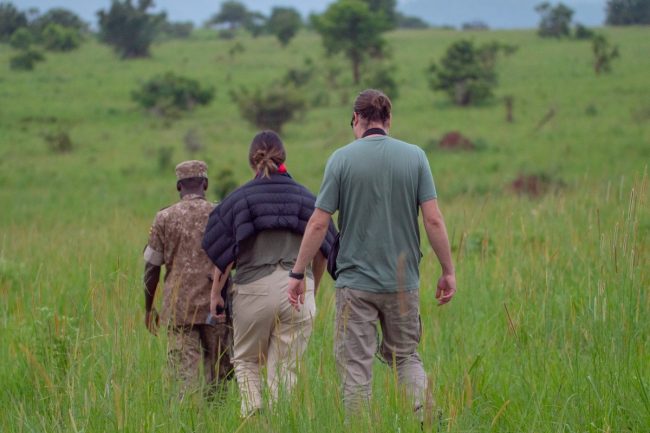
A walking safari at Lake Mburo is always conducted with an armed park ranger or guide, both for your safety and to enrich the experience with expert knowledge. Walks typically set out in the cool of the early morning, when wildlife is most active and the light is soft and golden, or in the late afternoon as the day cools again. A typical walk lasts around two hours, though longer options are available, and covers gentle, walkable terrain suited to a range of fitness levels.
What makes walking so different from a game drive is the shift in perspective and pace. Your ranger reads the bush for you, pointing out tracks in the dust, identifying droppings, explaining which plants are used in traditional medicine, showing you the tiny details of insects, birds, and flowers that a vehicle simply rushes past. You learn to move quietly, to read animal behaviour, and to understand the ecosystem as a connected whole rather than a series of sightings. Approaching a herd of zebra or eland on foot, downwind and unhurried, creates a sense of connection and quiet exhilaration that stays with you long after the walk is over.
One of the classic Mburo walking routes leads to a salt lick, where animals gather to take minerals from the earth and where a hide allows close observation. Another popular option is to climb one of the park’s rocky ridges or hills at sunrise or sunset, rewarding walkers with sweeping views over the lakes, the woodland, and the plains, dotted with grazing wildlife below. These walks combine wildlife, scenery, and a genuine sense of adventure in a way that few experiences in Uganda can match.
Other Activities at Lake Mburo
While walking safaris are the park’s signature draw, Lake Mburo offers a wonderful variety of other activities that complement time on foot and make it one of Uganda’s most versatile small parks.
- Boat cruises on Lake Mburo: glide across the water to see hippos, crocodiles, otters, and a wealth of waterbirds along the shoreline, a perfect gentle counterpoint to an energetic walk.
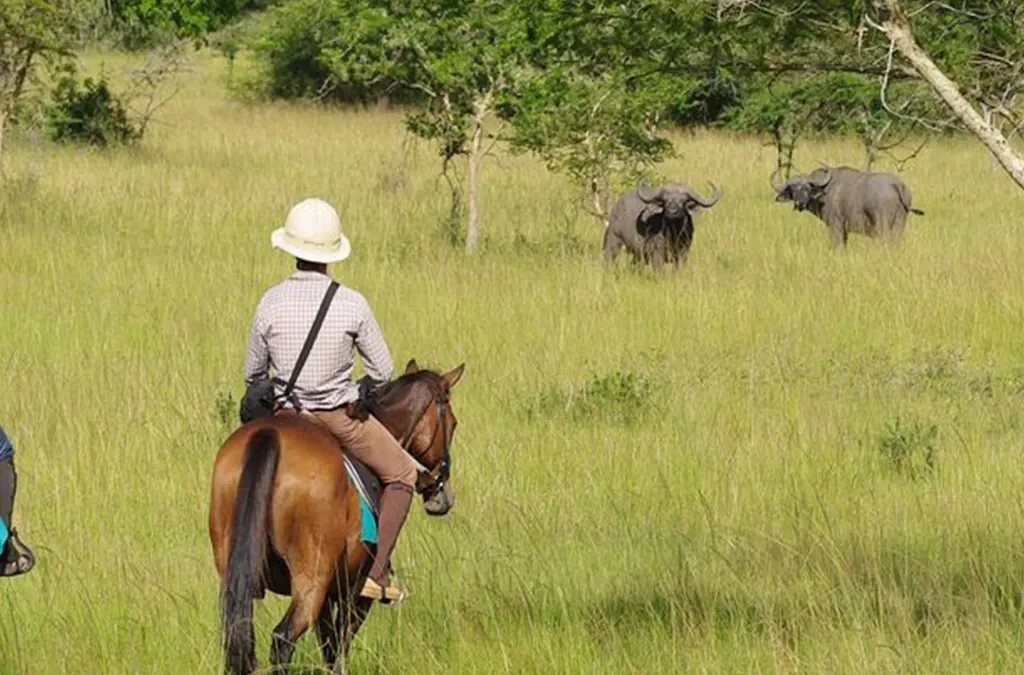
- Horseback safaris: Lake Mburo is the only park in Uganda offering horseback safaris, letting you ride among zebra and antelope, which often accept horses more readily than people on foot, for a truly unique wildlife encounter.
- Quad biking: for the adventurous, guided quad-bike excursions explore the areas around the park, combining wildlife viewing with an adrenaline rush.
- Game drives: classic vehicle safaris, including night drives, reveal nocturnal creatures such as leopards, bush babies, and genets rarely seen by day.
- Cultural experiences: visits to nearby Ankole communities showcase the famous long-horned Ankole cattle and traditional pastoralist life around the park.
This combination of walking, riding, boating, biking, and driving makes Lake Mburo one of the most activity-rich parks in Uganda, and few places let you experience the bush in so many different ways within such a compact and accessible area.
Best Time for a Walking Safari at Lake Mburo
Lake Mburo can be visited and walked year-round, but the dry seasons, from June to August and December to February, are generally the best times for walking safaris. During the dry months the ground is firm underfoot, the grass is shorter, making wildlife easier to see and approach, and animals concentrate around the remaining water sources. The weather is also more reliable for comfortable walking, with less chance of rain interrupting your morning.
The wet seasons bring lush green scenery, dramatic skies, and superb birding as migratory species arrive, and the park is quieter with fewer visitors, though trails can be muddier and grass longer. Whichever season you choose, early morning and late afternoon are the ideal times of day to walk, when temperatures are cool and wildlife is at its most active. Because Mburo sees fewer crowds than Uganda’s headline parks, a walking safari here feels peaceful and unhurried at almost any time of year.
Tips for Your Lake Mburo Walking Safari
- Wear neutral colours: earthy tones like khaki, green, and brown help you blend into the bush and avoid startling wildlife.
- Choose sturdy footwear: closed walking shoes or hiking boots protect your feet on uneven ground, rocks, and through grass.
- Bring binoculars: essential for enjoying the park’s superb birdlife and for watching distant animals up close.
- Carry water and sun protection: a hat, sunscreen, and drinking water keep you comfortable, especially on morning and midday walks.
- Listen to your ranger: always follow your armed guide’s instructions, stay together, and move quietly for the best and safest experience.
- Combine activities: pair a walk with a boat cruise or horseback safari to experience the park from several perspectives.
- Add it to your itinerary: as the closest savannah park to Kampala, Mburo fits easily at the start or end of a western Uganda safari.
Related Posts