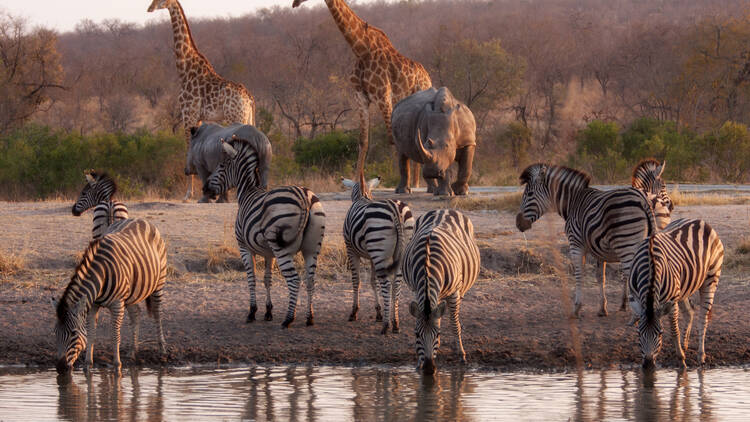
Serengeti National Park Vs Kruger National Park Serengeti National Park Vs Kruger National Park are the…

Why Kenya Is Really Your Next Safari Destination for Wildlife Safaris in Africa?
Why Kenya Is Really Your Next Safari Destination for Wildlife Safaris in Africa?
Why Kenya Is Really Your Next Safari Destination for Wildlife Safaris in Africa? I have spent years listening to people plan their East Africa safari trips, and the pattern is always the same. At first, the focus is on the Serengeti or the Ngorongoro Crater, sometimes both. There is a certain romance to those names, and rightly so. They are extraordinary places. But when the planning becomes more serious, when travelers start asking about timing, movement, logistics, and what the actual experience feels like day after day, Kenya keeps coming up again and again.
Not because it is louder or more famous, but because it tends to work better in practice. Especially for people who want a proper wildlife safari in Africa without spending half their holiday exhausted, stuck in vehicles, or dealing with complicated travel connections that eat up time and energy.
Kenya is not just another safari destination. It is the place where modern safari culture really took shape. The word safari itself comes from Swahili and means journey. That idea still fits today. A journey here is not only about animals, it is about how the land, people, weather, and wildlife all overlap in a way that feels immediate and alive.
Nairobi National Park and the First Impression of Kenya Safari Life
One of the most surprising things about Kenya is how quickly the safari experience begins. Most international visitors land in Nairobi expecting a standard capital city. What they do not expect is that within a short drive from hotels and office buildings, there is a full national park where lions, rhinos, giraffes, and buffalo move with the city skyline behind them.
It is a strange contrast at first. You might have just come from a busy airport road, still adjusting to the heat and noise of the city, and suddenly you are watching a rhinoceros walk through open grassland with tall buildings visible in the distance. That combination of urban life and wild Africa in the same frame is something very few places in the world can offer.
This early introduction matters more than people realize. It sets the tone. It reminds you immediately that in Kenya, wildlife is not something far away or protected behind invisible boundaries. It is part of the same space people live in.
Why Kenya Makes Safari Travel Easier Than Other African Destinations
A big part of why Kenya stands out for safari travel is not only the wildlife. It is the logistics. East Africa covers vast distances, and anyone who has tried moving between multiple parks in a single trip knows how exhausting long road transfers can become.
In some countries, reaching a safari destination means spending an entire day on rough roads. The scenery might be beautiful at first, but after several hours of dust, bumps, and heat, the journey becomes draining.
Kenya takes a different approach. Domestic flights are part of the safari system. Small aircraft connect Nairobi with remote airstrips across the country. These flights are short, often under an hour, and they change the entire rhythm of a safari.
You can have breakfast in Nairobi, fly over rivers and escarpments, and land directly in the Masai Mara in time for lunch and a late afternoon game drive. Instead of spending your best energy on travel, you arrive ready to actually experience wildlife.
That difference sounds simple, but over the course of a week it completely changes how the safari feels.
Masai Mara National Reserve and Why It Defines Kenya Safaris
The Masai Mara is the image most people associate with Kenya safari experiences. Rolling plains, acacia trees, lion prides resting in the shade, and during certain months, enormous migration herds stretching to the horizon.
It deserves the attention it gets. During the migration period, when wildebeest and zebra cross the Mara River, the scenes are intense and unpredictable. Crocodiles wait in the water, predators follow the herds, and everything feels in motion at once.
But what many first time visitors do not realize is that the Masai Mara is not only about a few dramatic months. It is a living ecosystem all year round. Lions remain resident. Leopards hold territories in riverine forests. Elephant families move slowly across the landscape regardless of season.
The difference between months is not whether wildlife exists. It is how concentrated it becomes and how many other vehicles are sharing the experience with you.
Samburu, Amboseli, and the Variety of Kenya Wildlife Safaris
One of the strongest arguments for choosing Kenya is variety. Many safari destinations offer one dominant landscape. Kenya offers several, each with a completely different feel.
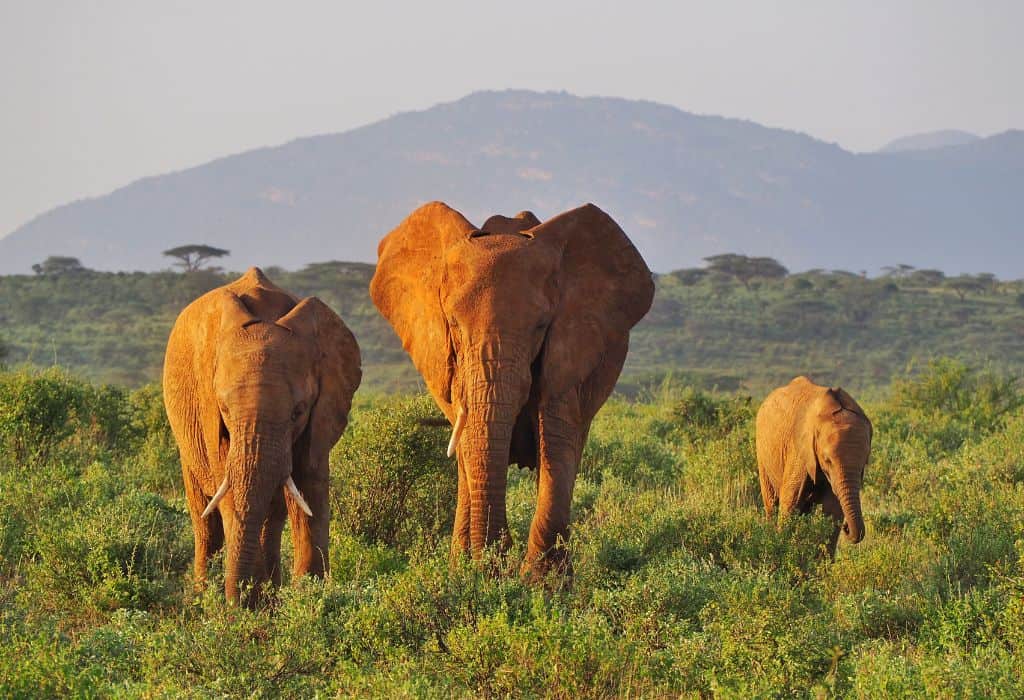
Amboseli National Park is known for elephants moving in large family groups with Mount Kilimanjaro visible in the background. Even though the mountain sits in Tanzania, the most iconic photographic views belong to the Kenyan side. The contrast between dry plains and snowcapped peaks creates a visual that feels almost unreal.
Samburu in the north feels entirely different again. The land is dry, open, and often dusty, with a red tint that changes under sunlight. Wildlife here includes species that are rarely seen in southern parks, such as Grevy zebra, reticulated giraffe, and gerenuk, an antelope that stands upright on its hind legs to feed from thorn trees.
What makes Samburu especially interesting is the guiding culture. Many guides come from local Samburu communities and bring deep personal knowledge of the land. They read tracks, animal behavior, and environmental changes in a way that feels intuitive rather than memorized. For travelers who want more than just sightings, this kind of guiding adds real depth.
Private Conservancies and the Real Kenya Safari Experience
A key detail that many visitors only understand after arriving is the difference between national reserves and private conservancies.
Inside the main Masai Mara Reserve, wildlife viewing is open to all licensed vehicles. During peak migration months, this can lead to crowded scenes, especially around river crossings or predator sightings. It is not unusual to see many vehicles gathered around a single leopard or lion pride.
Private conservancies operate differently. Access is limited to guests staying within specific camps. Vehicle numbers are controlled, and guides work together to prevent overcrowding at sightings. The result is a calmer, more respectful safari experience.
There is also more freedom. Off road driving is sometimes allowed when appropriate, and night drives are possible, which are not permitted inside the main reserve. This allows travelers to experience nocturnal wildlife activity that is otherwise invisible.
For many experienced safari travelers, conservancies are where Kenya truly shines.
Kenyan Safari Guides and the Human Side of Wildlife Safaris
One of the most overlooked strengths of Kenya as a safari destination is the guiding profession. Safari guides here are not simply drivers. Many go through formal training and certification that covers ecology, animal behavior, birdlife, tracking skills, and environmental systems.
A skilled guide does not just point out animals. They interpret what is happening. They notice when a herd becomes alert, when birds shift direction, or when predators might be nearby even before they appear.
This changes everything. A safari becomes less about waiting for animals to show up and more about understanding why they appear where they do.
There is also a cultural element. Guides often come from regions near the parks they work in. Their knowledge is not abstract. It is lived. They grew up around these landscapes and understand them in a way that cannot be learned from books alone.
Kenya Safari Food, Culture, and Lodge Experience
Another part of Kenya that surprises travelers is the food. Safari lodges are often remote, yet meals are usually fresh, varied, and carefully prepared.
Kenyan cuisine reflects coastal and international influence. You might find spiced curries, grilled meats, fresh vegetables, coconut based dishes, and fruit that tastes noticeably different from imported produce. Meals are often served in open dining areas overlooking plains or rivers, which adds to the atmosphere.
Lodge culture also plays a role. Many camps encourage communal dining in the evenings, where guests share stories from their game drives. For solo travelers, this creates an easy social environment without forcing interaction.
For couples or families, there is usually flexibility to choose private dining if preferred, but many still enjoy the shared atmosphere around the fire after sunset.
Kenya Safari Costs and Why Value Matters
Safari travel in Africa is often associated with high costs, and Kenya is no exception at the luxury level. However, what makes Kenya different is range.
There are ultra-luxury camps that sit among the most expensive in the world. At the same time, there are mid-range lodges and eco camps that offer strong comfort and excellent guiding without extreme pricing.
This range creates flexibility. Travelers can adjust their experience based on budget without completely changing the quality of wildlife viewing.
Another factor is competition. Because there are many lodges and operators, standards remain high. Camps invest in service, food, and guiding because expectations are competitive.
Kenya Coastal Safaris and Post Safari Relaxation
One of the most underrated parts of a Kenya safari is how easily it connects to the coast. After days of early morning game drives and dusty roads, the transition to the Indian Ocean feels natural.
The coastal town of Lamu feels historical and quiet. There are no cars. Movement happens through narrow streets, boats, and donkeys. It has a slow rhythm that contrasts sharply with the intensity of safari life.
Diani offers long beaches, warm water, and a relaxed atmosphere that works well for recovery after safari travel. Some areas also offer water sports, but many visitors simply spend time resting by the ocean.
This combination of safari and coast within one country is one of Kenya’s strongest advantages.
Why Kenya Works for First Time and Experienced Safari Travelers
Kenya is often recommended for first-time safari visitors, but it also works well for experienced travelers. The reason is balance.
It offers easy logistics, strong guiding, diverse landscapes, and consistent wildlife viewing throughout the year. At the same time, it has enough depth and variation to keep returning visitors interested.
There is no single version of Kenya. A trip during migration season feels completely different from a trip during the green season. Samburu feels different from the Mara. Conservancies feel different from public reserves.
That variation is what keeps the experience from becoming repetitive.
What a Typical Safari Day in the Masai Mara Actually Feels Like
Most people plan a safari around animals and seasons, but very few really understand what a normal day inside the Masai Mara actually feels like once you are there. It is not just “wake up, see lions, go back to camp.” The rhythm of the day has its own logic, and once you fall into it, it starts to shape how you think.
It usually begins very early, long before the sun has fully shown itself. The air is cold in a way that surprises most first time visitors. Even if you packed for Africa, you will still feel that morning chill cut through you when you step out of your tent. There is a strange silence at that hour, but it is not empty. You can hear distant lions finishing their night movements, hyenas calling to each other somewhere far out in the dark, and sometimes the low grunt of hippos from the river bends near camp.
Tea or coffee is already waiting. No one talks much at first. People are still waking up properly, pulling on jackets, trying to guess how the day will unfold. Guides are already outside checking vehicles, talking quietly with spotters, looking at tracks that appeared overnight. There is always a sense that something might already be happening out there before you even leave.
The first game drive usually leaves just as the sky starts to shift from black to that pale grey-blue color that only exists near the equator. You drive out slowly at first, headlights cutting through the dust. Everything feels uncertain in those first minutes. You do not know if you will see anything or if the bush will stay quiet for hours.
Then things start to reveal themselves. A lone elephant appears out of the haze, moving without hurry. Zebras stand in tight groups near the road, shaking off the cold. Sometimes you come across lions before they have fully ended their night. They are not performing, not posing. They are just existing in that heavy, sleepy state after a hunt or a long walk. That is when the Mara feels most honest.
As the sun rises higher, the entire landscape changes tone. What looked soft and muted suddenly becomes sharp and bright. The grass takes on that golden color people always talk about, but seeing it in person feels different from photographs. There is depth to it, layers you do not notice from far away. The air warms quickly, and the animals begin to move toward shade or water.
By mid-morning, most sightings become slower and more deliberate. This is when guides start doing what they are truly good at. They read tracks, notice broken branches, listen to alarm calls from birds or baboons. A good guide is rarely rushing. They are constantly collecting small pieces of information, almost like reading a story that is still being written.
Sometimes nothing dramatic happens for an hour or more. You just drive. Not aimlessly, but without urgency. That is something first time visitors do not expect. A safari is not a constant highlight reel. It has long stretches of calm where the landscape itself becomes the experience. You start noticing things you would normally ignore. The shape of termite mounds. The way giraffes move almost awkwardly but still with complete control. The sound of wind moving through dry grass.
Late morning often ends back at camp. Breakfast feels different here. It is slower, almost exaggerated in its simplicity. Eggs, fruit, coffee, sometimes fresh bread still warm from the kitchen. People sit longer than they normally would at home. There is no rush to leave because time itself feels less important.
Then comes the heat of the day. This is when the bush slows down. Animals disappear into shade. Even predators rest, stretched out under acacia trees or hidden in tall grass. Camp becomes quiet in a different way now. Some people nap, others sit on decks just watching the river or the movement of birds. It is not inactivity, it is pause.
Around midafternoon, everything begins to shift again. The light softens. The temperature drops slightly. You can feel movement returning to the bush even before you see it. This is when the second game drive begins.
The evening drive often feels more focused than the morning one. There is a sense that everyone is hoping for something specific. Maybe a hunt, maybe a leopard finally coming down from a tree, maybe just a good sighting that feels personal rather than crowded.
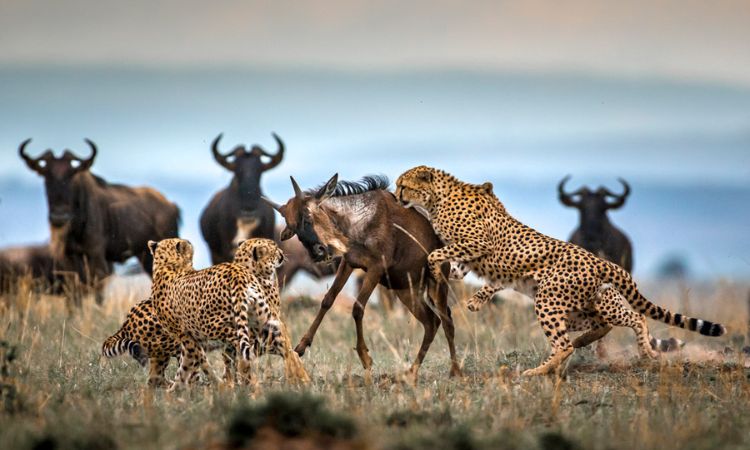
The colors change again as the sun starts to lower. Shadows stretch across the plains. Elephants look larger. Even small animals feel more dramatic in that light. If you are lucky, you might find a kill being investigated by multiple predators, or a pride of lions starting to move with intention instead of rest.
And then there is the moment everyone remembers, even if the day was otherwise quiet. The sun drops behind the escarpment or horizon, and the entire sky shifts into deep orange and red. Vehicles stop. No one speaks much. It is not staged or arranged. It just happens naturally, day after day, and it never really loses its impact.
After sunset, you head back to camp in near darkness. This is often when guides become more alert again. Night belongs to different animals. You might see glowing eyes in the distance or hear sudden movement just beyond the headlights. The bush feels less visible but more alive in a different way.
Dinner is usually communal unless you request privacy. People share stories from the day, sometimes exaggerating slightly, sometimes staying quiet just listening. There is usually wine, sometimes local beer, and a feeling that the day has stretched far beyond normal time.
After dinner, most people do not stay up long. The early mornings catch up with you quickly. You walk back to your tent under a sky that is unusually clear, filled with stars that feel closer than they actually are. That final walk, with only the sounds of the bush around you, is often when the experience settles in.
Because at that point, it stops being about checking animals off a list. It becomes something harder to explain. A rhythm you briefly stepped into and will not fully shake off once you leave.
That is what a day in the Masai Mara actually feels like. Not just wildlife sightings, but a slow movement through time that feels completely different from everything outside Kenya.
What to Pack for a Masai Mara Safari (and What Most People Get Wrong)
Packing for a Masai Mara safari sounds simple until you actually try to do it. Most people overthink it in the wrong direction. They imagine they need a full safari uniform, or that there is some kind of special “Africa outfit” that makes the experience more authentic. In reality, the wildlife does not care what you are wearing at all. A lion will not adjust its behavior because you chose beige instead of green.
What actually matters is comfort, layers, and practicality across very different temperatures within the same day. The Masai Mara does not stay at one consistent temperature. Early mornings can feel surprisingly cold, especially when you are sitting in an open safari vehicle before sunrise. You will often find yourself wrapped in a blanket, wearing a jacket, and still wondering why the air feels like this in equatorial Africa. Then by midday, the situation completely changes and you are dealing with strong sun heat, and dust that clings to everything.
This constant shift is where most packing mistakes happen. People arrive with heavy clothing that only works for one part of the day, or they underestimate how much dust will become part of their life for the week. The red dust in the Masai Mara is not just something you see on the ground. It gets into shoes, camera equipment, hair, and sometimes even inside sealed bags if you are not careful. It is not a problem, but it is something you have to accept as part of the safari experience in Kenya.
Clothing should be simple and layered. Light shirts that breathe well during the day work best, ideally in neutral tones that do not attract attention from insects and also do not reflect too much heat. A warm jacket or fleece is necessary for morning and evening game drives. Many first time visitors underestimate just how cold it can feel before sunrise, especially during the dry season when the wind moves freely across the open plains.
Footwear is another area where expectations and reality often clash. People imagine dramatic safari boots, but most of the time, simple closed walking shoes are enough. You are not hiking constantly unless you specifically book walking safaris in conservancies. In the main reserve, you are usually inside a vehicle. The important thing is not fashion, but comfort when getting in and out of the safari truck repeatedly throughout the day.
A hat is more useful than most people expect. The sun in the Masai Mara sits directly overhead at certain hours and there is very little shade when you are out on game drives. A wide brim hat or a cap that stays secure in wind conditions helps more than any piece of technical clothing. Sunglasses are also essential because glare from the sun and dust combined can become tiring on long drives.
Another thing people often get wrong is luggage. Hard suitcases are not ideal for safari travel inside Kenya. Most bush flights have strict weight limits, and soft duffel bags are far easier to handle when moving between small aircraft and safari vehicles. It is one of those small details that does not seem important when planning from home, but becomes obvious the moment you arrive at a bush airstrip.
Binoculars are often overlooked, yet they completely change the experience. The Masai Mara is not just about animals standing next to vehicles. Some of the most interesting behavior happens at a distance. A pride of lions resting under a tree far off the track, or a leopard moving slowly through riverine forest, becomes far more meaningful when you can actually see the detail rather than just being told what is happening.
Camera gear is another consideration, although it depends entirely on how serious you are about photography. Even a simple camera or modern phone will capture plenty, but longer lenses are useful if you want more control over wildlife shots. That said, it is important not to turn the safari into a constant photography exercise. Some of the best moments in the Masai Mara are the ones you do not fully document because you are just watching.
What people rarely pack properly is patience. It is not something you can put in a bag, but it is part of the safari experience in a very real way. Wildlife does not appear on demand. Some days are full of action, with multiple predator sightings and movement across the plains. Other days are slower, with long quiet stretches where nothing dramatic happens. Both are normal. Both are part of the same ecosystem.
Water bottles, sunscreen, and simple personal medical items are also essential. The sun in Kenya can be deceptive. It does not always feel extreme because of the altitude and breeze, but exposure builds up quickly over multiple days. Most camps provide water and basic supplies, but having your own small kit makes life easier during long drives.
In the end, packing for the Masai Mara is less about preparing for hardship and more about adjusting expectations. You are not entering a difficult environment, but you are entering a natural one that does not adjust itself to human schedules. The simpler you pack, the easier it becomes to focus on what actually matters once you arrive, which is the landscape, the wildlife, and the quiet rhythm of being in one of the most remarkable safari ecosystems in Africa.
Final Thoughts on Kenya Wildlife Safaris in Africa
Kenya is not perfect. Roads can be rough. Dust is unavoidable. Weather can shift quickly. Some areas become crowded during peak season.
But those imperfections are part of the experience rather than a flaw in it.
What Kenya offers is something more important for many travelers. It offers clarity. Wildlife is accessible. Travel is manageable. Guides are skilled. Landscapes are varied. And at the end of the day, there is a sense that you are not just observing Africa from a distance but actually moving through it.
That is why so many people who travel across East Africa eventually come back to Kenya. Not because it is the only option, but because it tends to bring all the essential parts of a safari together in a way that feels complete.
Related Posts