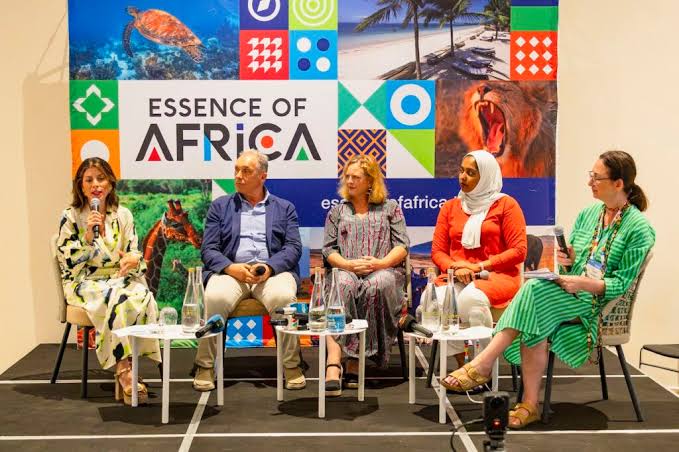
Essence of Africa 2026 in Zanzibar Essence of Africa is a trade forum, which means…
Gorilla Trekking Vs. Great Migration
Gorilla Trekking Vs. Great Migration | What to Choose and How to Decide
There are many things that decide gorilla trekking vs. the great migration. Every year, thousands of travelers sit down to plan their African safari and hit the same wall: do I go for gorilla trekking or the Great Migration? It is not an easy question.
Both experiences rank among the greatest wildlife encounters on earth. Both have been described repeatedly by people who have done both as the trip of a lifetime.
We have been organizing African safaris for many years, and this is one of the questions we get asked most often. Our honest answer is it depends entirely on you. What kind of traveler you are, what you want to feel when you are out there, how you respond to scale versus intimacy, and practically when you can travel.
Gorilla Trekking
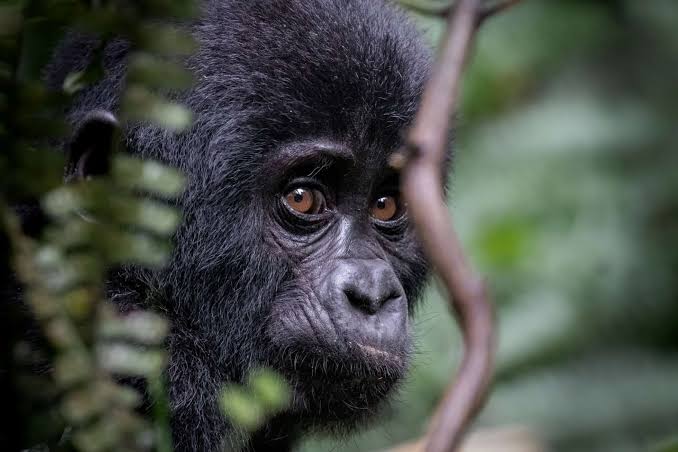
Mountain gorilla trekking in Uganda or Rwanda is one of the most intimate and emotionally charged wildlife encounters available anywhere on earth. You are not watching from a distance. You are in the forest, on foot, with a small group of no more than eight people, within meters of a wild gorilla family going about their morning. The silverback is eating. The juveniles are wrestling.
Gorilla trekking remains one of the most conservation-funded wildlife experiences in Africa. Uganda charges $800 per permit at Bwindi Impenetrable National Park and Mgahinga Gorilla National Park. Rwanda charges $1,500 per person at Volcanoes National Park. These fees go directly to the Uganda Wildlife Authority and Rwanda Development Board, funding the ranger patrols and habitat protection programs that have allowed gorilla populations to grow. When you book a gorilla trek, your permit is doing something real.
Gorilla Trekking in Uganda
Uganda is home to more than half of the world’s remaining mountain gorillas, approximately 459 individuals across Bwindi Impenetrable National Park and Mgahinga Gorilla National Park. Bwindi is divided into four gorilla trekking sectors: Buhoma in the north, Ruhija in the east, Rushaga in the south, and Nkuringo in the southwest.
Each sector has a different character. Buhoma is the most accessible and most visited; Rushaga has the highest number of habituated gorilla families, including the option of a gorilla habituation experience; Nkuringo sits at a higher altitude and offers a more remote feel.
Uganda’s $800 permit price makes it significantly more accessible than Rwanda for couples, families, and groups. A couple doing gorilla trekking in Uganda pays $1,500 in permits.
Gorilla Trekking in Rwanda
Rwanda’s Volcanoes National Park is the alternative gorilla trekking destination, sharing the Virunga Massif with Uganda and the DRC. The park protects ten habituated gorilla families across its volcanic forest, with permit access for 96 visitors per day in total.
Rwanda is the more accessible option for travelers flying through Kigali, which has excellent international connections from Nairobi, Entebbe, Amsterdam, Brussels, and London.
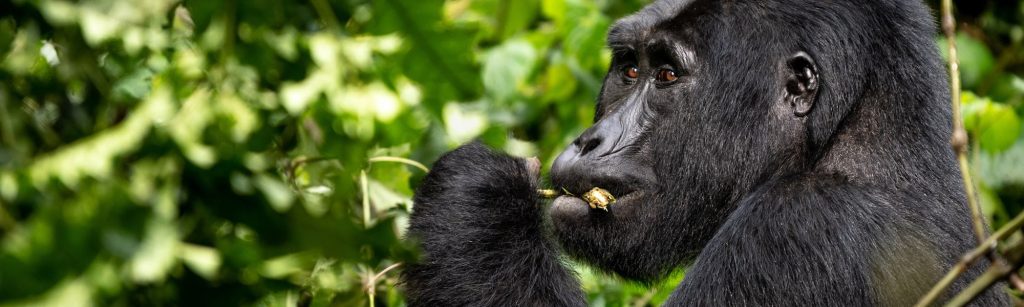
The $1,500 Rwanda gorilla permit reflects the country’s premium positioning of the experience, small visitor numbers per family, tighter regulation, and an overall tourism infrastructure that has been deliberately built around exclusivity.
Top lodges near Volcanoes National Park like Bisate Lodge and Singita Kwitonda are among the finest safari properties in Africa. For travelers for whom cost is secondary to the overall quality of the experience and the surrounding accommodation, Rwanda is genuinely hard to beat.
Gorilla Trekking: Who It Is Best For
- Travelers who want a deeply personal, emotional wildlife encounter, not a spectacle
- Photographers seeking intimate, close-range wildlife portraits in natural forest light
- First-time Africa safari travelers who want something they genuinely cannot see anywhere else
- Couples on a honeymoon safari or a significant milestone trip
- Conservation-minded travelers whose permit spending directly funds endangered species protection
- Anyone who has done a classic game drive safari before and wants something entirely different
Great Migration
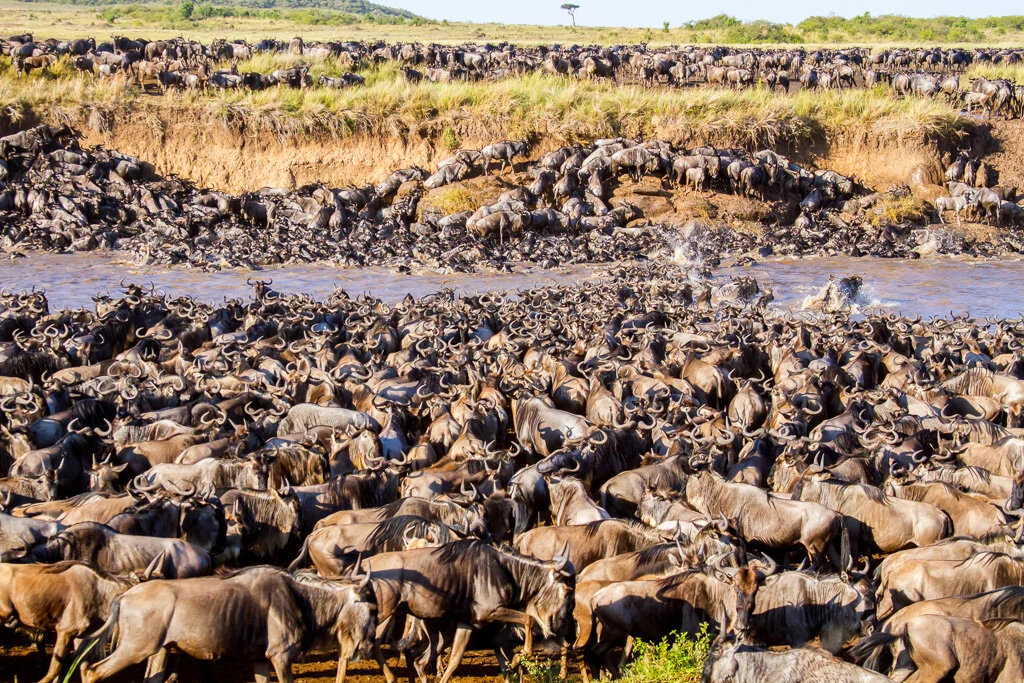
The Great Wildebeest Migration is the largest overland movement of mammals on earth. Roughly 1.5 million wildebeest, 200,000 zebra, and 350,000 Thomson’s and Grant’s gazelles move in a continuous clockwise loop across the Serengeti-Mara ecosystem, covering approximately 800 kilometers every year in search of fresh grazing and water.
It is described as one of the seven natural wonders of Africa, and the description is not overblown. When you are standing at the Mara River watching 10,000 wildebeest gather on the opposite bank, you understand immediately why.
What sets the Great Migration apart from any other safari experience is the scale. This is nature at its most overwhelming. The columns of animals stretching to the horizon.
The dust rising off the plains as the herds move. The noise—hooves, grunts, and the splash and chaos of the river crossings. And everywhere, the predators: lions, cheetahs, leopards, hyenas, wild dogs, and in the river, Nile crocodiles that can reach five meters in length, waiting for the wildebeest to come to them.
The Great Migration Calendar
Understanding the migration’s annual cycle is the single most important factor in planning your safari. The herds are always somewhere, and where they are depends on which month you travel.
January to March — Calving Season, Southern Serengeti and Ndutu:
The herds are concentrated on the short grass plains of the southern Serengeti and the Ndutu area within the Ngorongoro Conservation Area.
February is calving season, when approximately 8,000 wildebeest calves are born every day during a compressed two-to-three-week period.
The predator action during calving is extraordinary—cheetah, lion, and hyena are in constant hunting mode. This is one of the most underrated times to be on a migration safari, and it is significantly less crowded than peak season.
April to June — The March North, Western Corridor and Grumeti:
The herds begin moving north and west as the short grass dries out. By June, the first major obstacle arrives—the Grumeti River in the Western Corridor of the Serengeti. The Grumeti crossings do not attract the same volume of visitors as the Mara River crossings, but they are dramatic in their own right, with huge resident crocodiles waiting in pools along the riverbanks.
July to October—Peak Season, Northern Serengeti and Masai Mara:
This is the period most people picture when they think of the Great Migration. The herds push north into the Lamai Wedge and Kogatende area of the northern Serengeti and, from there, cross the Mara River into Kenya’s Masai Mara. August is widely considered the peak month for Mara River crossings, though crossings can and do happen from late June through October. The Masai Mara in September is outstanding for big cat sightings as predators follow the herds north.
November to December — The Return South:
Short rains trigger the return migration. The wildebeest move south through the eastern Serengeti, heading back toward Ndutu for the next calving cycle. This is a quieter period, less visited, with good game viewing and a landscape turning green after the rains.
The Mara River Crossings: What to Expect
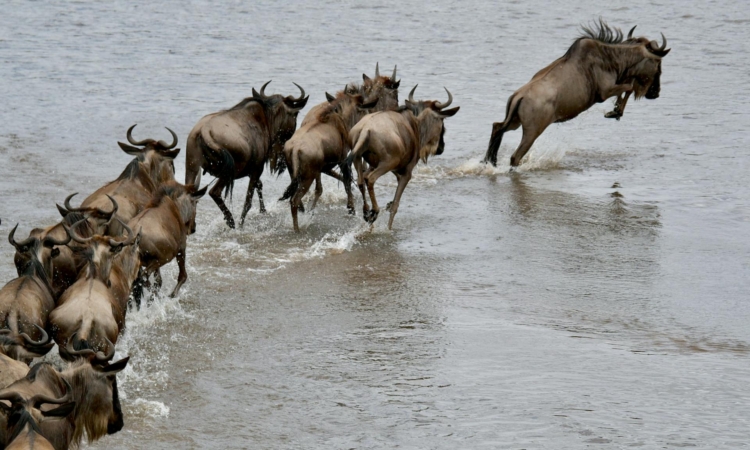
The Mara River crossing is the scene that most people book the Great Migration for. Wildebeest and zebra mass on the banks, often in numbers that strain comprehension, before the first animal leaps and the rest follow in a blind, churning rush through the crocodile-filled water. Some crossings last twenty minutes. Some go on for hours. Some are spectacular and relatively calm. Some are chaotic and harrowing.
We recommend staying a minimum of three nights in the northern Serengeti or Masai Mara during crossing season to give yourself the best odds. Mobile camps that reposition with the migration are worth the premium during this window—they cut down travel time to the action and put you in exactly the right spot.
Great Migration: Who It Is Best For
- Travelers who want the full scale of the African plains — vast herds, big skies, constant predator action
- First-time Africa safari visitors who want the classic, cinematic East Africa experience
- Wildlife photographers seeking dramatic wide-angle shots of river crossings and massed herds
- Families with children of all ages — game drives are accessible and endlessly stimulating
- Travelers who want to combine a safari with Ngorongoro Crater, Tarangire, or a Zanzibar beach extension
- Visitors travelling between July and October who want the peak of East Africa safari season
Gorilla Trekking vs. Great Migration: Side-by-Side Comparison
| Gorilla Trekking (Uganda/Rwanda) | The Great Migration (Tanzania/Kenya) | |
| Location | Uganda (Bwindi, Mgahinga) or Rwanda (Volcanoes NP) | Tanzania (Serengeti) and Kenya (Masai Mara) |
| Best Months | Year-round; June–Sept & Dec–Feb ideal | Jan–Mar (calving), Jul–Oct (river crossings) |
| Permit Cost | Uganda: $800 per person. Rwanda: $1,500 per person | No separate permit—park fees apply (~$80–$150/day) |
| Group Size | Max 8 people per gorilla family per day | Open — no cap on vehicles at sighting points |
| Guarantee | ~90% success rate finding gorillas on trek | River crossings cannot be guaranteed—rain-dependent |
| Duration | 1 hour with gorillas after a 1–8 hour trek | Year-round movement; river crossings happen spontaneously |
| Physical Demand | Moderate to high—uphill forest hiking required | Low—game drives from 4×4 vehicles |
| Crowds | Very low—deeply intimate experience | Peak season (July–Oct) can be busy at crossing points |
| Combine With | Chimp trekking, Queen Elizabeth NP, Lake Mburo | Ngorongoro, Tarangire, Zanzibar beach, Amboseli |
| Best For | Once-in-a-lifetime primate encounter; intimate wildlife | Scale, spectacle, predator action, classic African plains |
Can You Do Both on the Same Trip?
Yes — and for the right traveler with enough time, this is the option we recommend most. Uganda and Tanzania are both well served by international flights through Nairobi or Entebbe, and a combined itinerary of twelve to fourteen days can comfortably cover both experiences without feeling rushed.
A Uganda–Rwanda combination also works well for travelers who want to double their gorilla trekking in Bwindi on the Uganda side, then crossing to Volcanoes National Park for a second, different gorilla experience in a different country and a different sector of the Virunga Massif.
Sample 14-Day Combined Itinerary
- Days 1–2: Fly into Entebbe. Night in Kampala or Entebbe.
- Day 3: Transfer to Bwindi Impenetrable National Park (Buhoma or Rushaga sector).
- Day 4: Gorilla trekking — the main event. Afternoon rest at lodge.
- Day 5: Optional: second gorilla trek or gorilla habituation experience. Or Queen Elizabeth NP game drive en route north.
- Day 6: Drive or fly to Entebbe. Night flight or early morning flight to Kilimanjaro or Nairobi.
- Days 7–9: Northern Serengeti — positioned in the Kogatende/Lamai area for Mara River crossings (if July–October).
- Days 10–12: Masai Mara — game drives, big cat sightings, possible further river crossing views.
- Day 13: Optional Ngorongoro Crater day trip or Tarangire game drive.
- Day 14: Fly home from Nairobi or Kilimanjaro.
What to Choose: Our Honest Recommendation
If you have never been on an African safari before and you are trying to choose between gorilla trekking and the Great Migration, here is our honest take.
Choose gorilla trekking if you want the most personal, emotionally charged wildlife encounter you are ever likely to have. If you want to be moved, unsettled, or humbled by an animal. If the idea of sitting in a forest three meters from a wild silverback gorilla sounds more compelling than watching a river crossing from a 4×4. If you are traveling to Uganda or Rwanda anyway, or if you have a limited budget and want to spend it on one truly unique experience.
Choose the Great Migration if you want the scale and spectacle of the African plains in full voice. If you want the classic East Africa experience—big skies, massive herds, lions on kills, and the Serengeti at sunrise. If you are traveling between July and October and want to time your safari around one of the genuinely great natural events on earth. If you are bringing children, a group, or first-time safari companions who need the immediate wow factor that a game drive in prime wildlife territory provides.
Do both if you have twelve days or more and want the full picture of what East Africa can give you. These two experiences sit at different ends of the spectrum—intimate versus epic, forest versus savannah, primate versus plains—and the combination of them on a single trip is something that very few travelers regret spending the money on. Most say it was the best trip they ever took.
Related Posts