
7 Days Tanzania Big Five Safari | Tarangire, Ngorongoro Crater & Serengeti This 7 Days…
7 Days Great Wildebeest Migration Calving Safari
7 Days Great Wildebeest Migration Calving Safari
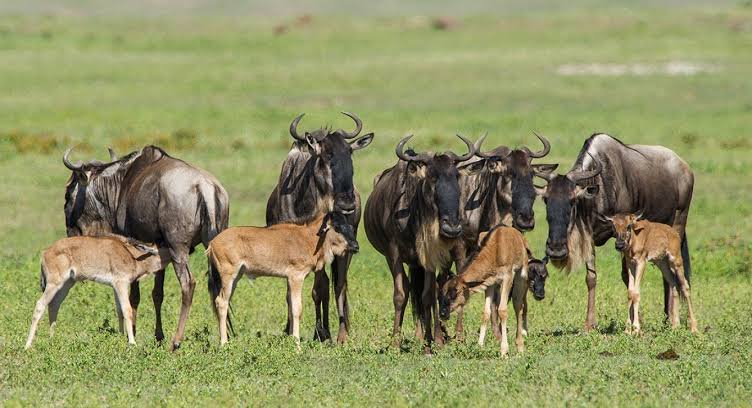
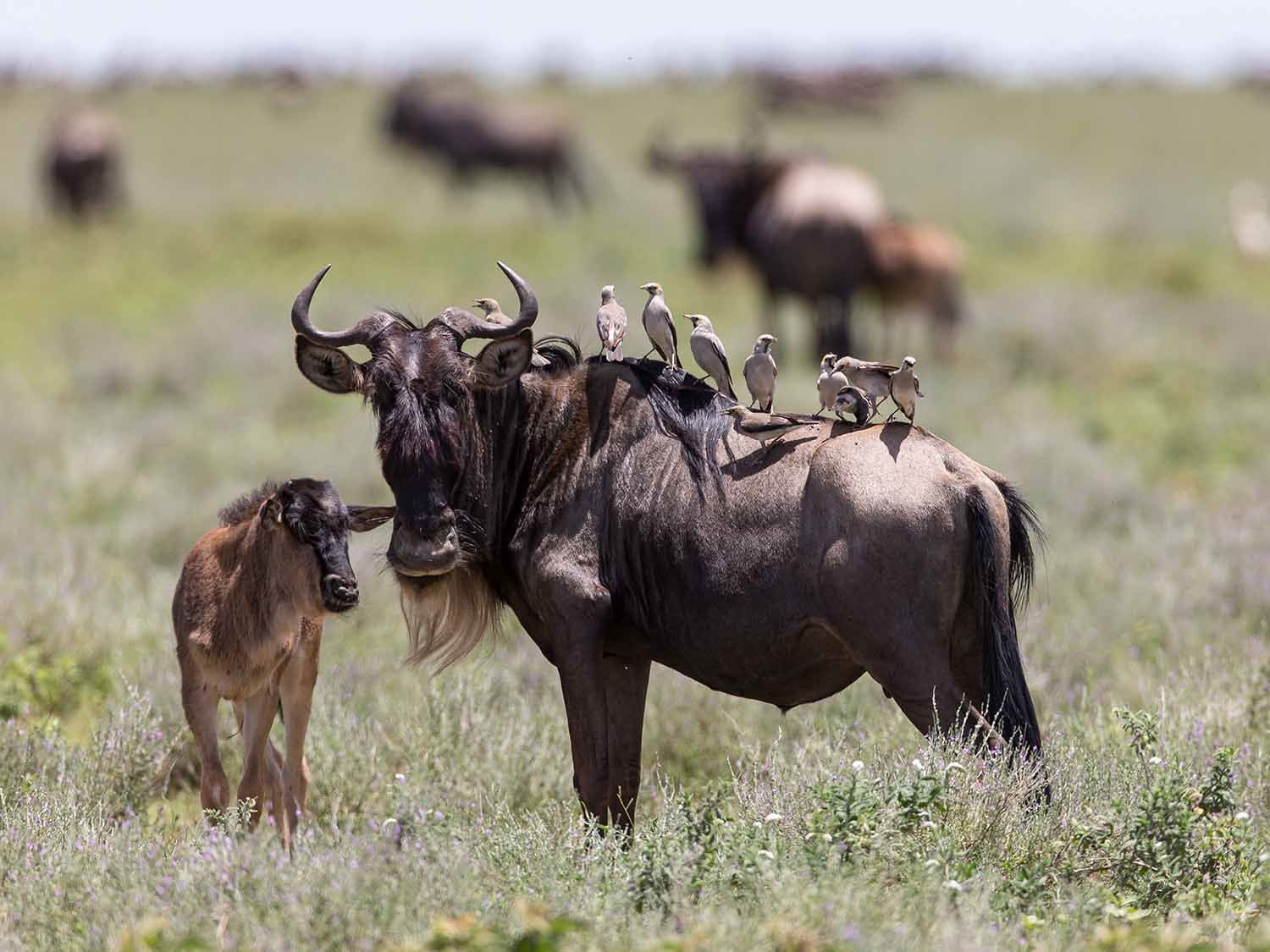
This 7 Days Great Wildebeest Migration Calving Safari is designed around the Great Migration’s calving season, when hundreds of thousands of wildebeest gather on the short-grass plains of the southern Serengeti and the Ndutu area to give birth. The herds are usually in this area from December to April, and the calving itself peaks in late January and February.
During the peak weeks, thousands of calves are born every day. Calves can stand within minutes and run with the herd within days, but the vulnerable newborns attract lion, cheetah, hyena and leopard, and predator action is at its most intense. For many guides and photographers, this is the most exciting time of year in the Serengeti.
The route also includes Tarangire National Park, the central Serengeti, the Ngorongoro Crater and Lake Manyara National Park.
Trip at a Glance
| Detail | Information |
| Duration | 7 days, 6 nights |
| Starts | Kilimanjaro International Airport |
| Ends | Arusha |
| Parks | Tarangire, Ndutu, Serengeti, Ngorongoro Crater, Lake Manyara |
| Key activities | Calving season game drives, predator viewing, crater tour |
| Best for | Travellers visiting from December to March, especially photographers |
Itinerary Summary
| Day | Route and Activity | Overnight |
| 1 | Arrive at Kilimanjaro, transfer to Arusha | Arusha |
| 2 | Arusha to Tarangire, game drive | Karatu |
| 3 | Karatu to the Ndutu area | Ndutu |
| 4 | Ndutu to the central Serengeti | Central Serengeti |
| 5 | Full day in the central Serengeti | Central Serengeti |
| 6 | Serengeti to Ngorongoro, crater game drive | Karatu |
| 7 | Lake Manyara game drive, return to Arusha | Not included |
Day-by-Day Itinerary
Day 1: Arrival in Arusha
On arrival at Kilimanjaro International Airport, you are welcomed by your guide, who briefs you on the safari during the drive to your hotel in Arusha. The evening is free to rest.
- Accommodation: Palace Hotel
- Meals: Dinner
Day 2: Arusha to Tarangire National Park
After breakfast, you drive to Tarangire National Park for a game drive. Tarangire is known for its large elephant herds and giant baobab trees. Lion, leopard and wildebeest are also found here, along with a long list of birds, including the endemic ashy starling and rufous-tailed weaver.
In the evening, you continue to Karatu, in the highlands near Ngorongoro, for dinner and the night.
- Accommodation: Endoro Lodge
- Meals: Breakfast, lunch and dinner
Day 3: Karatu to the Ndutu Area
After breakfast, you drive over the Ngorongoro highlands to the Ndutu area. Ndutu lies within the Ngorongoro Conservation Area, on the edge of the Serengeti, and forms part of the southern Serengeti ecosystem. Lake Ndutu is a shallow alkaline lake surrounded by acacia woodland.
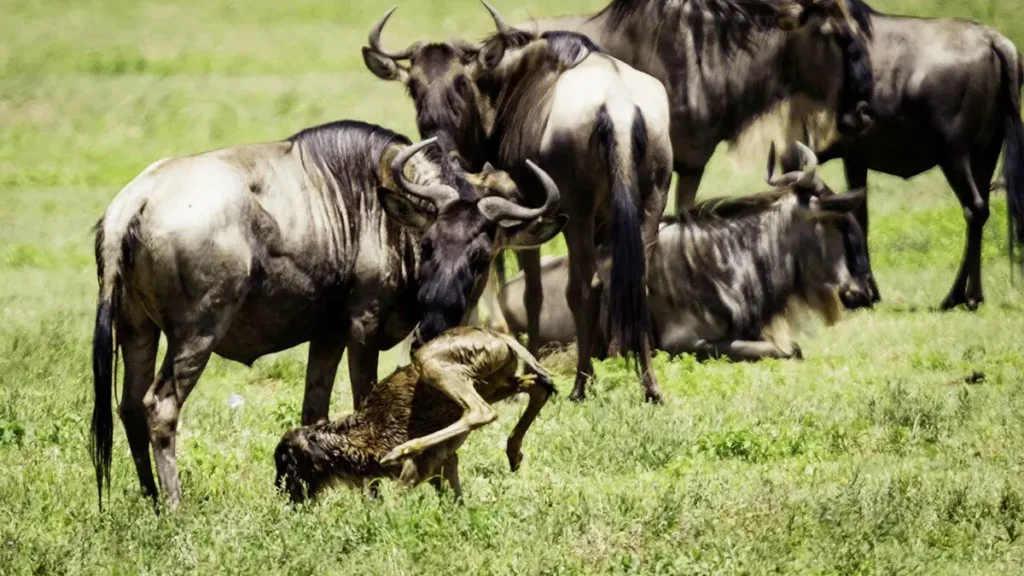
From December to April, most of the wildebeest are usually found on the surrounding short-grass plains, where the grass is rich in minerals that nursing mothers need. The area also holds elephant, lion, cheetah, leopard and many birds. You spend the afternoon on a game drive before settling into your camp.
- Accommodation: Acacia Migration Camp
- Meals: Breakfast, lunch and dinner
Day 4: Ndutu to the Central Serengeti
You spend the morning on a game drive in the Ndutu area, exploring swamps, woodland, the soda lake and the famous short-grass plains. Herds of wildebeest and zebra stretch across the landscape, and in the peak calving weeks of February, newborn calves are everywhere. Their presence draws predators, and the chances of seeing a hunt are high. Within a few weeks, the calves grow strong enough to keep pace with the herd.
In the afternoon, you continue north with a game drive to the central Serengeti.
- Accommodation: Acacia Central Camp
- Meals: Breakfast, lunch and dinner
Day 5: Full Day in the Central Serengeti
You spend the day exploring the central Serengeti, following any migration herds within reach and enjoying the area’s resident wildlife. Elephant, buffalo, impala, Grant’s gazelle, eland, topi, Masai giraffe, hippo and cheetah are all common, and the Seronera Valley is one of the best places in Africa for lion and leopard.
- Accommodation: As Day 4
- Meals: Breakfast, lunch and dinner
Day 6: Serengeti to the Ngorongoro Crater
After breakfast, you drive to the Ngorongoro Conservation Area, home to the Ngorongoro Crater, the world’s largest intact caldera. After lunch on the crater rim, you descend to the crater floor for an afternoon game drive. Lion, leopard, elephant, buffalo, zebra and wildebeest are all common, and Lake Magadi often hosts large numbers of flamingos. You then drive up to your lodge in Karatu.
- Accommodation: Acacia Farm Lodge
- Meals: Breakfast, lunch and dinner

Great Wildebeest Migration Calving
Day 7: Lake Manyara and Return to Arusha
After breakfast, you drive to Lake Manyara National Park, which Ernest Hemingway famously described as the loveliest lake he had seen in Africa. The lake covers much of the park and, together with the Rift Valley escarpment, forms a dramatic backdrop to your game drive.
You may see lions resting in the trees, as well as giraffe, impala, hippo and a wide variety of birds, including flamingos, pelicans, cormorants and storks. After lunch, you drive to Arusha, where you are dropped at your hotel or the airport for your onward flight.
- Meals: Breakfast and lunch
What’s Included
- Park and conservation fees
- All activities, unless listed as optional
- Accommodation as listed
- All transport, unless listed as optional
- All taxes and VAT
- Return airport transfers
- Meals as listed for each day
Not Included
- International flights
- Tips (a guideline is about US$20 per person per day)
- Souvenirs and other personal items
- Visa fees
- Travel insurance and medical evacuation cover
- Services not mentioned in the itinerary
Good to Know
- Calving timing: Most calves are born in a window of about three weeks, usually from late January into February. Travelling in February gives you the best chance of seeing the calving at its peak.
- Weather: The short rains fall in November and December, and the long rains start around March. January and February are usually warm and green, with short showers.
- Visas: Tanzania issues e-visas online. Apply well before travel.
Related Posts