Serengeti National Park Vs Kruger National Park Serengeti National Park Vs Kruger National Park are the…
Sightseeing Tours In Uganda
Sightseeing Tours In Uganda
Uganda’s tourism identity is so thoroughly built around gorilla trekking and wildlife safaris that a genuinely rich list of non-wildlife sightseeing destinations gets almost entirely overlooked by first-time visitors.
The country holds the actual source of the world’s longest river, one of the most dramatic waterfalls in Africa, a royal capital with centuries of Buganda kingdom history, and a location where you can stand with one foot in each hemisphere.
None of these require a gorilla permit, a trekking guide, or a strenuous hike, and several fit easily into a standard safari itinerary as a change of pace. Most first-time visitors leave without ever hearing about several of these destinations simply because they were never mentioned in the standard gorilla-and-safari itinerary template.
This guide covers Uganda’s best sightseeing destinations beyond wildlife and gorilla trekking, what makes each one worth the stop, how to fit them into a broader itinerary, and what they cost.
Should You Add Sightseeing to a Uganda Safari Trip?
Short answer: yes, particularly if you have any travel days between parks, since several of Uganda’s best sightseeing stops sit directly along the standard road routes safari itineraries already use, adding genuine value with minimal extra travel time.
A surprising number of Uganda’s most worthwhile sightseeing destinations require no dedicated day at all, since they sit conveniently along the road between Entebbe and the country’s major national parks.
Building a sightseeing stop or two into what would otherwise be a purely transitional travel day is one of the easiest ways to add meaningful content to a Uganda itinerary without extending your total trip length.
Uganda’s Best Sightseeing Destinations
| Destination | Location | What Makes It Worth Visiting |
| Source of the Nile | Jinja | The actual point where the Nile River begins its journey from Lake Victoria |
| Murchison Falls | Murchison Falls National Park | The entire Nile forced through a gap barely 7 metres wide, among Africa’s most dramatic waterfalls |
| Equator crossing | Kayabwe, on the Kampala-Masaka road | A marked crossing point with demonstration stations showing the Coriolis effect |
| Kasubi Tombs | Kampala | UNESCO World Heritage site, burial ground of Buganda kingdom kings |
| Uganda Museum | Kampala | The country’s oldest museum, covering natural history, archaeology, and ethnography |
| Ssezibwa Falls | Near Kampala | A scenic waterfall with cultural and spiritual significance to local communities |
| Lake Bunyonyi | Southwestern Uganda, near Bwindi | A scenic crater lake dotted with islands, popular for relaxation between gorilla trekking days |
The Source of the Nile
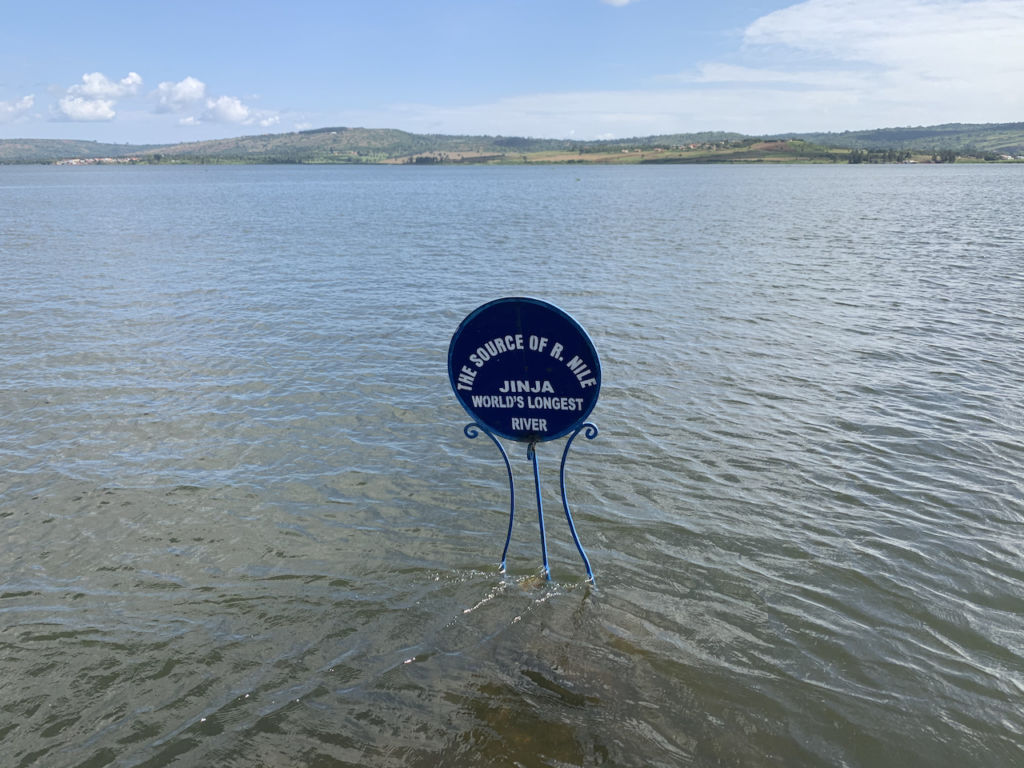
Jinja marks the point where the Nile River begins its roughly 6,650 kilometre journey north to the Mediterranean, flowing out of Lake Victoria, and standing at this spot carries a genuine sense of geographic significance beyond the pleasant riverside setting itself.
Boat trips from Jinja take visitors directly to the source point, often combined with birdwatching and a chance to see the spot British explorer John Hanning Speke identified in 1862 as the Nile’s origin, a discovery that resolved one of the great geographic questions of the era.
Murchison Falls
Murchison Falls National Park’s namesake waterfall is a genuinely dramatic sight: the entire volume of the Victoria Nile forced through a rock gap barely seven metres wide before plunging 43 metres into the pool below with tremendous force and noise.
Most visitors experience the falls both from the top, a short hike offering a dramatic overhead view directly into the gorge, and from below via boat safari, which also offers strong wildlife viewing along the riverbank, including hippos, crocodiles, and elephants coming down to drink.
The sheer volume of water and noise at close range genuinely surprises most first-time visitors, who often did not expect the falls to feel quite this powerful in person.
The Equator Crossing at Kayabwe
A marked equator line crosses the Kampala-Masaka road at Kayabwe, roughly a two-hour drive from the capital, and has developed into a modest but popular tourist stop, complete with small demonstration stations where local guides show the Coriolis effect using water and a basin, supposedly draining in different rotational directions just metres apart on either side of the line.
This particular demonstration is more a fun, photogenic tourist tradition than a scientifically rigorous experiment given how localised such an effect would need to be to actually manifest reliably, but it remains a popular, low-cost photo stop for travellers passing through en route to southwestern Uganda’s parks.
Most visitors treat it exactly as intended, a quick, cheerful photo opportunity rather than a genuine scientific demonstration, and it works well as a short stretch-your-legs break on a longer road transfer.
Kampala’s Cultural and Historical Sites
Uganda’s capital holds several worthwhile sightseeing stops for travellers with a half or full day to spend in the city, whether at the start or end of a broader safari itinerary.
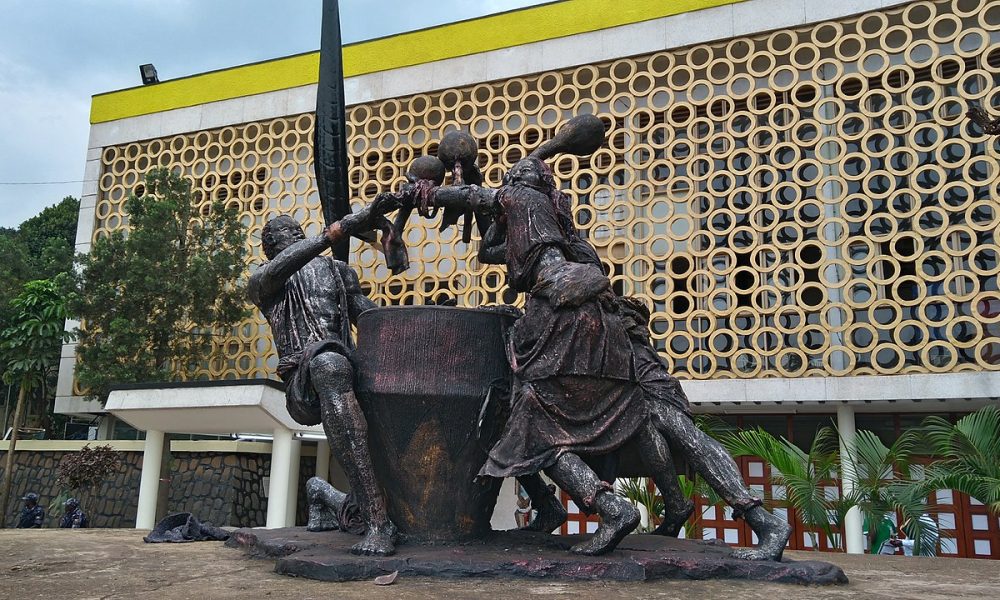
- Kasubi Tombs: a UNESCO World Heritage site and the traditional burial ground of Buganda kingdom kings, offering insight into one of Uganda’s most historically significant traditional kingdoms.
- Uganda Museum: the country’s oldest museum, holding ethnographic, archaeological, and natural history collections that provide useful context before heading out to the parks themselves.
- Namugongo Martyrs Shrine: a significant religious pilgrimage site commemorating 19th-century Christian converts executed under King Mwanga II, drawing both religious pilgrims and visitors interested in this period of Ugandan history.
- Owino Market: a large, bustling local market offering an unfiltered look at daily commercial life in Kampala, suited to travellers comfortable with a busier, more sensory experience.
Ssezibwa Falls
A scenic waterfall roughly an hour from Kampala, Ssezibwa Falls holds genuine spiritual significance for many Ugandans, associated with traditional beliefs and used as a site for cultural and religious ceremonies.
Beyond the waterfall itself, the surrounding area includes walking trails and a small cultural center explaining the site’s traditional significance, making this a worthwhile stop for travellers interested in Ugandan spirituality and folklore alongside natural scenery.
Lake Bunyonyi: Rest and Scenery Between Gorilla Treks
Lake Bunyonyi, whose name translates roughly to “place of many little birds,” sits in Uganda’s far southwest near Bwindi Impenetrable Forest, making it one of the most naturally convenient sightseeing and relaxation stops on a gorilla trekking itinerary. The lake is dotted with numerous small islands, several with their own local legends and history, and its terraced, hilly shoreline offers some of the most photogenic scenery in southwestern Uganda.
Activities here are deliberately low-key: canoeing between islands, short guided walks along the shoreline, and simply relaxing at a lakeside lodge after a physically demanding gorilla trek. Unlike Uganda’s larger lakes, Bunyonyi is free of bilharzia and crocodiles, making it one of the few lakes in the region where swimming is genuinely considered safe.
Practical implication: Lake Bunyonyi works particularly well as a rest-day stop either immediately before or after your gorilla trekking day, given its proximity to Bwindi and its genuinely restful, low-activity atmosphere.
Fort Portal’s Crater Lakes
Western Uganda’s Fort Portal region holds a cluster of volcanic crater lakes, scenic, often strikingly blue or green bodies of water formed by ancient volcanic activity, scattered across a landscape of rolling tea plantations.
This area combines naturally with chimpanzee trekking in nearby Kibale Forest, offering a scenic half-day or full-day sightseeing addition featuring crater lake viewpoints, community walks, and, in some cases, canoeing on the calmer lakes.
The colour variation between neighbouring lakes, some vivid green, others deep blue, depending on mineral content and depth, is a genuinely striking detail worth pointing out to anyone touring the region for the first time.
Ndere Cultural Centre
Located in Kampala, the Ndere Cultural Centre offers a well-regarded, professionally staged showcase of traditional Ugandan dance, music, and storytelling drawn from multiple ethnic groups across the country, performed by a long-established resident troupe.
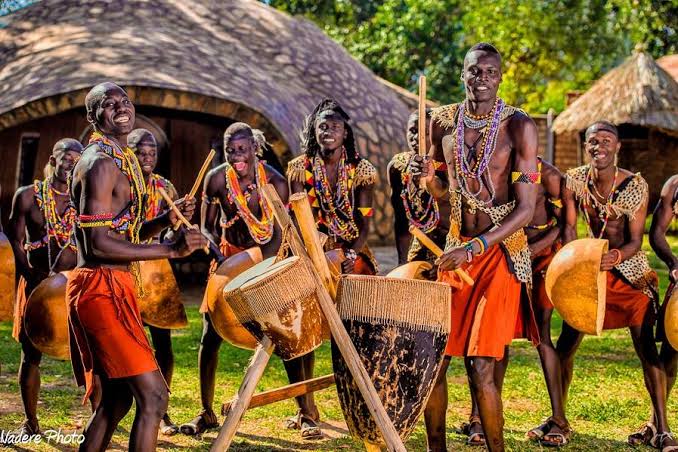
This is a good option for travellers wanting a concentrated, single-evening introduction to Uganda’s diverse cultural traditions without arranging separate community visits to multiple specific regions. Performances typically run several nights a week and are popular with both visitors and local audiences, giving the evening a genuine, lived-in atmosphere rather than feeling staged purely for tourists.
What Sightseeing Experiences Cost
| Destination | Approximate Cost Per Person | Notes |
| Source of the Nile boat trip | $20 to $40 | Varies by boat operator and trip length |
| Murchison Falls (top and boat views) | Included in standard park entry and boat safari fees | Typically $50 to $70 combined for park entry and boat cruise |
| Equator crossing demonstration | Free to $5 | Small optional fee for the demonstration itself; crossing point viewing is free |
| Kasubi Tombs entry | $10 to $15 | Guided tour typically included |
| Uganda Museum entry | $5 to $10 | One of the more affordable sightseeing stops in Kampala |
| Ssezibwa Falls entry | $5 to $10 | Modest entry fee supporting site maintenance |
Who Uganda Sightseeing Suits
| Traveller Type | Recommendation | Reasoning |
| First-time visitors with a Kampala arrival/departure gap | Kasubi Tombs, Uganda Museum | Easy half-day additions requiring no significant detour |
| Gorilla trekking travellers wanting a rest day | Lake Bunyonyi | Genuinely restful, scenic, and conveniently close to Bwindi |
| Adventure and history-minded travellers | Jinja (Source of the Nile plus adventure activities) | Combines geographic significance with genuine activity variety |
| Families with children | Equator crossing, Ssezibwa Falls | Short, engaging stops that break up longer travel days |
| Culturally curious travellers with limited regional travel time | Ndere Cultural Centre | A single-evening overview of multiple Ugandan cultural traditions |
Combining Sightseeing With Your Safari Itinerary
- Stop at the Kayabwe equator crossing while travelling between Entebbe and southwestern Uganda’s parks. This sits directly along the standard road route.
- Dedicate a full day to Jinja if your itinerary allows. The Source of the Nile combines naturally with adventure activities for a genuinely full, varied day.
- Add a Kampala city half-day at the start or end of your trip. Kasubi Tombs and the Uganda Museum both fit comfortably into a half-day city tour.
- Visit Ssezibwa Falls if travelling between Kampala and Jinja. It sits conveniently along this route without requiring a significant detour.
- Combine Murchison Falls sightseeing with your existing park visit. Both the top viewpoint and boat safari are typically already part of a standard Murchison Falls National Park itinerary.
Planning Advice
- Do not skip Kampala entirely if you have flight timing that allows a stop. Many itineraries treat the capital purely as an arrival and departure point, missing worthwhile sightseeing with minimal extra time investment.
- Bring cash in small denominations for site entry fees. Many of these smaller sightseeing stops do not accept card payments.
- Hire a local guide for Kasubi Tombs and Ssezibwa Falls specifically. Both sites carry cultural and spiritual context that a knowledgeable guide adds considerably to.
- Check current opening hours before planning a tight schedule. Some sites, particularly religious and cultural locations, have specific visiting hours or restricted access during ceremonies.
- Treat the equator crossing demonstration as a fun photo stop rather than rigorous science. Enjoy it for what it is, an entertaining local tradition, rather than expecting scientific precision.
Frequently Asked Questions
Do I need a separate guide for Kampala sightseeing, or can my safari driver-guide handle it?
Most safari driver-guides can competently handle Kampala sightseeing, though a specialist local city guide sometimes offers deeper historical and cultural context for sites like Kasubi Tombs.
Is Jinja safe for tourists?
Yes, Jinja is a well-established tourist destination with a mature adventure tourism industry, and standard travel precautions apply as they would anywhere.
How much time should I set aside for Kampala sightseeing?
A half day covers the main highlights comfortably; a full day allows a more relaxed pace including the market and additional historical sites.
Is the equator crossing worth stopping for if I am short on time?
It is a quick, low-cost stop, generally fifteen to thirty minutes, so it fits easily even into a tight schedule if your route passes directly through Kayabwe.
Can I visit Murchison Falls without doing the full national park safari?
The falls themselves are within the national park, so standard park entry fees apply regardless of whether you also do a full game drive safari, though most visitors combine both given they are already in the park.
Is Lake Bunyonyi worth an overnight stay or just a day visit?
An overnight stay is generally more rewarding given the lake’s restful atmosphere, allowing time for a relaxed canoe outing and an evening without a packed schedule, something a rushed day visit does not really capture.
How far is Fort Portal’s crater lake region from Kibale Forest?
The crater lakes sit within a short drive of Kibale Forest National Park, making them an easy half-day addition either before or after a chimpanzee trekking morning.
Building Sightseeing Into Your Uganda Trip
Uganda’s non-wildlife sightseeing destinations deserve more attention than they typically receive in itineraries built purely around gorilla trekking and game drives. Several of the best stops, the equator crossing, Ssezibwa Falls, Kampala’s historical sites, require minimal detour from routes you are already travelling, making them genuinely easy additions rather than a significant time or planning investment.
Taken together, they round out a Uganda trip with history, geography, and culture that complements rather than competes with the wildlife experiences most people come for in the first place.
Related Posts