Mara Serena Safari Lodge | Maasai Mara, Kenya Mara Serena Safari Lodge holds a unique…
Serengeti National Park Vs Kruger National Park
Serengeti National Park Vs Kruger National Park
Serengeti National Park Vs Kruger National Park are the two parks almost every first-time safari traveller ends up comparing, and for good reason: both are genuinely world-class, both anchor their country’s entire safari tourism industry, and both regularly top best-of-Africa lists.
They are also fundamentally different experiences dressed up in similar marketing language, and choosing between them based on brand recognition alone, rather than what each actually offers, is how travellers end up disappointed by a trip that was, on paper, exactly what they asked for.
The comparison shows up constantly in our own client conversations, usually from travellers who have narrowed their entire Africa search down to these two names without yet understanding how differently each one actually operates.
We have planned safaris to both, and this guide compares them directly across the factors that actually matter for your decision: wildlife experience, cost, accessibility, malaria risk, self-drive feasibility, and which type of traveller each one suits. By the end, you should have a clear sense of which park matches your travel style, rather than a vague impression based on which one shows up more often in glossy magazine spreads.
Should You Choose Between Them, or Consider Both?
Short answer: choose based on your total available time and travel budget; if you have the time and budget for both across separate trips, there is no need to rank one above the other permanently, since they offer different enough experiences to both be worth visiting.
The Serengeti and Kruger are not really substitutes for each other in the way two competing beach resorts might be. They sit in different ecosystems, different countries, and reward different travel styles.
A traveller who loves the idea of a self-drive safari with full control over their own vehicle and pace will feel very differently about Kruger than a traveller who wants a fully guided, all-inclusive wilderness experience, and the Serengeti’s format leans more naturally toward the latter. Neither preference is wrong, but pretending the two parks are interchangeable is where a lot of trip planning goes astray.
Why These Two Parks Get Compared So Often
Both parks carry outsized reputations relative to even other excellent African parks, largely because both were established early, in 1951 for Serengeti and 1926 for Kruger, giving each nearly a century of conservation infrastructure, research, and global tourism marketing behind it.
Both also host the Big Five, and both are large enough, Serengeti at roughly 14,750 square kilometres and Kruger at approximately 19,485 square kilometres, to support genuinely substantial, ecologically significant wildlife populations rather than a managed, fenced sample of animals.
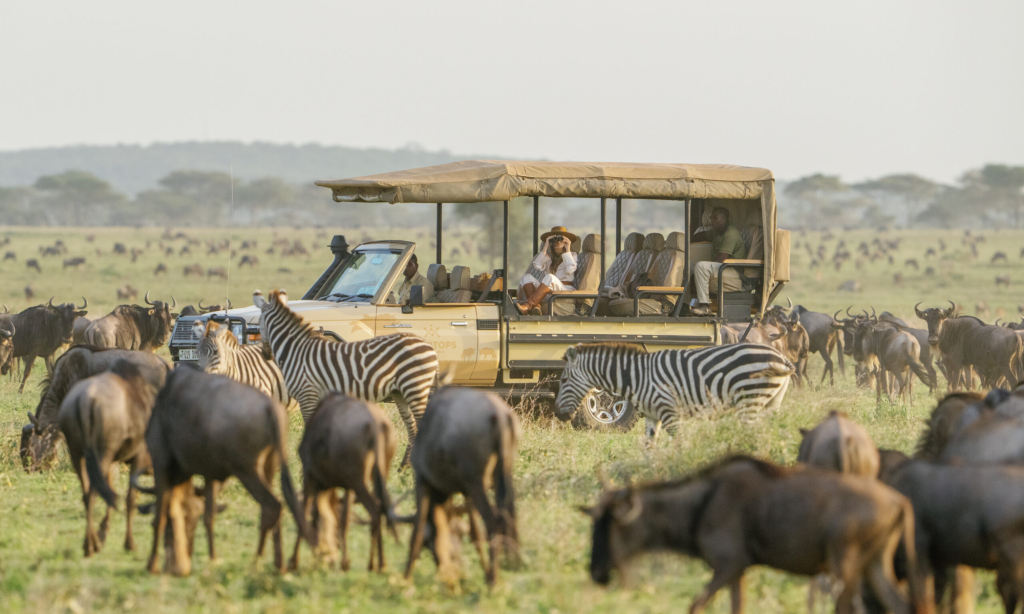
This scale is part of why both parks have become shorthand, in general conversation, for “African safari” itself, even among people who have never visited either one.
The Core Comparison
| Factor | Serengeti (Tanzania) | Kruger (South Africa) |
| Signature wildlife event | The Great Migration, over a million wildebeest and zebra | Consistent year-round Big Five viewing, no comparable single migration event |
| Self-drive feasibility | Not permitted for general tourists; guided vehicles only | Fully self-drive friendly with a well-maintained road network and rest camps |
| Malaria risk | Present year-round | Present, generally lower risk in the dry winter months (May to September) |
| Typical cost | Higher, driven by park fees, limited camps, and required guided transport | Lower, particularly for self-drive and self-catering options |
| Accessibility for independent travellers | Difficult; requires a tour operator or fly-in package | Very accessible; rentable car, well-signed roads, defined rest camps |
| Scenery | Endless short-grass and acacia-dotted plains | More varied, bushveld, riverine forest, and granite koppies |
Wildlife Experience: What You Will Actually See
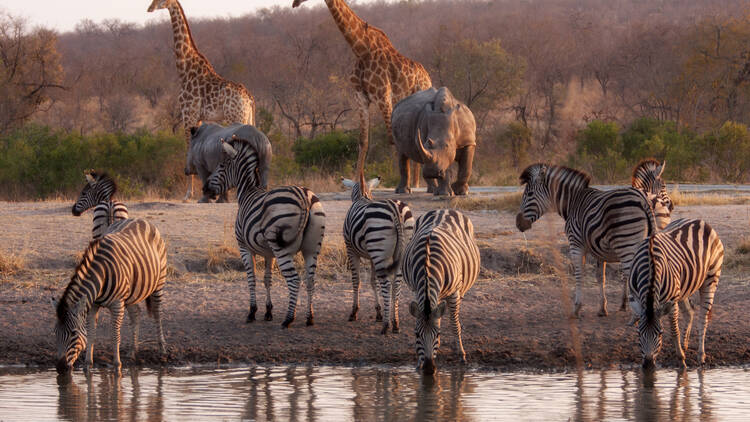
The Serengeti’s defining feature, the Great Migration, is genuinely without parallel anywhere else on the continent: over a million wildebeest moving in a broadly circular pattern chasing seasonal rainfall, accompanied by hundreds of thousands of zebra and gazelle, with predator action concentrated wherever the herds currently are. This is not a permanent, static spectacle; it moves through the ecosystem across the year, meaning your specific Serengeti experience depends heavily on when you visit and where the herds happen to be.
Kruger does not have an equivalent single migratory event, but it compensates with remarkably consistent, reliable Big Five sightings across almost the entire year, supported by one of the most sophisticated wildlife monitoring and road networks in Africa.
Kruger’s resident, non-migratory wildlife populations mean a well-planned few days here reliably delivers strong sightings regardless of season, without the same degree of “right place, right time” luck that migration-chasing in the Serengeti sometimes requires.
Practical implication: if witnessing the migration itself is a genuine bucket-list priority, the Serengeti is not really replaceable by Kruger. If consistent, dependable Big Five viewing across any travel date matters more, Kruger’s year-round reliability is a real practical advantage.
Self-Drive vs Guided: The Biggest Practical Difference
This is, in our experience, the single factor that most changes how a trip actually feels day to day. Kruger is built for self-drive tourism, with a network of paved and well-maintained gravel roads, clearly signed rest camps offering fuel, shops, and restaurants, and a genuine culture of independent travellers navigating the park in their own rental vehicle at their own pace.
The Serengeti offers no equivalent. Tourists cannot self-drive through the park; all visitors travel with a licensed guide in a safari vehicle, typically as part of a pre-arranged itinerary with an operator. This is not a bureaucratic inconvenience so much as a reflection of the park’s operating model, built around guided, lodge-based tourism rather than independent camping and driving culture.
| Traveller Preference | Better Fit |
| Wants full control over pace, route, and daily schedule | Kruger |
| Wants a fully guided, done-for-you wilderness experience with expert interpretation | Serengeti |
| Comfortable driving on the opposite side of the road, managing logistics independently | Kruger |
| Prefers zero logistics management, arriving to a fully planned itinerary | Serengeti |
Cost Comparison
| Style | Serengeti (per person per day, all-inclusive) | Kruger (per person per day, all-inclusive) |
| Budget | $250 to $350 (guided camping safari) | $80 to $150 (self-drive, self-catering rest camp) |
| Mid-range | $400 to $650 | $200 to $350 |
| Luxury | $700 to $1,200+ | $400 to $900+ |
The cost gap is driven almost entirely by structural differences rather than one park being inherently more “luxurious.” Kruger’s self-drive, self-catering rest camp system, run by South African National Parks, offers a genuinely low-cost way to experience world-class wildlife independently, an option that simply does not exist in the Serengeti’s guided-only model.
This structural gap, rather than any difference in wildlife quality, explains almost the entire budget-tier price difference between the two parks.
Getting There: Gateway Airports and Travel Time
| Park | Main Gateway Airport | Typical Onward Journey |
| Serengeti | Kilimanjaro International Airport (Tanzania) | 4 to 6 hour road transfer, or a 1 to 1.5 hour light aircraft charter to an airstrip within the park |
| Kruger | Kruger Mpumalanga International Airport, or OR Tambo (Johannesburg) | 30 minutes to 1 hour drive from Kruger Mpumalanga; 5 to 6 hours self-drive from Johannesburg |
Kruger has a logistical advantage for international travellers here, particularly those flying via Johannesburg, since Kruger Mpumalanga International Airport sits close enough to the park’s southern gates that a same-day arrival and entry is entirely realistic.
The Serengeti’s remoteness, while part of its appeal as a genuine wilderness, means most itineraries need to budget a dedicated travel day, or a meaningful charter flight cost, simply to reach the park after landing in Tanzania.
Accommodation Styles Compared
| Style | Serengeti | Kruger |
| Self-catering | Not available; all accommodation includes guiding and meals | Widely available in SANParks rest camps, a defining feature of the Kruger experience |
| Mid-range lodges | Tented camps and lodges, typically full board with game drives included | Private lodges and rest camp chalets, both self-catering and full-board options exist |
| Luxury | Exclusive-use fly-in camps, some of the most exclusive properties in Africa | Private concessions bordering Kruger (such as Sabi Sands) offering open-vehicle, off-road game viewing |
When to Visit Each Park
| Park | Best Months | Why |
| Serengeti | June to October for river crossings, January to February for calving season | Timing determines which migration phase you witness |
| Kruger | May to September (dry season) | Sparser vegetation improves visibility; lower malaria risk during these cooler, drier months |
Malaria and Health Considerations
Both parks sit within malaria risk zones, and prophylaxis is generally recommended for both regardless of season. Kruger’s risk drops meaningfully during the dry winter months, roughly May through September, when mosquito activity decreases, making this window particularly appealing for travellers, including families with young children, who want to minimise malaria exposure while still visiting during excellent game-viewing conditions.
The Serengeti carries a more consistent year-round risk profile, without as pronounced a seasonal dip. Consult a travel health professional for personalised prophylaxis advice ahead of either trip, since recommendations can vary based on your specific health history and exact travel dates.
Which Park Suits Which Traveller
| Traveller Type | Recommended Park | Reasoning |
| First-time safari-goer wanting the classic migration experience | Serengeti | An unparalleled, singular wildlife event unavailable elsewhere |
| Independent traveller who enjoys self-drive road trips | Kruger | Purpose-built infrastructure for independent exploration |
| Budget-conscious traveller | Kruger | Self-drive and self-catering options bring costs down substantially |
| Family with young children wanting lower malaria exposure | Kruger (dry season) | Meaningfully lower seasonal malaria risk than the Serengeti |
| Photographer chasing dramatic predator-prey action | Serengeti | Migration-linked predator activity offers some of Africa’s most dramatic wildlife photography opportunities |
| Traveller wanting maximum flexibility and minimal advance planning | Kruger | Rest camps can often be booked with shorter lead times than Serengeti’s guided lodge circuit |
Planning Advice
- Match your choice to your appetite for independent logistics. If managing your own driving, fuel, and daily plans sounds appealing rather than stressful, lean toward Kruger; if you would rather have everything arranged, lean Serengeti.
- Time your Serengeti visit around the specific migration phase you want to see. A river crossing in August looks nothing like the calving season in February, and both require different travel windows.
- Consider Kruger’s dry season specifically if malaria risk is a significant concern. This is the clearest seasonal health advantage either park offers.
- Do not assume Kruger is “lesser” because it costs less. The price difference reflects a different operating model, not a lower quality of wildlife experience.
- Budget realistically for the Serengeti’s mandatory guided format. This cost is not optional or reducible the way it might be in Kruger through self-driving.
Frequently Asked Questions
Which park has better Big Five sightings?
Both offer excellent Big Five viewing, though Kruger’s non-migratory resident populations provide more consistent year-round reliability, while the Serengeti’s sightings can vary more with the herds’ seasonal location.
Can I self-drive in the Serengeti like I can in Kruger?
No, the Serengeti requires all tourists to travel with a licensed guide in a safari vehicle. Independent self-driving is not permitted for general tourism.
Is Kruger cheaper than the Serengeti overall?
Generally yes, particularly at the budget end, given Kruger’s self-drive and self-catering rest camp system, which has no direct equivalent in the Serengeti’s guided-only tourism model.
Which park is better for a first-time safari?
Both work well for first-time visitors, though the Serengeti tends to suit travellers specifically chasing the migration experience, while Kruger suits those who want to try independent, self-paced safari travel.
Can I combine a Serengeti and Kruger trip in one holiday?
This is possible but requires significant total travel time and budget, given the distance and different international gateway airports involved. Most travellers treat these as separate trips rather than combining them into one itinerary.
Is Sabi Sands the same thing as Kruger National Park?
No, Sabi Sands and similar private reserves border Kruger and share an unfenced boundary allowing wildlife to move freely between them, but they operate under separate private management with their own rules, including off-road driving and night drives not permitted in the main public park.
Which park is better for photography specifically?
The Serengeti’s migration-linked predator action and open plains offer some of the most dramatic wildlife photography opportunities in Africa, while Kruger’s private reserves, particularly Sabi Sands, are renowned specifically for close, relaxed leopard sightings that are considerably harder to achieve in the Serengeti’s more open terrain.
Making Your Choice
Neither park is objectively superior to the other; they represent genuinely different safari philosophies, guided wilderness immersion built around a singular natural event in the Serengeti’s case, versus independent, flexible, cost-accessible wildlife travel in Kruger’s. The right choice depends on how much control you want over your own itinerary, how important the migration specifically is to you, and how your budget and malaria risk tolerance factor into the decision.
Related Posts