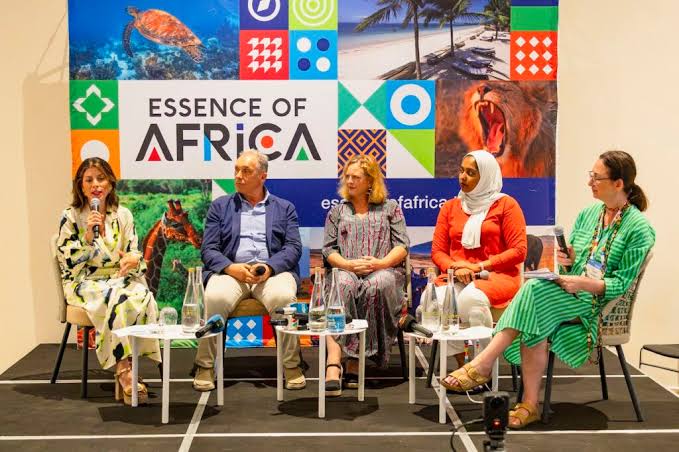
Essence of Africa 2026 in Zanzibar Essence of Africa is a trade forum, which means…
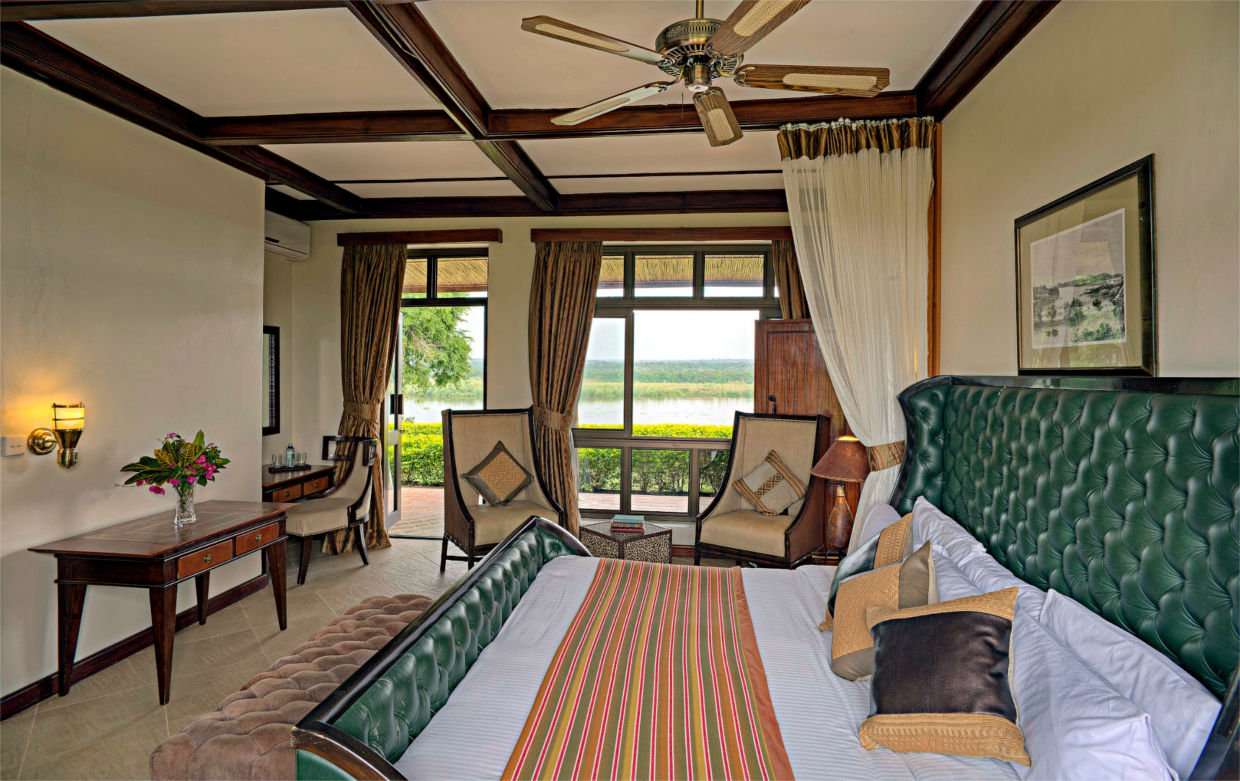
Best Big 5 Safari Lodges in Uganda
Best Big 5 Safari Lodges in Uganda
Best Big 5 Safari Lodges in Uganda; Uganda rarely tops the first list of Big Five destinations that comes to mind, and that is exactly what makes it interesting. While Kenya and South Africa see far higher visitor numbers, Uganda’s parks pair genuinely strong lion, leopard, elephant, and buffalo sightings with landscapes that range from Nile-side savannah to the strange, flat-topped fig trees where the Ishasha lions climb to escape the heat.
The one honest caveat, and worth addressing before anything else, is rhino: Uganda’s wild rhino population was hunted to extinction decades ago, so a true Big Five trip here means adding a stop at Ziwa Rhino Sanctuary, a dedicated breeding and reintroduction reserve a few hours from Murchison Falls National Park.
Once you account for that, Uganda delivers a Big Five experience that is every bit as rewarding as its more famous neighbors, at a noticeably lower cost and with far fewer other vehicles at each sighting.
Should Uganda Be on Your Big Five Shortlist?
If your priority is ticking the Big Five in the fewest possible days with the least effort, Kenya or South Africa will get you there faster. But if you are open to a slightly more involved itinerary in exchange for uncrowded game drives, lodges that feel more personal because they host far fewer guests, and the option to pair Big Five viewing with gorilla or chimpanzee trekking in the same trip, Uganda earns its place. It particularly suits travellers who have already done a classic Kenya or South Africa safari and want the Big Five experience layered into something more varied.
Where to Find the Big Five in Uganda
Three parks do the heavy lifting: Queen Elizabeth National Park in the southwest, Murchison Falls National Park in the north, and Kidepo Valley National Park in the remote northeast, with Ziwa Rhino Sanctuary filling the rhino gap en route to or from Murchison Falls. Each has a distinct character, and most well-built itineraries combine two of the three rather than attempting all four stops in a single trip.
Queen Elizabeth National Park
Queen Elizabeth is Uganda’s most visited savannah park, known for the tree-climbing lions of its Ishasha sector, a genuinely unusual behaviour seen reliably in only a handful of places on the continent, and for the Kazinga Channel, a natural waterway connecting Lake Edward and Lake George that draws enormous concentrations of hippos, elephants and buffalo, especially visible on a boat cruise at midday when other game viewing slows down. Leopard sightings here are good though not guaranteed, and the park’s mix of savannah, wetland and crater lakes makes for varied scenery across even a two-day stay.
Murchison Falls National Park
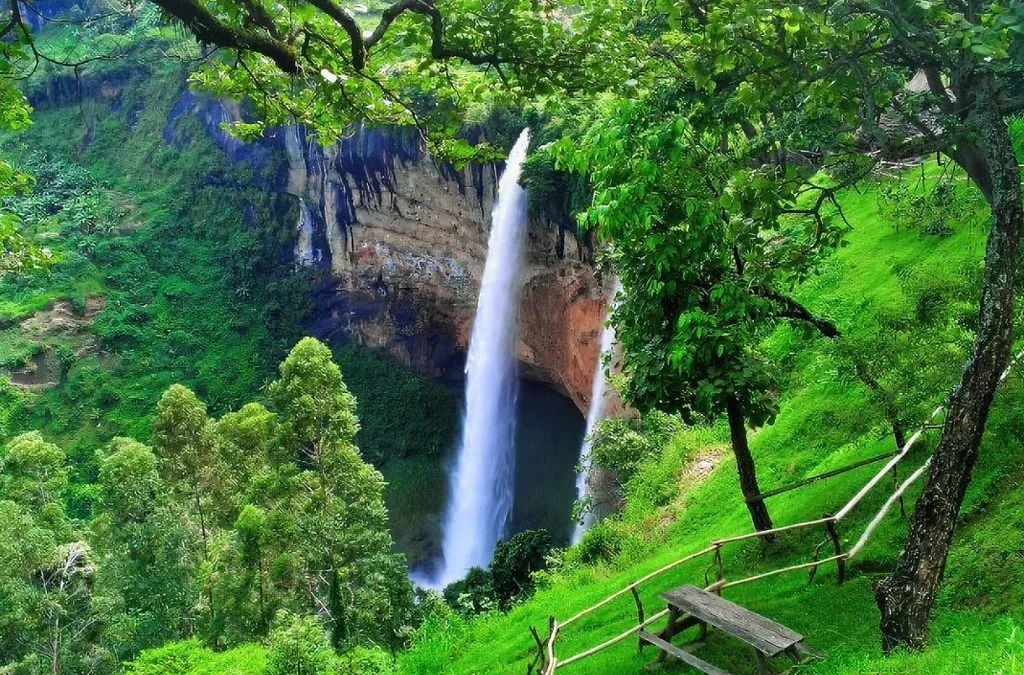
Uganda’s largest park is built around the Nile River and the thundering, narrow gorge where the entire river forces itself through a gap barely seven metres wide before dropping 43 metres in a wall of spray.
Game drives on the park’s northern bank deliver strong elephant, buffalo and lion sightings, while a boat cruise to the base of the falls is one of the best wildlife viewing activities in the park, regularly turning up hippo pods, crocodiles and elephants drinking at the water’s edge. Murchison Falls pairs naturally with a stop at nearby Ziwa Rhino Sanctuary, where you can track both southern white rhino on foot, completing the Big Five in a way no other single Uganda itinerary manages as efficiently.
Kidepo Valley National Park
Kidepo is Uganda’s most remote major park, tucked against the borders of South Sudan and Kenya, and it rewards the extra effort of getting there with a wilderness feel that Queen Elizabeth and Murchison Falls, both more accessible, cannot quite match.
Elephant and buffalo sightings are near-daily, and lion, leopard and cheetah are all realistic possibilities, with Kidepo being one of the only parks in Uganda where cheetah are present at all. Because it is harder to reach, usually by light aircraft rather than road, visitor numbers stay low even in peak season, and it suits travellers who have already done a first Uganda safari and want something wilder for a second visit.
The Best Big Five Lodges, Park by Park
Queen Elizabeth National Park Lodges
Mweya Safari Lodge sits on a peninsula with views over the Kazinga Channel and Lake Edward, and is the park’s most established option, well suited to travellers who want reliable comfort and an easy base for both game drives and boat cruises.
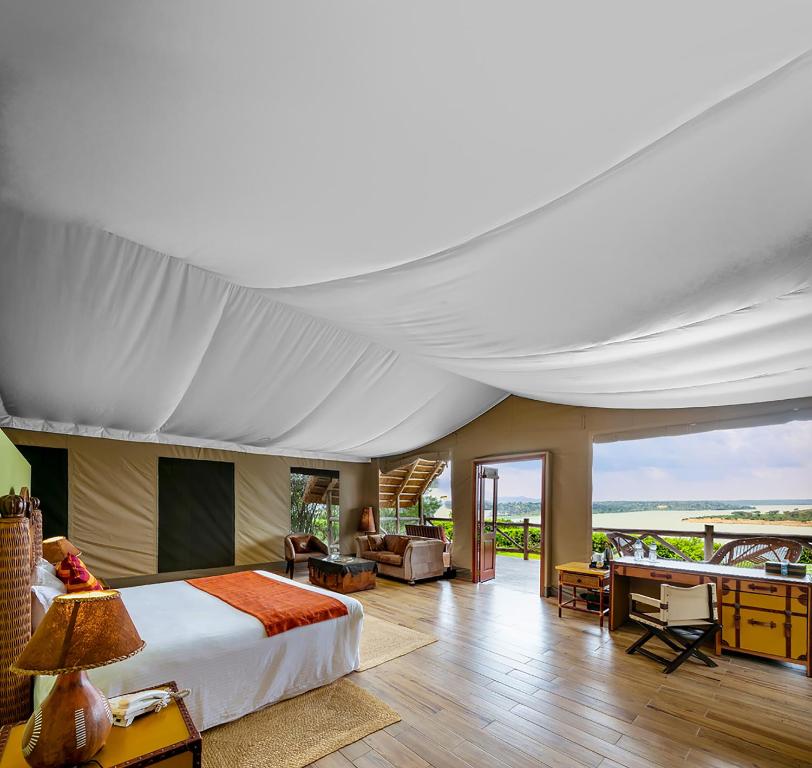
Elephant Plains is arguably the most polished lodge in the park, positioned on a small rise overlooking a crater lake with views toward Lake George, and suits travellers prioritising a more luxurious, design-forward stay. Ishasha Wilderness Camp puts you directly in tree-climbing lion territory in a small tented camp, the right choice for travellers whose main goal is seeing that specific, unusual behaviour rather than maximising overall Big Five variety.
Murchison Falls National Park Lodges
Paraa Safari Lodge is a hotel-in-the-bush set upstream of the falls on the Nile’s northern bank, a solid, comfortable choice for travellers who want dependable infrastructure and easy access to both boat cruises and game drives. Nile Safari Lodge, set on the river’s southern bank, trades a little accessibility for more intimate, elevated views over the Nile and a quieter atmosphere. Baker’s Lodge, a smaller riverfront tented camp, suits travellers who want a more personal, lower-key stay without sacrificing proximity to the falls and the best game-viewing tracks.
Kidepo Valley National Park Lodges
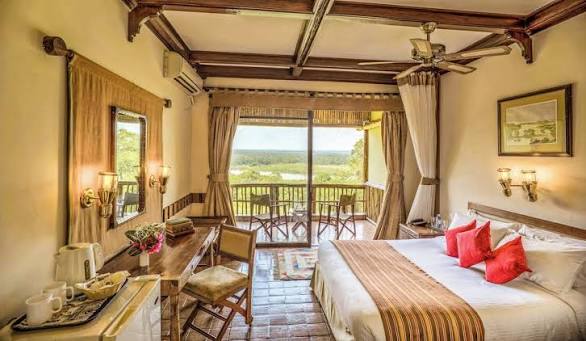
Apoka Safari Lodge is the standout property here, perched on a rocky ridge above a waterhole that draws wildlife past the lodge itself, and it is the obvious choice for most travellers given how few alternatives exist this far from the rest of Uganda’s tourism infrastructure. Kidepo Savannah Lodge offers a simpler, more budget-conscious alternative with traditional thatched cottages and open views across the valley, suited to travellers who want to experience Kidepo without the premium price tag of Apoka.
Lodge Comparison at a Glance
| Lodge | Park | Best For |
| Mweya Safari Lodge | Queen Elizabeth | Reliable comfort, easy logistics |
| Elephant Plains | Queen Elizabeth | Design-forward luxury |
| Ishasha Wilderness Camp | Queen Elizabeth | Tree-climbing lions |
| Paraa Safari Lodge | Murchison Falls | Dependable, well-located base |
| Nile Safari Lodge | Murchison Falls | Quiet, elevated river views |
| Baker’s Lodge | Murchison Falls | Intimate riverfront tented stay |
| Apoka Safari Lodge | Kidepo Valley | Premier remote wilderness stay |
| Kidepo Savannah Lodge | Kidepo Valley | Budget-conscious remote option |
When to Go
Uganda’s dry seasons, roughly December through February and June through September, offer the easiest game viewing, with thinner vegetation and animals concentrated around permanent water sources.
These months also align well with gorilla trekking conditions if you are combining a Big Five circuit with Bwindi Impenetrable Forest, since drier trails make for a considerably easier trek. The wetter months, particularly March through May, bring lower rates and lush, dramatic scenery, and game viewing remains solid, though thicker vegetation can make sightings slightly harder to spot at distance.
Budgeting for a Uganda Big Five Trip
Uganda is noticeably more affordable than Kenya, Tanzania or Botswana at equivalent comfort levels. Budget lodges and tented camps run roughly $150 to $250 per person per night, mid-range options with a private vehicle and guide sit between $250 and $450, and the top-tier properties like Apoka or Elephant Plains reach $450 to $800. If you are combining Big Five viewing with gorilla trekking, budget an additional $700 permit fee per person, non-negotiable and best booked well in advance since daily numbers are capped.
Planning Advice
The most efficient classic itinerary pairs Murchison Falls with Queen Elizabeth over seven to eight days, adding the Ziwa Rhino Sanctuary stop en route from Entebbe to Murchison Falls to complete the Big Five early in the trip.
Kidepo is worth adding only if you have ten or more days available, since the flight there and back effectively uses a full travel day each way; trying to squeeze it into a shorter trip usually means arriving tired and leaving too soon to appreciate why the extra effort was worth it.
If gorilla trekking is part of the plan, Bwindi Impenetrable Forest sits reasonably close to Queen Elizabeth, making a Queen Elizabeth, Bwindi, Murchison Falls loop a logical, well-tested route that many operators run as standard.
Our Recommendations by Traveller Type
First-time Uganda visitors should prioritise Murchison Falls and Queen Elizabeth, staying at Paraa Safari Lodge and Mweya Safari Lodge for a dependable, well-supported introduction. Travellers chasing a specific wildlife moment should head straight for Ishasha Wilderness Camp and the tree-climbing lions.
Photographers and repeat safari travellers wanting fewer vehicles at every sighting should make the extra effort to reach Kidepo Valley and stay at Apoka. Budget-conscious travellers can still see all three parks by mixing in Kidepo Savannah Lodge and simpler tented options in Queen Elizabeth and Murchison Falls without sacrificing much in wildlife access.
Getting Between the Parks
Road transfers in Uganda take longer than distances on a map suggest, since much of the network outside major towns is unpaved and shared with local traffic. Entebbe to Murchison Falls by road runs five to six hours, and Murchison Falls to Queen Elizabeth is a similar stretch, often broken up with a stop in Kibale Forest for chimpanzee trekking along the way. Domestic flights on light aircraft connect Entebbe with airstrips near all three parks and cut those transfer times to under an hour, at a meaningfully higher cost. For travellers with limited time, especially anyone adding Kidepo Valley, flying between parks is less a luxury than a practical necessity, since the road journey there alone can take a full day each way.
Self-driving is possible in Queen Elizabeth and, with more caution, Murchison Falls, but most visitors are better served by a private guide-driver, both for the game-spotting expertise and because navigating unmarked park tracks without local knowledge can easily mean missing the sightings your itinerary was built around.
Frequently Asked Questions
Can I see all of the Big Five in Uganda?
Yes, but only by including Ziwa Rhino Sanctuary, since wild rhino no longer exist in Uganda’s national parks. Lion, leopard, elephant and buffalo are all realistic sightings in Queen Elizabeth, Murchison Falls and Kidepo Valley.
Which park has the best leopard sightings?
Queen Elizabeth and Kidepo Valley both offer good leopard sightings, though neither matches the near-guaranteed viewing found in South Africa’s Sabi Sands. Leopards remain more elusive across Uganda generally.
How many days do I need for a Big Five Uganda safari?
Seven to eight days covers Murchison Falls and Queen Elizabeth comfortably. Add three to four more days if you want to include Kidepo Valley or gorilla trekking in Bwindi.
Is Uganda cheaper than Kenya or Tanzania for a Big Five safari?
Generally yes, at equivalent comfort levels. Uganda’s lower visitor volumes and less saturated luxury market keep prices noticeably below Kenya, Tanzania or Botswana.
Do I need a visa to visit Uganda?
Most nationalities require a visa, available as an e-visa applied for online before travel or, for some travellers, on arrival at Entebbe International Airport. Uganda also participates in the East Africa Tourist Visa, which covers Uganda, Kenya and Rwanda on a single visa and is worth considering if your trip spans more than one of those countries.
Related Posts