Essence of Africa 2026 in Zanzibar Essence of Africa is a trade forum, which means…
Where to Go for Photography Safaris in Uganda?
Where to Go for Photography Safaris in Uganda?
Where to Go for Photography Safaris in Uganda? The photography on a Uganda safari is not the kind that happens from a kilometer away with a 600mm lens trained on a pride scattered across the Masai Mara horizon.
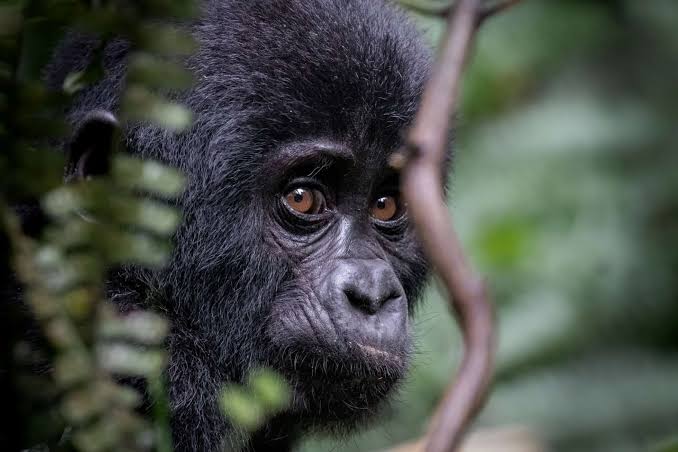
Uganda’s encounters are close and often loud and frequently unexpected. A silverback looks up from feeding and holds your gaze for a moment that has nothing to do with focal length and everything to do with being in the right place and ready.
A chimpanzee drops from a branch onto the path in front of the group. An elephant comes to the riverbank at Murchison while your boat is positioned five meters away in the morning calm. The photography here rewards patience, quick reaction, and an understanding of animal behavior over pure technical reach.
This guide covers the best locations for photography safaris in Uganda, what each park offers for different photographic subjects, the practical gear considerations for Uganda’s specific conditions, the best time of year for different subjects, and the specific advice that makes the difference between coming home with mediocre images and coming home with photographs that required Uganda specifically to make.
Bwindi Impenetrable National Park
Bwindi is the most technically demanding and the most rewarding photographic location in Uganda. Everything about the forest creates difficulty: the light is filtered through multiple canopy layers and is often low, the terrain is steep and moving through it with a camera and lens is physically demanding, and the gorillas do not pose.
They eat, they sleep, they interact with each other, they occasionally look at you. The frame is yours to make out of whatever is happening when you reach the family.
The specific photographic challenge of gorilla photography in Bwindi is the combination of low light and subject movement. The forest light, even on a bright morning, is significantly darker than open savannah light, and a gorilla in deep forest shade can require ISO settings that no photographer would choose voluntarily.
This is where fast primes and wide-aperture zoom lenses earn their price. A 70-200mm f/2.8 is the most commonly recommended focal range for gorilla photography: long enough to work at the seven to ten meter minimum distance and fast enough to hold a reasonable shutter speed in the understory light. A 100-400 mm covers more reach but is slower and heavier on steep terrain.
The hour with the gorilla family is fixed. How you use it matters. Spend the first few minutes watching the group and identifying the individuals most likely to produce interesting images: the silverback if he is visible and in reasonable light, juveniles playing if the light angle is favorable, or a mother and infant if you can get a clear line of sight through the vegetation.
Then commit to those subjects rather than chasing every movement in the group. The photographers who come back from a Bwindi gorilla trek with strong images are usually the ones who chose a subject and worked it for ten minutes rather than the ones who fired at everything.
Murchison Falls National Park
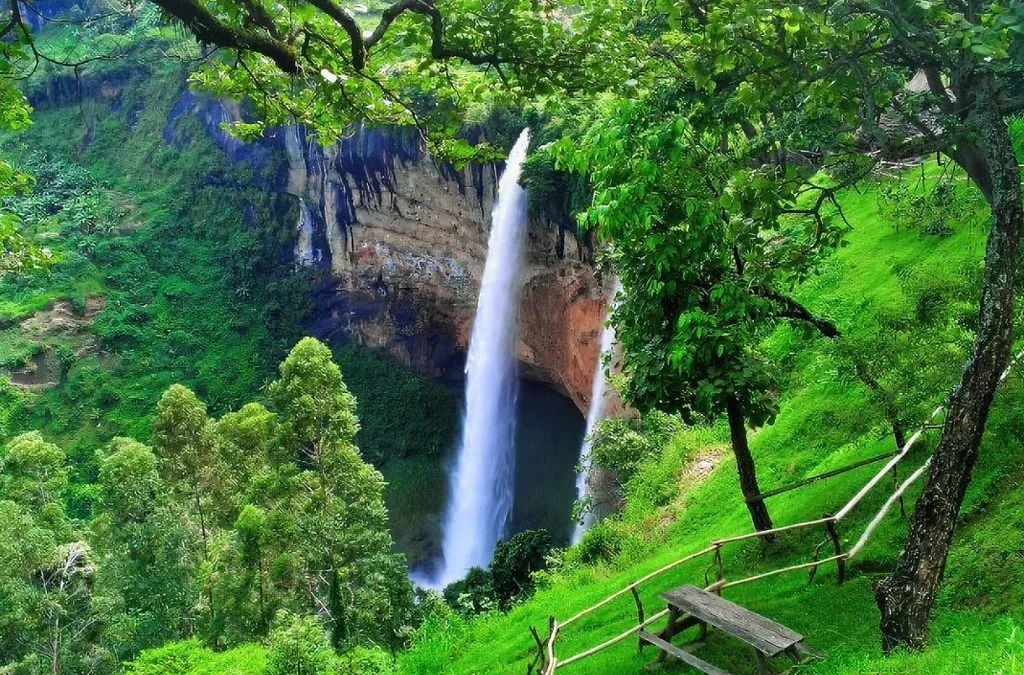
Murchison Falls National Park is where Uganda produces its most dramatic landscape photography. The Victoria Nile, forcing its entire volume through a seven-meter gap in the rock and dropping forty-three meters into the pool below, is a waterfall that you cannot take a bad photograph of from the right position.
The view from the boat anchored below the falls, looking up at the gorge with the water falling above, and the view from the top road looking down into the gorge with the pool below are two completely different compositions from the same falls, and both are worth the time to work on properly.
The Nile boat cruise from Paraa to the base of the falls gives photographers access to animal encounters that are not available from any other platform in Uganda. Hippos surface alongside the boat at distances that sometimes make a wide-angle lens the appropriate choice rather than a telephoto.
Nile crocodiles lie on exposed mud banks at eye level from the water. Elephants and buffaloes come to the riverbank to drink in the morning, and the low angle of the boat relative to the animals on the bank gives a perspective that a vehicle can never replicate.
African fish eagles call from the riverine trees and can be photographed at close range when the captain positions the boat near the bank. The boat cruise is one of the best photographic hours available anywhere on a Uganda safari.
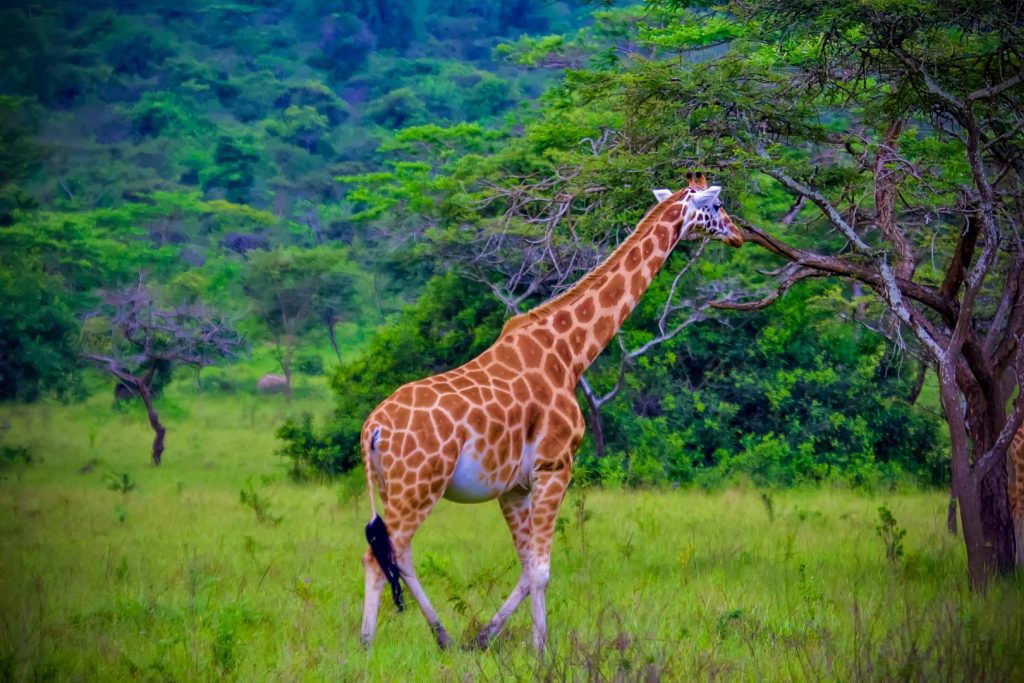
The Buligi game drive circuit on the north bank of the park covers open savannah where Uganda’s largest lion population hunts and rests. Morning drives at Murchison start around 6:30 AM, and the first two hours produce the best light and the most active wildlife: lions moving back to shade after a night of hunting; giraffes visible against the horizon in the low-angle early light; and elephants in family groups moving toward water with the Borassus palm silhouettes behind them.
The Borassus palm landscape of Murchison is visually distinctive in ways that the acacia savannah of Kenya or Tanzania is not, and landscape photographers who take the time to use the palms as compositional elements in the background of their wildlife shots come back with images that are immediately identifiable as Murchison.
Queen Elizabeth National Park
Queen Elizabeth National Park offers Uganda’s most varied photographic terrain in a single park: open savannah on the Kasenyi Plains, the Kazinga Channel waterway with its exceptional animal density, the dramatic volcanic crater landscape in the park’s center, and the Ishasha sector in the south where the tree-climbing lions are found.
A photographer who spends four nights in Queen Elizabeth and covers all of these areas will come back with a portfolio that spans landscape, wildlife, and water photography in a way that very few other parks in Africa allow.
The Kazinga Channel boat cruise is Queen Elizabeth’s best photographic opportunity and one of the best on any Uganda safari. The channel connects Lake George to Lake Edward and holds one of the highest hippo concentrations in Africa. The boat moves at a pace that allows sustained observation of animals on both banks, and the low water-level angle produces a perspective on large mammals that vehicle-based photography cannot match.
Elephants and buffaloes that come to the bank to drink are photographed from eye level or below. Hippos in the channel surface alongside the vessel. The morning departure at 9:00 AM catches the best light on the south bank and the most active wildlife before the heat builds. The afternoon cruise at 2:00 PM is worth considering for the warmer, more orange afternoon light that catches the hippos and the waterbirds in the last two hours before sunset.
The Ishasha sector’s tree-climbing lions are one of Uganda’s most photographed subjects and one of the most frustrating photographic challenges on the Africa safari circuit. The lions rest in sycamore fig trees whose dense canopy provides shade and elevation, and the same canopy that the lions use for comfort creates a constant battle for the photographer between achieving a clean line of sight and avoiding the branches that block or fragment the frame.
Getting a clean, unobstructed shot of a lion in an Ishasha fig tree takes patience, multiple vehicle positions, and frequently some luck with which branch the animal decides to rest on. When it comes together, the image of a lion above you in a tree, looking down with the open Ishasha plains in the background, has no equivalent anywhere else in East Africa.
Kibale Forest National Park
Chimpanzee photography in Kibale Forest National Park is one of the most technically demanding wildlife photography experiences available in East Africa. Gorillas can be slow and deliberate; chimpanzees are none of those things.
A habituated Kibale chimpanzee community moves fast, vocalizes loudly, swings between trees, drops to the forest floor, charges across the path, climbs back into the canopy, and does all of this simultaneously in multiple directions. You are not waiting for the subject to look up. You are tracking a subject that rarely holds still long enough for a considered composition.
The photography here rewards a different approach from gorilla work. Burst mode shooting is more useful in Kibale than in Bwindi because the chimpanzees move fast and the moment that makes the frame is often between the frames you intended to shoot.
A fast autofocus system that can track a subject moving horizontally through dappled forest light is more valuable than outright focal length. Eye-tracking autofocus, which the current generation of mirrorless cameras handles increasingly well, is a particular advantage when a chimpanzee is swinging overhead and the only clear shot is a fraction of a second long.
Kidepo Valley National Park
Kidepo Valley National Park in Uganda’s far northeast is where the country’s photography landscape shifts completely. There are no other vehicles at your sightings. The Narus Valley plain is ringed by flat-topped mountains and rocky escarpments that give every game drive composition a background that is different from any other park in Uganda.
The sky above Kidepo is enormous and dramatic in a way that the more forested western parks cannot produce, and the landscape photography opportunities here, with the mountains and the valley floor and the complete absence of other human presence in the scene, are among the best available on a Uganda safari.
Kidepo’s lion population is around 130 individuals and growing. Finding them on the rocky kopje outcrops at the edges of the Narus Valley, with the Nyangea-Napore Hills behind them and nothing else in the frame, produces images with a character that is distinctly different from a Masai Mara lion photograph.
The absence of other vehicles, the space around the sighting, and the quality of the background landscape give Kidepo lion photographs a rawness and isolation that the busier parks cannot replicate. Kidepo also holds the only cheetah population in Uganda, which adds a predator photography subject that no other Uganda park offers.
Lake Mburo National Park
Lake Mburo National Park offers a photographic experience that none of Uganda’s other parks can provide: wildlife photography from horseback. The horses approach zebra herds, impalas, and eland at distances that a vehicle cannot achieve, and the eye-level perspective from a horse on a standing zebra in the morning light gives a different quality of image than the same subject photographed from a pop-top vehicle roof. For photographers willing to manage both a camera and a horse simultaneously, the horseback safari at Mihingo Lodge is worth the extra planning.
Mabamba Swamp
The Mabamba Swamp on the northern shore of Lake Victoria, about an hour from Entebbe by road, is one of the most productive single birding photography locations in East Africa. The Shoebill Stork, which has been on most serious bird photographers’ wish lists since they first encountered a picture of one, is found here with greater consistency than almost anywhere else on the continent. The swamp is accessed by canoe, which allows a very quiet, low-level approach to birds in the papyrus margins.
Shoebill photography at Mabamba combines the photographic advantages of a calm water surface, an extraordinary subject, and an approach angle that places the camera almost at water level when shooting from the canoe.
A 400mm to 600mm focal length is standard for the longer-distance encounters, but the Shoebill’s tendency to remain motionless for extended periods means that when the canoe gets close, the problem shifts from reach to proximity. A
A bird the size of a shoebill at ten meters from a canoe does not need a 600 mm lens; it needs a 300 mm or 400mm and a careful composition that includes the papyrus context rather than filling the frame with the bird alone.
Related Posts