Small Group vs Large Group Safari: Pros and Cons Group safari sizes in East Africa…
Budget Vs Luxury Safari Cost In Uganda
Budget Vs Luxury Safari Cost In Uganda | Uganda Safari Costs | Costing of a Uganda Tour
Budget Vs Luxury Safari Cost In Uganda, If you are sitting there looking at safari quotes for Uganda and wondering why one company wants 2,000 dollars while another is asking for 9,000, you are about to find out the secrets to safari costing.
As a safari operator who spends my days balancing several costs for distinctive safari packages, I can tell you that Uganda can be, somewhat, a tricky place to budget for.
In Uganda, the cost of your safari has the power to change how you move, where you eat, and how many destinations in Uganda you actually get to experience with ease.
In 2026, the cost of a safari in Uganda has shifted a bit due to new park fees and fuel prices, plus some other unpredictable costs. To help you make a real decision, I am going to pull back the curtain on the actual costs of being on the ground.
The fixed costs of a Ugandan safari
Before we even talk about the difference between transport means like van and a plane, you need to understand the “Fixed Costs” of a Ugandan safari. These are the fees set by the Uganda Wildlife Authority (UWA), the statutory body controlling tourism in Uganda.
No operator, no matter how much they would wish, can change the fixed costs of safaris in Uganda. Actually, if any tour operator promises to offer you a permit for less, they are likely lying and you need to run to save your dollars from scammers. The fixed prices when costing a Uganda safari are as follow;
- Gorilla Permits, in 2026, these are 800 dollars for foreign nonresidents. If you come in the “Low Season” months of April, May, or November, some years have seen discounts, but for 2026, the standard remains 800 for the peak. However, there is hope that UWA might communicate a general low season gorilla trekking permit cost to 600 dollars.
- Chimpanzee Permits in Uganda cost 250 dollars if you are going to Kibale Forest which is the best spot destination in Africa, for chimpanzee tracking.
- Park Entrance is another fixed cost, it is now about 45 dollars per day for Murchison Falls and 40 dollars for Queen Elizabeth or Kidepo and Lake Mburo National Park. I cannot tell you the reason why the two national parks have different entry costs but from Uganda wildlife authority classification, Murchison falls national park is rated class A+ while Kidepo Valley National Park and other parks are classified class A. That partly explains the slight cost difference
- Vehicle Fees to make your logistics easy. A safari vehicle pays about 30,000 Shillings (roughly 13dollars) per entry if it is Uganda-registered in other parks while at Murchison falls its 40,000 Uganda shillings or its equivalent in major currencies like US Dollars, GBP and Euro
These are your basic Uganda safari costs. A three day gorilla trip already starts at 800 US dollars for the permit plus about 120 dollars for dry lease car hire fee per day for a good standard land cruiser without fuel before you have even eaten a meal or even found a safari lodge to stay.
- The Budget Safari on the Ground Experience
Budgeting in Uganda is for the traveler who has more time than money and does not mind a bit of a “rough and tumble” journey along the country roads to the safari circuits. One fact is for sure, the road safari trip can be very memorable and rewards through community stop overs, visiting road side markets, fruit tasting and scenery views. The following aspects can be part of your budget safari in Uganda;
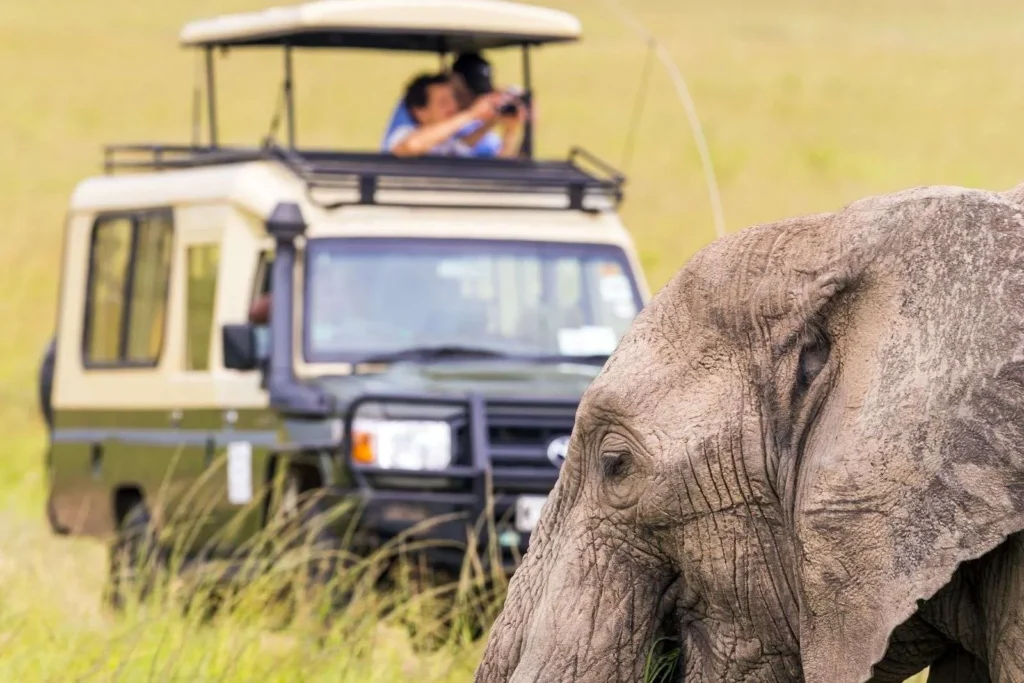
The safari Vehicle: On a budget trip, you will be in a 4×4 safari van. These are Toyota Hiace vans with a pop up roof. They are reliable, and very recommendable if we are planning sustainable safaris. Because if one van can carry 10 passengers, then it reduces on the number of vehicles thus reduced disturbance and carbon emissions.
On the long, all weather dirt roads of northern Murchison or southern Bwindi, you Might feel some turbulence, or every single stone. We call this the “African Massage”, and yeah, maybe it is. By day six, your back will know exactly what I mean. However, these small experiences might be the reason as to why you truly was on an authentic African safari.
Accommodation in Bandas and Guesthouses You can stay in “Bandas” (local huts) or budget lodges like Red Chilli in Murchison or Buhoma Community Rest Camp in Bwindi and many others located in all tourist areas in Uganda. This is to make the tourist activities accessible for all, regardless of the budget
- The Reality: You will have a mosquito net and a clean bed. However, the shower might not have warm and cold options. For warm water, someone brings you a plastic container full of hot water of hot water which you can mix with cold water in a bucket.
However these might be the student centers in the deepest rural areas. Most of the country is supplied with tap water making even budget accommodation have showers.
The power often runs on a generator, though this might not be the case unless in the deepest remote areas in Uganda. Uganda is well supplied with electricity and solar energy making even budget guest houses have the basic amenities.
- The Food: You can eat a lot of local food, because it is more affordable than continental options. Freshly fried tilapia from the Nile, “Rolex” (eggs rolled in a chapati), and groundnut sauce/peanut butter with matooke, these are common in local restaurants in Kasese, fort portal, or Kisoro. Food is not all, the other continental restaurants can serve you the delicacies familiar to your taste.
The estimated typical cost of a budget safari in Uganda usually runs between 250 and 550 dollars per day per person excluding gorilla tracking permits
- The Luxury Safari or exclusive experience
Luxury safari in Uganda is mostly about one thing, Time. Uganda is a big country with slow roads to remote safari areas in the west, east, and north of the country. A luxury Uganda safari eliminates the struggle, and the long road trips. The following are aspects of a luxury Uganda safari;
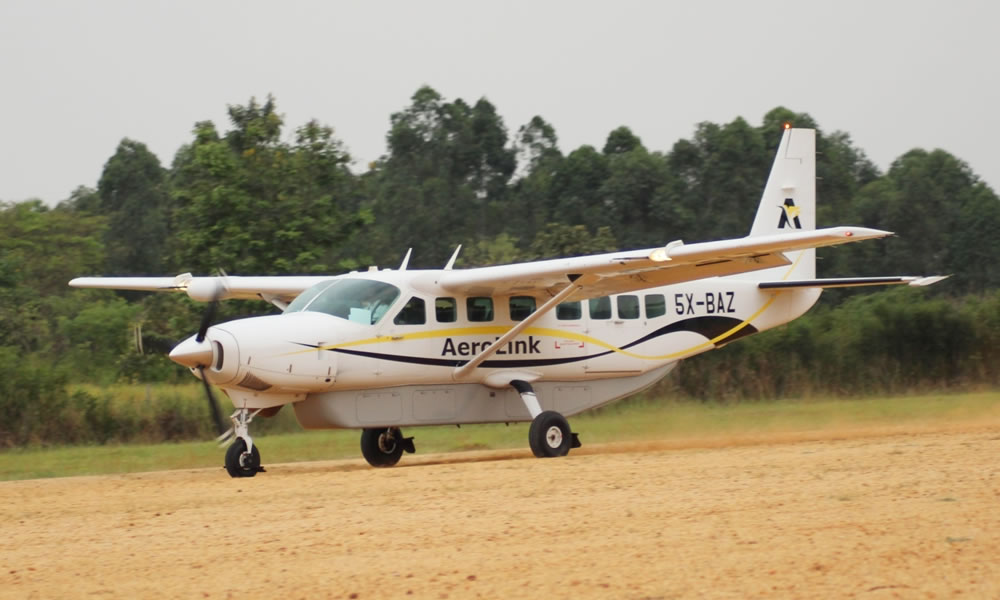
The Transit transport from Entebbe is mainly flights. Instead of driving nine hours from Entebbe to Bwindi, you go to the airport and board a 12-seater Cessna Caravan operated by Aerolink or Bar Aviation. In 75 minutes, you land at the forest. These flights cost about 330 to 400 dollars per leg, but they save you two whole days of sitting in a car, giving you time to experience your wanderlust.
The Land Cruiser is the common vehicle for the luxury travelers in Uganda. Once you land, a luxury Land Cruiser picks you up from the airstrip to your lodge. Like in Bwindi, from the air strip, the guest can enter into the cruiser to the lodge to relax until the trekking morning.
These have coil suspension (much smoother), a fridge for cold beer and water, and only four or six seats so everyone has a window seat. Many have an open roof, however others do not, so be reminded to share specific details when finalizing your safari inquiry.
High-End Eco-Lodges are part of the luxury experiences. You stay at places like Clouds Mountain Gorilla Lodge or Chimpundu Lodge in Kibale Forest. Or Nile Safari Lodge in Murchison falls national park. The simple details added onto the bed like the views, the bath tub, sustainable food gardening, sustainable solar energy, and others, all make the experience luxurious.
As an expert who has handled these elite trips, I can tell you that luxury in the Ugandan jungle is measured by how much of the struggle is taken off your shoulders. When you stay at a place like Sanctuary Gorilla Forest Camp, you are staying at the only lodge located right inside the Bwindi Impenetrable National Park boundaries.
While budget travelers are waking up in the dark at five in the morning to drive for over an hour on slippery and dangerous mountain roads, you are waking up to the sound of forest birds at seven. You simply finish a hot breakfast and walk a few steps to the briefing point. You start your hike fresh, while others are already tired from the commute.
The service with your boots is a legendary part of the experience at lodges like Nkuringo gorilla Lodge or Clouds Mountain Gorilla Lodge. Gorilla trekking involves sliding through deep mud and pushing through thick vines. By the time you get back to the lodge, your gear is usually a mess. Your personal butler meets you at the entrance with a cold drink and takes those heavy and muddy boots away.
While you are relaxing in a deep bathtub that looks out over the ancient forest canopy, a team is working to scrub and dry your gear by a real wood fire. By the time you sit down for a five course dinner with fine wine, your boots are back in your room, clean and ready for the next day. This level of care is what makes a luxury safari in Uganda worth the investment because it turns a physically demanding trek into a purely magical memory.
The Cost: This will run you 1,500 to 2,800 dollars per day per person.
- The Mid-Range Safari: The “Sweet Spot”
As an operator, this is what I usually recommend if you want to actually enjoy yourself without spending your inheritance.
You take a Private Land Cruiser (trust me, your back will thank you) but you drive instead of fly. You stay in “Comfort” lodges like Turaco Treetops in Kibale or Elephant hab in Queen Elizabeth national park. You get a private bathroom, 24-hour solar power, and a swimming pool, but you don’t have a private butler.
The mid-range safari is what I like to call the sweet spot because it is where you get the most value for every dollar you spend.
As an operator who has seen many travelers come through Entebbe or Kigali, I usually suggest this route if you want to enjoy the Pearl of Africa without spending your entire inheritance. You are not flying in bush planes, but you are also not static into a basic van.
Instead, you take a private 4×4 Land Cruiser. Trust me, your back will thank you for this choice. These vehicles have much better suspension, perfect leg room and larger windows, which is vital when you are spending six or eight hours on the road or trying to get the perfect photo of a leopard in Queen Elizabeth National Park.
When it comes to where you sleep, you stay in comfort lodges like Turaco Treetops in Kibale or Buhoma Haven Lodge in Bwindi. These places are beautiful and sit right on the edge of the wilderness. At Kasenyi Safari Camp, you might wake up to the sounds of lions roaring across the plains, while at Buhoma Haven, you are literally at the doorstep of the mountain gorillas.
You get a private bathroom with hot water and twenty four hour solar power, which is a massive upgrade from budget camps where the lights go out at ten at night. Most of these lodges even have a swimming pool where you can wash off the dust of the day while looking out over the savannah
You won’t have a private butler to shine your boots, and you will have to walk yourself to the dining room for your three course meal, but the quality of the service is still very high. For a price between 450 and 850 dollars per day, you get a professional guide who knows the birds and the tracks, a very comfortable bed, and a vehicle that won’t break down in the middle of a muddy forest. It is the perfect balance for someone who wants a real adventure with a soft place to land at the end of the day.
The Cost: Expect 450 to 850 dollars per day per person.
Relevant Details You Need to Know
Tipping Guidelines for 2026
Tipping is not mandatory in Uganda, but it is deeply built into the local culture and widely expected. For many of the people you will meet, the ones who carry your bags, find the lions, or cook your dinner, these tips are how families pay for school fees and medical bills. In 2026, as the cost of living has risen, your tip, small gesture, of thanks goes a massive way.
- Your Driver Guide: Your guide is your driver, your storyteller, and your protector for the entire trip. They often work fourteen hour days. The standard is 15 to 25 dollars per person day. It is best to put this in an envelope and hand it to them personally on the very last day of your trip.
- Gorilla Ranger guides and Trackers: These are the people who go into the forest at five in the morning to find the gorillas so you don’t have to wander for hours. There is usually a lead ranger guide and a team of trackers. A tip of 10 to 20 dollars per person in your group is a great way to thank them for their expertise and for keeping you safe in the thick jungle.
- Hire a Porter; this is the most important piece of advice I can give you. It costs about 20 dollars per porter on a trek. Even if you are an Olympic athlete and your bag is light, hire a porter. Most porters are local people from the villages surrounding the Bwindi Impenetrable National Park. Hiring them is the most direct way to make sure the money from tourism stays in the local community. If you do not hire a porter, that family misses out on income for that day. Plus, they will literally pull you up the steep hills or hold your hand so you don’t slip on the muddy slopes.
- Lodge Staff: Behind the scenes, there are cleaners, gardeners, and chefs working hard to make your stay perfect. Most lodges have a Tip Box at the reception desk. Dropping in 10 dollars per day covers everyone you didn’t see face to face. It is usually shared out equally among the staff at the end of the month.
The Hidden Costs
When you are planning your budget, these small things can sneak up on you. Knowing the hidden costs now helps you plan your cash properly before you leave Kampala or Entebbe.
- Laundry: Most lodges will do your laundry for a few dollars per item, or sometimes a flat fee for a bag. Because the roads are dusty and the forests are muddy, you will get dirty. Instead of packing ten different outfits and paying for extra weight on a plane, just pack three or four good sets of clothes and get them washed every few days. It is much easier.
- Drinks: If you are on a budget safari, your package usually only includes water and sometimes coffee or tea. You will need to pay for your own sodas or beers at the lodge bar. A beer is usually around 2 to 3 dollars, and a soda is about 1 dollar. If you are on a luxury safari, these are almost always included in your room price, but it is always good to double check your booking details.
- Souvenirs: You will definitely want to take home a memory of the Pearl of Africa. A hand woven basket from a local women’s group or a small carved wooden gorilla usually costs between 10 and 40 dollars. If you see something you love at a community craft shop, buy it there. It supports the local artists much more than buying at a big airport shop later.
- Visa Fees: Do not forget that you need to pay for your visa. A standard Uganda tourist visa is 50 dollars, and the East Africa Tourist Visa (if you are also going to Kenya or Rwanda) is 100 dollars. You must apply and pay for these online before you arrive in 2026.
Seasonality: The Money-Saving Secret
Seasonality is the biggest secret in the travel industry here in Uganda, and it is how smart travelers get a five star experience on a three star budget. If you want to stay in those famous luxury lodges but your wallet is telling you no, you should plan your trip for May or November. These are what we call the low season months because they fall during the rains.
Most people are afraid of a little water, so the lodges sit nearly empty. I have seen rooms that usually cost eight hundred dollars a night drop down to five hundred dollars just because the owners want to keep the lights on and the staff busy.
We call this the Emerald Season because the landscape turns a deep, vibrant green that looks incredible in photos. If you are a photographer, this is actually the best time to visit the Pearl of Africa.
During the dry season, the air is full of dust that can make your long distance shots look hazy. In May and November, the rain washes the air clean, and the colors of the trees and the birds really pop.
Do not let the word rainy season scare you away. It rarely rains all day. Usually, you get a heavy downpour for an hour or two in the afternoon, and then the sun comes out again. The animals like the lions and elephants do not care about the rain at all.
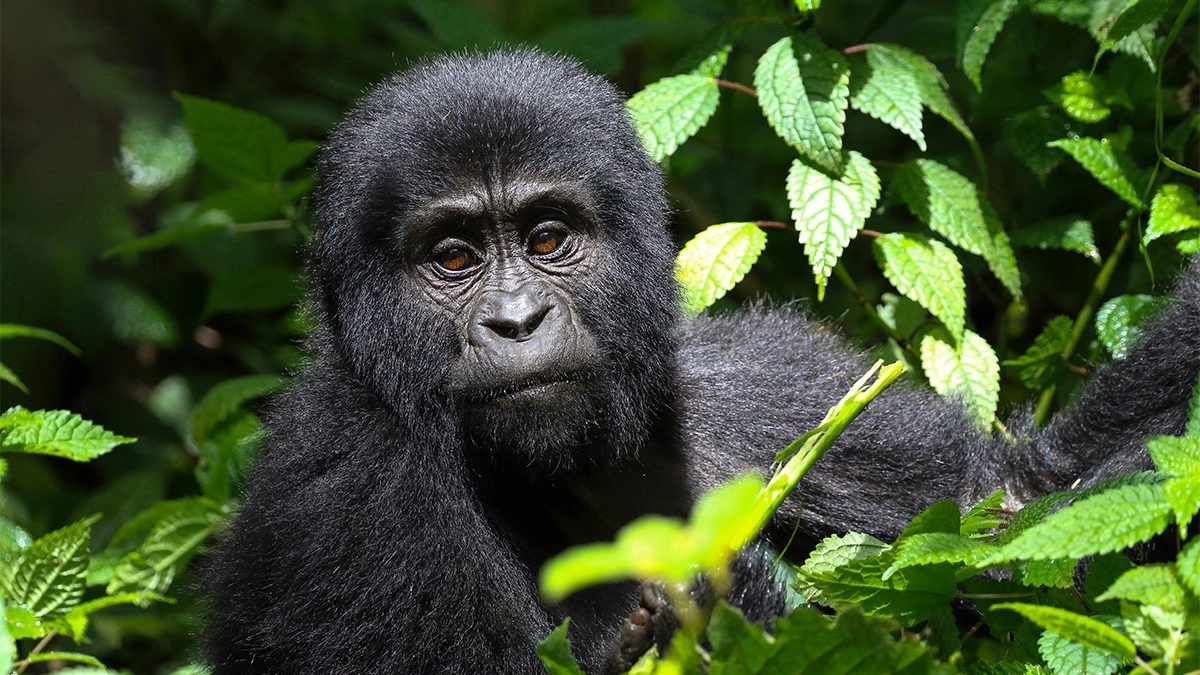
In fact, because there is plenty of water and fresh grass everywhere, the wildlife is healthy and happy. You get the same gorillas and the same big cats, but you get them without the crowds and at a fraction of the normal price.
Making the Decision
If you have five days and a healthy budget, fly. Spend the money on the flight and a luxury lodge in Bwindi. It is a world-class experience.
If you have ten days and want to see the whole country (Murchison, Kibale, Queen, Bwindi and Lake Mburo), Go Mid-Range. Take the Land Cruiser. The drives are long, and you will want the comfort of a good car and a lodge with a pool to wash off the dust. But it’s rewarding to see the beautiful countryside
If you are a backpacker and just want to see the animals, Go Budget. Join a group tour or form one and travel as a group and pay less for more. You will meet great people, have fun , eat local food, and see the same gorillas that the billionaire saw, but you will have a few more stories about the bumpy roads to tell when you get home.
Uganda is not a cheap destination, but it is one of the only places on earth where you can still feel like a true explorer. Whether you are in a van or a plane, the moment that Silverback looks you in the eye, you will forget every dollar you spent.
Stop guessing and start planning your perfect journey. Whether you want a rugged budget adventure or a seamless luxury experience, we are here to help you navigate the costs. Contact us today for a transparent quote and let us show you the very best of Uganda.
Meta description: Planning a trip to the Pearl of Africa? Discover the real truth behind Uganda safari prices in 2026. From the 800 dollar gorilla permit to the difference between safari vans and luxury flights, this guide by a local operator reveals how to budget for the adventure of a lifetime.
Related Posts