Serengeti National Park Vs Kruger National Park Serengeti National Park Vs Kruger National Park are the…
Ngogo Chimpanzees of Kibale National Park
Ngogo Chimpanzees of Kibale National Park
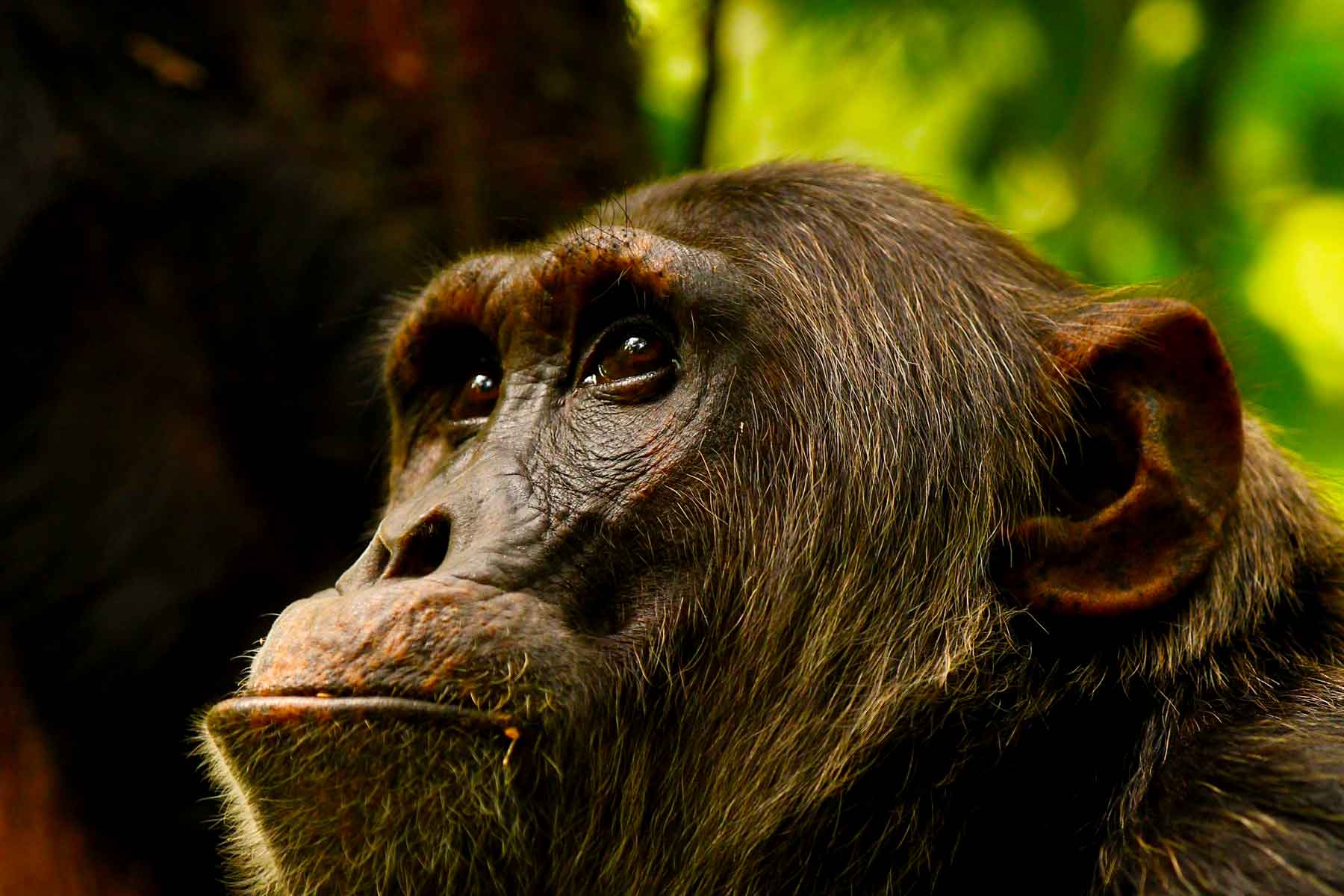
The Ngogo chimpanzees of Kibale National Park aren’t just another group of primates living in the woods. They are a massive, record-breaking society that has flipped everything scientists thought they knew about animal behavior on its head. While most chimp groups are the size of a small neighborhood, Ngogo grew into a sprawling city of over two hundred individuals. This wasn’t an accident; it was the result of a perfect environment meeting a very specific kind of ambition.
To stand within this forest is to be enveloped by a heavy, humid atmosphere where the air feels thick with the scent of damp earth and ripening fruit. The auditory landscape is equally dense. High in the canopy, the Great Blue Turaco flashes its cobalt wings, letting out a rhythmic, guttural croak that competes with the shrill, mechanical whir of cicadas. You might catch the flash of a Black-and-white-casqued Hornbill, its heavy wings beating against the air with a sound like a distant bellows.
The Secret Behind the Growth
Keeping the big Ngogo chimps group together takes an incredible amount of energy. In most forests, two hundred chimps living in one spot would be impossible; they would run out of fruit quickly, and the constant competition for leftovers would lead to endless fighting.
Ngogo is the exception to the rule of the forests. Kibale forest is a literal gold mine of giant fig trees that stay loaded with sugar and calories all year long. This provides the chimpanzees with enough food supply all year long. As you walk through the forest, you constantly hear the soft noises of ripe figs hitting the leaves on the ground.
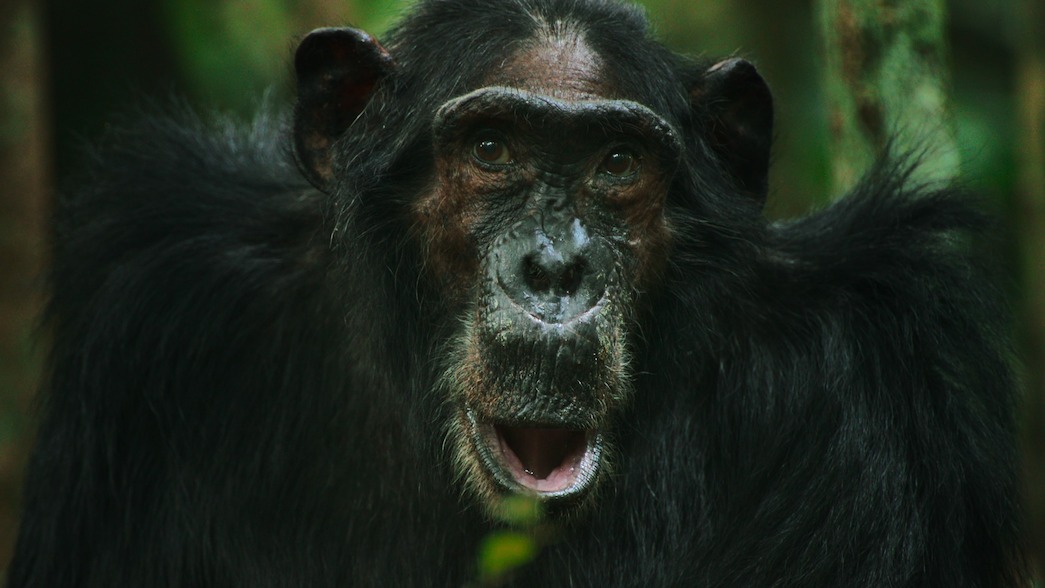
That quiet of the forest and the falling fruits is often interrupted by the chimps’ hoots. It is a sound that starts as a low, hooting breath and builds into a high-pitched scream so loud you can feel it vibrating in your chest. This sound of a chimp announcing he has found food or reminding everyone who is boss.
Because these Ngogo chimps are not constantly worried about where their next meal is coming from, they had the extra time and energy to get organized. They moved past basic survival and built a complex society that looks a lot like a human kingdom in kibale forest.
The Architecture of an Empire
With their bellies full and their numbers growing, the Ngogo chimps eventually stopped worrying about just getting by and started focusing on power. They adopted to living and owning the kibale Forest. The level of teamwork they used to dominate their neighbors is actually a bit chilling to see in person.
The Silent March
The male chimpanzees in Kibale national park are famous for their “patrols.” You will see a large group gather and suddenly go dead silent. In Kibale forest that is usually a wall of sound, filled with the rhythmic, honking calls of Trumpeter Hornbills and the high-pitched chirping of sunbirds, this silence is strange. The chimpanzees march in a single line through the thick ferns, stepping carefully over rotting logs and damp leaves to avoid making a single snap or rustle.
The Ngogo chimps are not looking for a snack during these walks, they are hunting for rivals. You might hear the distant, haunting cry of a Ross’s Turaco overhead, but on the ground, the only sound is the heavy breathing of the group as they scan the shadows.
By systematically taking out competitors and pushing back the borders of their land, the Ngongo chimps of Kibale created a massive, safe neighborhood where their families could thrive without fear.
The Warrior Culture
The Ngogo chimps’ focus on strength and territory created a unique way of life. For over twenty years, these chimps did not play defense, they went on the attack, swallowing up the land of neighboring chimpanzee groups.
This expansion gave the female chimps access to the absolute best fruit trees, which meant more babies and even more power for the group. It’s a cycle of success that looks a lot like the rise of the great human empires.
When the silence finally breaks, it’s usually with a chorus of screams and drum-like noise against tree trunks, announcing to the entire Kibale National Park that the kings of Ngogo have arrived to claim what’s theirs.
The Power Players: Faces of the Empire
If you look back at the history of Ngogo, two names stand out more than any others: Hare and Jackson. To really get how this group turned into a global superpower, you have to understand the bond between these two.
The Diplomat: Hare
Hare was not the biggest guy in the woods, and he certainly was not the strongest chimp either. In a world that usually rewards the biggest bully, Hare was a political genius. He stayed in charge for a legendary amount of time because he was a master at making friends. He knew that in a crowd of two hundred chimps, you cannot just fight your way to the top, you have to talk your way there.
On a quiet afternoon, while the Kibale forest is filled with the soft, cooing of Tambourine Doves and the occasional flash of a Red-chested Cuckoo, you would find Hare doing the hard work of politics.
Hare was famous for sharing meat after a hunt and spending hours grooming his supporters. By being a “good guy” to the right people, he built a loyal fan base that protected his position among the Ngogo chimp community in Kibale National Park.
The Enforcer: Jackson
Then there was Jackson. If Hare was the politician, Jackson was the general. He was a powerhouse of a chimp who led those terrifying border patrols with a level of focus that was honestly scary to see. Under his watch, the Ngogo territory grew faster than ever before in Kibale forest.
When Jackson moved through the brush, the usual forest sounds, like the rhythmic drumming of a woodpecker, would be replaced by the heavy noise of his feet and his deep, scary grunts.
But even a warrior like Jackson knew he could not rule by force alone. He and Hare formed a partnership that held the whole Ngogo Chimp community together for years.
This alliance between Hare and Jackson proved a simple point that; even the toughest soldier needs a smart political system to back him up. Together, they turned a group of apes into an empire in Kibale Forest.
The 2026 Fracture: When the Empire Broke
Nothing lasts forever, especially when it gets too big. By early 2026, the very things that made Ngogo Chimp community successful, the massive population and the endless expansion, became its downfall. The community finally reached a breaking point.
For the first time in recorded history, the super-group of the Ngogo Chimps has officially split into two rival factions: the Westerners and the Central group. The splitting of this vast empire of the ngogo chimpanzee, was not a smooth separation. It was a messy, slow-motion divorce that turned brothers into strangers.
You can feel the tension in the air now when you visit Kibale forest national park. Instead of the usual peaceful sounds of the forest, like the “whoop-whoop” of a White-browed Coucal or the whistling of a Yellow-billed Barbet, there is a nervous energy. This makes Kibale forest to feel like on the edge.
The distance between the two ends of these chimp territory simply became too great. A male on the western edge had not seen or groomed a male from the center in months. In the world of chimps, grooming is the “social glue.” Without that face-to-face contact, the bond dried up and trust disappeared.
We see the evidence of this split in the way they move. They no longer share the same fig trees or travel the same paths. If you are trekking in Kibale forest near the boundary, you might hear a sudden, sharp bark of alarm that is not meant for a predator, but for a former friend.
It’s a lot like a family feud in a local village where two sides stop speaking and start watching the fence line. The Westerners have claimed the rugged ridges of Kibale forest, while the Central group holds the heart of the old Ngogo chimp territory. This is a permanent fracture that has turned one of the world’s greatest Chimpanzee empires into two warring neighborhoods.
Why This Matters for the Modern Traveler
For anyone heading into Kibale today, the recent split at Ngogo changes the entire experience. You will not just walk into the woods to see a big, happy family. You will be stepping onto a front line. The forest has essentially become a giant chessboard, and the stakes could not be higher.
The area between these two new rival chimpanzee groups is now a “no-man’s land” where the atmosphere is thick with tension. As you trek through the vines, the usual cheerful sounds of the jungle, like the bright, ringing call of a Black-billed Turaco or the bubbling song of a Greenbul, can feel suddenly interrupted by a heavy, watchful silence. You might stumble across a set of fresh footprints in the red Ugandan mud, realizing they belong to a silent patrol of males moving with a military-like purpose.
You might hear the distant, bone-chilling screams of a territorial fight echoing through the valleys. It’s a sound that stops you in your tracks, far different from the normal food-calls you would hear at a standard trekking site like Kanyanchu. It’s the sound of a border dispute that caused the Ngogo Chimps to Split.
This matters because you are witnessing history. It’s like being in a border town during a massive political shift. Local guides who have spent decades here are seeing behaviors they have never witnessed before, former Chimp allies now acting like total strangers.
When tracking chimpanzees in Kibale, believe in every moment. Because you are not just observing animals, you are watching a new world order being implemented out in real time.
For a traveler, this is the ultimate “insider” experience. You will be seeing the raw, unscripted drama of an empire breaking apart, making every rustle in the leaves feel like a significant moment in a primate civil war, that’s epic African safari experience.
The Reality of the Trek: Deep Forest Logistics
Most travelers heading to Kibale for a primate safari end up at the Kanyanchu visitor center. It is the standard choice, efficient, well-paved, and predictable. But Ngogo is a different world entirely. Tucked deep in the heart of Kibale national park, it is far from the comfortable lodges and the easy, groomed trails. Here, the terrain itself acts as a gatekeeper to the great Ngogo chimps
The Terrain is the Gatekeeper
Ngogo has stayed a “super-community” for so long because Kibale forest is incredibly dense and untouched. There are no such paved paths or clear walkways in Ngogo. You are trekking through old-growth jungle where the air smells of wet moss and ancient bark, and tree roots as thick as an Amazonia anaconda snake across the ground.
The canopy in Kibale forest is so thick it blocks out the midday sun, creating a world of deep shadows. Because this area has never been logged, the undergrowth is a messy tangle of vines and fallen giant trees. But is it this environment that shifts you into the real epic Uganda primate safari.
Finding the chimpanzees is a serious physical commitment, unlike gorilla trekking where the walks can be gentle and slow paced. You might hike through the mud for four hours, listening to the rhythmic whoosh-whoosh of a Great Blue Turaco’s wings overhead, before you hear that first, haunting “pant-hoot” echoing through the trees
The “Researcher” Pace
At Ngogo, you are stepping into a working research site, not yet a tourist attraction. The guides they are tracking complex social movements of the chimps. This means the tracking pace is intense compared to Kanyanchu. Chimps can swing through the canopy at lightning speed, and to keep up with a “patrol,” you have to be ready to scramble off-trail.
You will find yourself ducking under thorny branches and navigating the kind of slippery slopes around the edges of the Crater Lakes. The trekking at Ngogo is raw, sweaty, and tough. But when you finally catch up to the group, the experience is evidently the most authentic wildlife encounter left in Africa.
Navigating the “Luxury” of Disconnect
In a world where we are always reachable, Ngogo offers a different kind of luxury, the chance to completely disappear. Yes, the Kibale forest’s Ngogo section is totally different from the normal seclusion. Instead, the luxury here is the total isolation and the silence of a forest that hasn’t changed in centuries.
Because there are no boutique hotels sitting on the edge of the Ngogo sector, you have to accept a bit of a journey. Most people stay in the high-end lodges around Fort Portal or the stunning Crater Lakes, places like Kyaninga, Nyamirima, or Ndali, and then make the drive into the park as the sun comes up. As you leave the comfort of your lodge, the crisp morning air is filled with the calls of Hadada Ibis, and by the time you reach the park, the mist is still hanging low over the trees.
Getting into Ngogo has always been tricky. While a standard chimp permit in Kibale costs about $250, Ngogo was mostly closed off to everyone except scientists. However, in 2026, specialized permits have opened up for those who want a private, expert-led experience. These permits, which often cost over $400, are basically the “backstage pass” of the safari world.
Instead of being part of a large group, you are out there with just a couple of people and the actual researchers. These are the folks who know every scar and personality trait of the chimps you’re watching.
While you sit in the leaves, listening to the rhythmic drumming of a Joyful Greenbul or the distant, booming call of a Ground Hornbill, your guide can tell you exactly which chimp is currently climbing the social ladder. It’s a deeper, much more personal way to see the forest, and for the right traveler, that exclusive access is worth every penny and every mile of the commute.
Is Ngogo chimpanzee tracking worth it?
If you want a guaranteed, comfortable photo of a chimp within an hour of leaving your vehicle, stick to the standard treks. But if you want to witness the “Empire” we have discussed, if you want to see the silent patrols, the political grooming, and the raw power of a society that has dominated this forest for decades, then Ngogo is the only place on Earth that matters.
You visit Ngogo and witness a different kind of civilization. It is a humbling reminder that we aren’t the only ones who know how to build a world.
What to pack for Ngogo chimpanzee tracking
The deep forest of Ngogo demands respect for its terrain. To make it through a day with the “super-community,” you have to dress for a battle with the undergrowth. This isn’t your standard savanna drive; it is a full-body immersion in a high-humidity, high-stakes environment.
Function over Form
The golden rule for Ngogo is “long and light.” You are moving through a tangle of stinging nettles, thorny acacia, and serrated elephant grass.
- Tough Trousers: Forget thin, stylish leggings. You need heavy-duty trekking pants or even thick denim. Many local rangers actually prefer jeans because thorns can’t easily pierce them.
- Long Sleeves: Even when the humidity hits 90%, you want your arms covered. A moisture-wicking, breathable long-sleeve shirt will keep you cool while acting as a shield against scratches and the forest’s many biting insects.
- The “Anti-Ant” Tuck: This is a non-negotiable move. You must tuck your trousers into your long socks. It looks ridiculous, but it creates a sealed barrier against the “safari ants” that patrol the forest floor in massive columns. If you step on them without this protection, they will be under your clothes in seconds.
The chimp tracking Kit: What’s in Your Daypack
Because you are venturing so deep into the park, you won’t be able to “pop back” to the vehicle for a forgotten item. Your daypack needs to be a self-contained survival kit.
- Gardening Gloves: This is the most underrated item on the list. When the terrain gets steep or slippery, you will instinctively reach out to grab a vine or a branch for balance. In a rainforest, those branches are often covered in thorns or stinging hairs. A pair of simple, tough gardening gloves turns the forest from a threat into a handhold.
- Waterproof Everything: It is a rainforest, it will A lightweight, breathable poncho is often better than a jacket because it can fit over you and your camera gear, allowing for airflow so you don’t soak yourself from the inside with sweat.
- Energy Reserves: A trek to Ngogo can last anywhere from three to seven hours. Pack high-energy snacks like nuts, dried fruit, or chocolate. You’ll also need at least two liters of water; the humidity will dehydrate you faster than you realize.
- Quiet Gear: Since you are at a research site, you want to be as unobtrusive as possible. Choose neutral colors like khaki, olive, or brown. Avoid “crinkly” plastic rain gear that makes a loud noise with every step, as this can be distracting when you are trying to observe the chimps in silence.
Note on Footwear
Your boots are the single most important decision you will make. They must be waterproof and they must have ankle support. The Ngogo forest section floor is a hidden landscape of slippery roots and mud covered by a deceptive layer of leaves. A sturdy pair of broken-in hiking boots with a deep tread is the only thing standing between you and a twisted ankle miles from the nearest road.
FAQs about Kibale national park Chimpanzee tracking; Ngogo Section
When planning a trip this deep into the forest as Ngogo, several questions always bubble to the surface. Understanding the “rules of the road” for Ngogo helps you appreciate the scale of the place before you even set foot in the mud.
Is it better than the standard Kanyanchu trek? Kanyanchu is fantastic for a reliable, ninety-minute encounter. Ngogo is for the traveler who wants the full story. While the Kanyanchu standard trek feels like a highlight reel, Ngogo is the unedited documentary.
You will hear the “hoo-hoo” calls of the Western Nicator song bird, and the high-pitched whistling of the Slender-billed Greenbul while you wait for the main chimpanzee event.
How hard is the hike, really? It’s a serious workout. In places like Bigodi or the main Kanyanchu trails, the ground is relatively flat. At Ngogo, you are navigating the “valleys of the giants.” You will be stepping over massive Buttress roots and ducking under vines that look like tangled fishing nets. The evidence of the chimps’ power is everywhere, from the shredded nests in the canopy to the cracked shells of African walnuts on the forest floor.
Can I see the “split” in action? By mid-2026, the fracture between the Western and Central Ngogo groups has become a daily reality. Depending on which ridge your guide takes you to, you might witness the “tension of the border.”
You will hear the explosive, screaming choruses of a group of males realizing their former friends are now rivals across the valley. The chimpanzee noise vibrates through the damp air, often followed by a heavy silence where the only thing you hear is the rhythmic flap-flap of a Great Blue Turaco moving through the leaves.
What if it rains? In Kibale, rain is an event. When a downpour hits, the forest goes quiet, and the chimps often hunk down in the thickest brush.
But as soon as the sun peeks through and the mist starts rising off the red earth, the forest comes alive with a fresh, earthy scent. The chimps emerge to dry off and groom, often providing the most peaceful and intimate viewing opportunities of the entire trip.
To bring your journey through the primate world to a close, there is only one way to truly honor the scale of what you have learned about these forest empires.
After you have stood in the shadows of the Ngogo “super-community” and witnessed the raw, human-like drama of their changing world, the next logical step is to head south toward the mist-covered peaks of Bwindi or Mgahinga. By combining an intense Ngogo chimpanzee trek with a mountain gorilla safari, you are completing the ultimate primate pilgrimage in Uganda.
Imagine the contrast: spending one morning in the high-energy, vocal world of the Ngogo warriors, listening to the echoing screams of a border patrol, and a few days later, sitting in the profound, heavy silence of a gorilla family.
In Bwindi Impenetrable National Park, the air is thinner and the pace is slower, where the only sound is the rhythmic crunching of bamboo and the gentle grunts of a Silverback.
These two primate experiences together offer the full picture of Uganda’s wild heart. Whether you are navigating the thick fig forests of Kibale or the steep, fern-covered ridges of the Virungas, this combination is the gold standard for any serious traveler.
Don’t just watch the story of these great apes from afar, book your combined Uganda safari tour today and witness the legends of the forest for yourself.
Related Posts