Uganda is widely known for its mountain gorillas and breath taking landscapes, but one of…
Ngorongoro Crater Migration Season
Ngorongoro Crater Migration Season
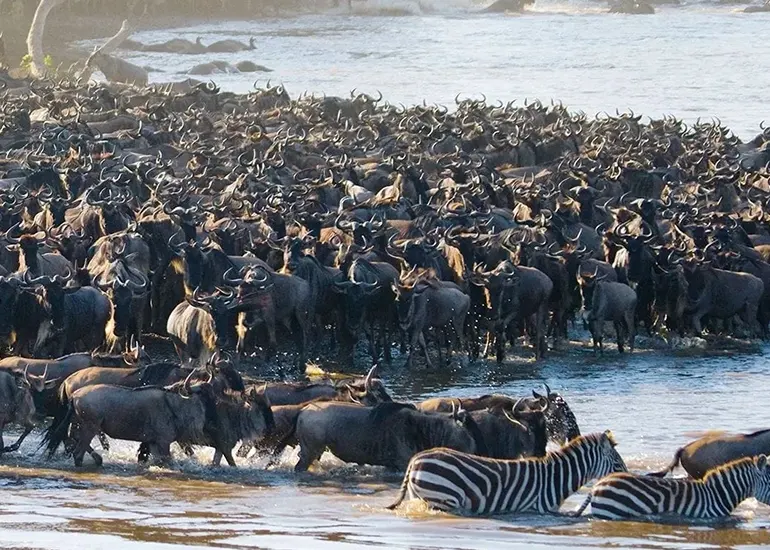
Ngorongoro Crater Migration Season: The wildebeest migration is one of the natural wonders around the world, which involves the movement of large numbers of wildebeest in search of water and greener pastures. This migration takes place in Serengeti national park, Maasai Mara national reserve and the Ngorongoro conservation area during the months of December to March.
Ngorongoro conservation area is located in the northern part of Tanzania. During the months of December to March, the wildebeests can be seen grazing in the Ndutu area, which is found in Ngorongoro.
The calving season is at its best in the Ngorongoro conservation area from January to February, when the wildebeests give birth to their young ones. This also attracts a number of predators, such as lions and leopards, as they wait to attack their unknowing prey.
To catch this amazing experience of the wildebeest migration in the Ndutu area, one may need to book accommodation around this area so as not to miss out on the migration and watching the predators in action.
The Ndutu area stretches from the southern part of Serengeti national park to the northern part of Ngorongoro conservation area. The short grasses in the ndutu plains are known for sustaining the young ones of the wildebeests during the calving season.
Other wildlife species that can be seen during the migration of wildebeests in the Ngorongoro conservation area include zebras, which can also be seen grazing in the green grasses and spread across the open plains of the reserve.
The wildebeest migration takes place all year round as wildebeests move in search of water and pasture. This movement is prone to certain aspects such as the weather changes and seasons. This can be seen in the changes of rainfall and dry seasons at this destination.
During the dry season, the wildlife species are known to gather around water points, which makes them easier to see during a safari and game viewing experience. Some of the wildlife species in Ngorongoro conservation area include lions, leopards, elephants, zebras, buffalos, giraffes, hartebeests, antelopes, warthogs, hyenas, and kudu, among others.
Other times of the year when the wildebeest migration takes place include the following:
- June to October is the dry season of the year, which favors wildlife viewing experiences. This time of the year is also favorable for experiencing the wildebeest migration. In June, the wildebeests can be seen in the central and western parts of the national park, while July is when the river crossings take place, where the wildebeests struggle to cross the crocodile-infested rivers to get to the other side.
- In March and April, the wildebeests can be seen in Serengeti national park around Kusini and Ndutu. In April, the migration continues up north.
- November is when the wildebeest start their movements to Serengeti national park. there is also rain experienced during this month and the wildebeest start arriving in the plains of Serengeti.
- August and September are when the crossing to Masai Mara national reserve in Kenya takes place along the Mara river.
Activities which tourists engage in during safaris in Ngorongoro conservation area include the following:
- Game drives in Ngorongoro conservation area are very exciting and they also involve descending to the crater, where a variety of wildlife species can be seen. These game drives take place at different times of day and they include morning game drives, which are very rewarding since the wildlife species are very active at this time of day and can easily be seen while enjoying the views of the crater. Other game drives in Ngorongoro conservation area include the afternoon game drives. During the calving season, tourists exploring this destination are able to watch as the wildebeests give birth to their young ones. They can also see predators such as lions waiting to attack the young ones of the wildebeests.
- Nature walks in Ngorongoro conservation area are guided and tourists explore the different attractions of this destination in the company of armed rangers. These walks provide a closer interaction with the surroundings in the crater area during wildlife viewing experiences.
- Bird watching is another activity that takes place in the Ngorongoro conservation area. Aside from the colorful flamingos, which can be seen along the shores of Lake Magadi, both native and migratory birds can also be seen at this destination and they include golden-winged birds, black kites, black-winged lapwings, rufous-tailed weavers, crowned cranes, and kori bustards, among others.
- Cultural visits involve interactions between the local community and the tourists. The Ngorongoro conservation area has for a long time been shared by the local community as well as the wildlife. During interactions with the Maasai people, tourists get to learn more about their way of life, such as cultural dances, traditional houses known as “manyattas,” cultural ceremonies, and traditional arts and crafts work, such as beaded necklaces, earrings, and anklets, among others, made in unique patterns and colors. The Maasai pastoralists were also known to graze their livestock, such as sheep, cattle and goats, in the conservation area. The nomadic way of life and unique culture of the Maasai are also among the aspects that the cultural visits comprise.
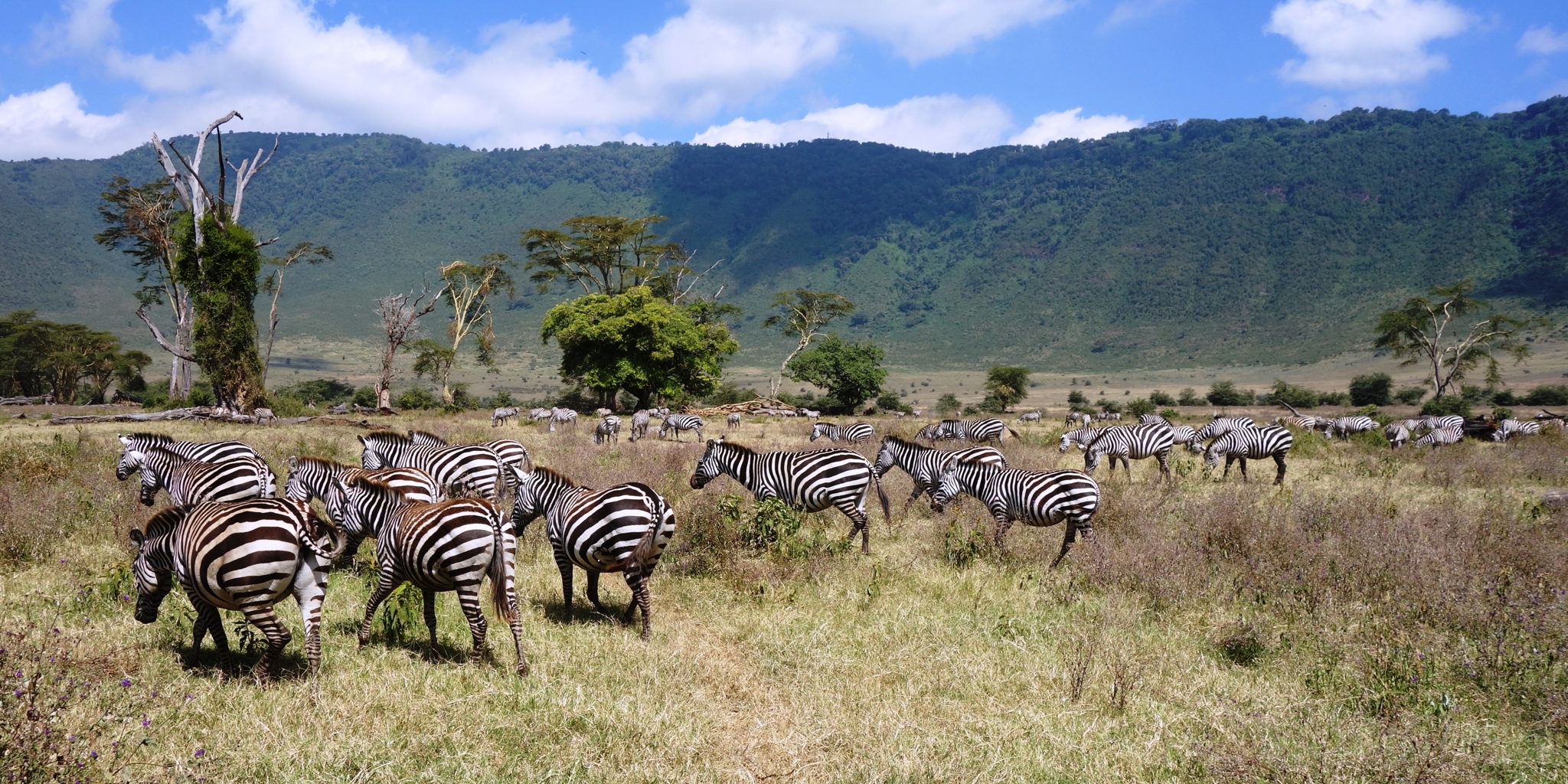
Ngorongoro Crater Migration
Ngorongoro conservation area is commonly visited for its amazing wildlife viewing experiences around the crater area, which also has beautiful scenery around it. Other attractions in this area include the following:
- Lake Magadi is a shallow soda lake found in the Ngorongoro crater. Large numbers of flamingoes can be seen around this lake.
- Ngorongoro crater which is an attraction that was formed as a result of the eruption and collapsing of a volcano that led to the formation of a caldera. An interesting fact about this crater is that it is filled with a variety of wildlife species, such as leopards, cheetahs, elephants, hyenas, warthogs, impalas, buffalos, and lions, among others, which can be seen around the crater area, such as giraffes.
- Ol duvai gorge is another attraction in the Ngorongoro conservation area. This is a prehistoric site that is famous for the findings of the evidence of the fossils of early man. These discoveries were made by Dr. Louis and Mary Leakey. This archaeological site is located in the great rift valley.
Visit the Ngorongoro conservation area and experience the wildebeest migration as you explore the beautiful scenery around the crater area.
Related Posts