Mara Serena Safari Lodge | Maasai Mara, Kenya Mara Serena Safari Lodge holds a unique…
Mountain Climbing and Hiking in Uganda: Exploring Africa’s Most Rewarding Trails, One Step at a Time
Mountain Climbing and Hiking in Uganda: Exploring Africa’s Most Rewarding Trails, One Step at a Time
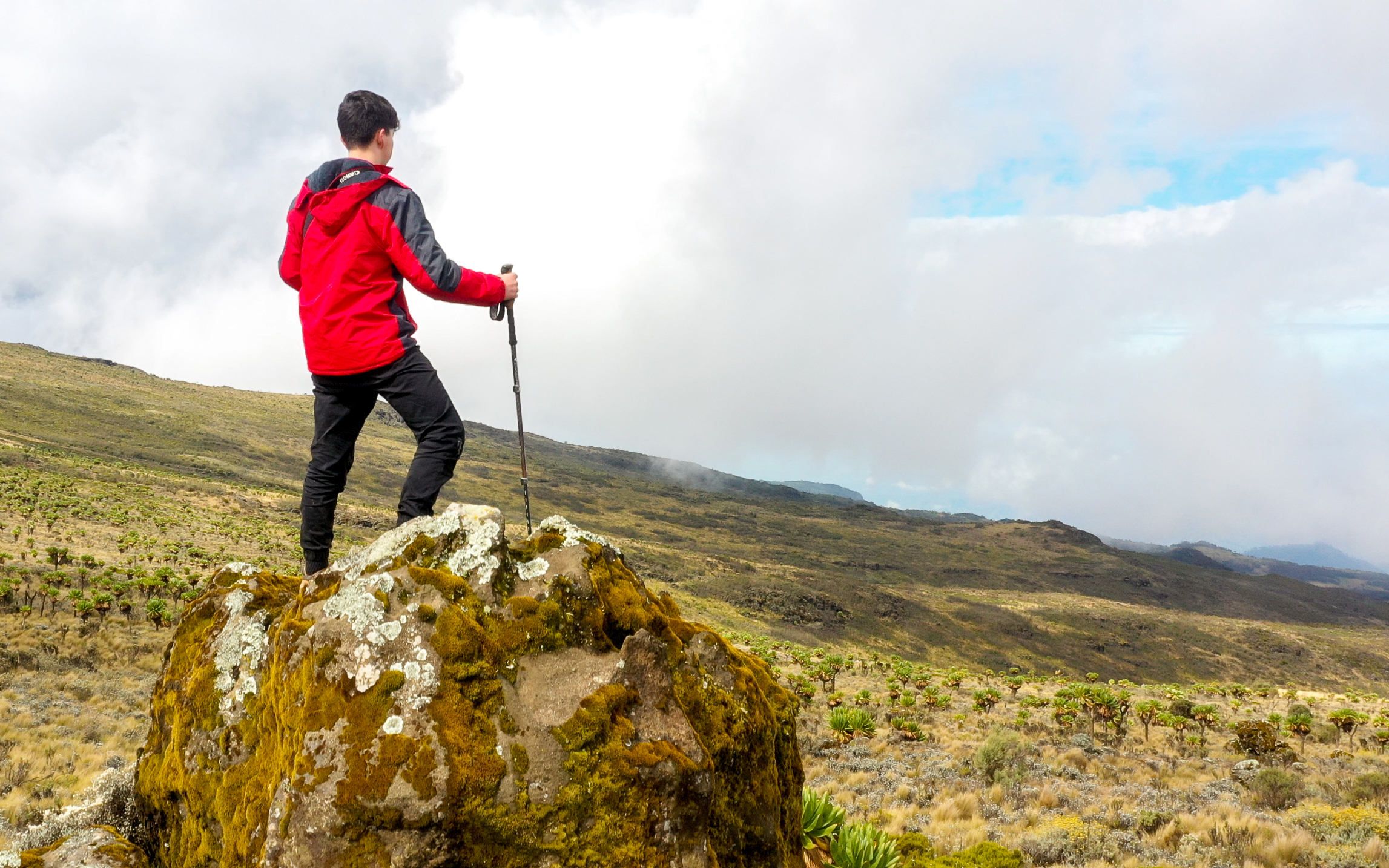
The first thing you notice is not the altitude, but the air. Cool, crisp and carrying the scent of damp earth and giant heather, it drifts across the slopes of the Rwenzori Mountains as dawn slowly breaks over western Uganda. Clouds cling to the valleys below while the jagged peaks begin to catch the first light of the day. Somewhere ahead, a porter laughs with a guide as they tighten the straps on a backpack before continuing uphill.
There are no queues here. No cable cars. No cafés perched halfway up the mountain selling souvenirs. Just a narrow trail disappearing into one of Africa’s most extraordinary mountain landscapes.
For many travelers, Uganda begins with gorillas. They’ve seen the documentaries. They’ve read about Bwindi Impenetrable National Park and imagined the moment they finally lock eyes with a silverback in the forest.
Few realise that some of the continent’s finest hiking lies just beyond those famous wildlife encounters.
Uganda is one of the rare places in Africa where you can climb glacier-covered mountains, trek through bamboo forests alive with golden monkeys, walk alongside wild giraffes on the open savannah, and finish your journey paddling across a lake surrounded by terraced hills, all within a single itinerary. The variety is remarkable. More importantly, it feels genuine.
Uganda’s trails don’t just connect viewpoints. They connect landscapes, cultures and conservation stories that have shaped Uganda for generations.
If you’re looking for a hiking holiday where every walk reveals something different, Uganda quietly stands among Africa’s most rewarding destinations.
The Rwenzori Mountains: Uganda’s Alpine Wilderness
Long before satellite maps and climbing routes, ancient geographers spoke of mysterious mountains feeding the Nile.
They called them the Mountains of the Moon.
Today we know them as the Rwenzori Mountains, a UNESCO World Heritage Site stretching along Uganda’s border with the Democratic Republic of Congo. Rising to Margherita Peak (5,109 meters) on Mount Stanley, they are Africa’s third-highest mountain range after Kilimanjaro and Mount Kenya. Yet they remain surprisingly overlooked. Perhaps that’s part of their magic.
Unlike the well-trodden paths of Kilimanjaro, the Rwenzoris feel wonderfully untamed. The journey isn’t simply about reaching the summit. It’s about moving through ecosystems that change dramatically with every day’s climb.
One morning you’re walking beneath towering mahogany trees dripping with moss. Then after, you’re crossing wooden boardwalks through vast bogs where giant lobelias stand like sculptures against the mist. A day later, enormous groundsels rise above the clouds, giving the landscape an almost prehistoric appearance. Nowhere else in Africa looks quite like this.
Choosing Your Rwenzori Trek
Not everyone climbs to Margherita Peak. And that’s perfectly fine.
The mountains offer routes for different levels of experience, allowing visitors to immerse themselves in the landscape without necessarily aiming for the highest summit.
A three-day trek introduces hikers to the lower montane forests, waterfalls and bamboo zones, offering a taste of the Rwenzoris without venturing into the more demanding alpine terrain.
A five-day hike reaches the dramatic high valleys where giant heather, lobelias and spectacular viewpoints begin to dominate the landscape.
Those seeking the full experience often choose seven to nine-day expeditions, following either the historic Central Circuit Trail or the scenic Kilembe Trail, both leading experienced climbers towards Margherita Peak.
Neither route should be underestimated. The challenge comes less from technical climbing than from the terrain itself. Rain is common throughout the year. Trails become muddy. Boardwalks cross deep wetlands. Steep ridges demand patience rather than speed. The Rwenzoris reward steady hikers, not hurried ones.
The People Who Know These Mountains Best
No one understands these mountains better than the Bakonzo.
For generations, the Bakonzo people have lived on the lower slopes of the Rwenzoris, regarding the mountains not simply as a place to climb but as part of their cultural identity. Today, many of Uganda’s most experienced mountain guides and porters come from these communities.
Walk with them for a few hours and the mountain changes. Plants become medicines. Bird calls become landmarks. Cloud formations become weather forecasts. Their knowledge turns a demanding hike into something much richer than a physical challenge.
Hiring local porters is more than practical assistance.
It is one of the most direct ways visitors contribute to mountain communities. Trekking tourism creates employment for guides, cooks, porters and lodge staff while encouraging young people to build careers connected to conservation rather than activities that place pressure on fragile ecosystems.
Every step uphill supports someone living beneath these mountains.
A Fragile Landscape Worth Protecting
The Rwenzoris are breathtaking. They are also changing.
Scientists have documented the steady retreat of the mountain glaciers over recent decades, with rising temperatures altering one of Africa’s rare alpine environments. While snow still crowns the highest peaks, the ice fields that once inspired explorers have become noticeably smaller.
The effects reach far beyond the summits.
These mountains feed rivers that support farming communities throughout western Uganda, making conservation about much more than preserving beautiful scenery.
Uganda Wildlife Authority works alongside researchers, local communities and international conservation partners to protect the Rwenzori ecosystem through habitat management, sustainable tourism and environmental monitoring.
Visitors play a quiet but important role in that effort.
Park fees contribute towards maintaining trails, supporting ranger patrols and protecting one of Africa’s most remarkable mountain landscapes.
The Rwenzoris ask something of every visitor. Walk carefully. Leave no trace. Take your memories home. Leave the mountain exactly as you found it.
Beyond the Rwenzoris: Uganda’s Mountains Tell Very Different Stories
The beauty of hiking in Uganda is that no two trails feel the same.
Climb one mountain and you’ll spend the day weaving through giant bamboo. Climb another and you’ll find yourself standing above waterfalls, looking out across coffee farms that have fed local communities for generations. Head east, and extinct volcanoes dominate the skyline. Travel southwest, and ancient Virunga volcanoes mark the borders of three countries.
Uganda doesn’t offer one signature hike. It offers an entire collection of landscapes.
Mount Elgon: The Gentle Giant
If the Rwenzoris are Uganda’s wild mountaineers, Mount Elgon is its patient giant.
Straddling the Uganda–Kenya border, this extinct volcano is home to one of the world’s largest volcanic calderas, stretching nearly 40 kilometers across. The summit, Wagagai Peak (4,321 meters), is lower than the Rwenzoris but no less rewarding, particularly for hikers looking for a less technical, more gradual ascent.
The pace here is different.
The climb begins through fertile farmland where Arabica coffee grows in the rich volcanic soil. Farmers welcome visitors into small processing stations, explaining how beans are picked, washed, dried and roasted before eventually making their way into cafés across Europe. It’s worth stopping. Coffee tastes different when you’ve seen where it comes from.
Higher up, caves once used by elephants in search of mineral-rich salt are hidden beneath the forest canopy. Black-and-white colobus monkeys leap through towering trees, while colourful turacos glide between branches with flashes of crimson wings.
By the time you reach the afro-montane zone, the views stretch across eastern Uganda towards Kenya. Unlike some famous peaks, Mount Elgon rarely feels crowded. You can hike for hours hearing little more than birdsong and the sound of your own footsteps.
For photographers, birdwatchers and walkers who enjoy quiet mountain landscapes, it’s one of Uganda’s best-kept secrets.
Sipi Falls: Where Hiking Meets Culture
At the foot of Mount Elgon lies Sipi Falls, a region that feels almost designed for slow travel.
Three waterfalls tumble through steep cliffs before disappearing into the valley below. Around them, neat terraces of coffee, banana and maize cling to impossibly steep hillsides. Most visitors arrive expecting a short walk to the waterfalls. Many leave wishing they had stayed another night.
Local guides lead hikes linking all three falls, sharing stories about the Sabiny communities who have farmed these slopes for generations. Along the way, children call out cheerful greetings, women spread coffee beans beneath the sun and small family farms overlook some of the finest scenery in eastern Uganda.
A coffee tour fits naturally into the day.
You’ll follow the journey from freshly picked cherries to a steaming cup brewed over charcoal, often prepared by the same family who grew the crop. It’s simple. Authentic. And a reminder that walking through a landscape often reveals far more than driving past it ever could.
For travelers looking for a little more adrenaline, Sipi also offers one of East Africa’s highest abseiling experiences. Descending beside the tallest waterfall is optional, but unforgettable for those willing to step backwards over the edge.
The Virunga Volcanoes: Three Peaks, Three Countries, One Extraordinary Landscape
In the far southwest of Uganda, another mountain range rises from the mist. The Virunga Volcanoes are older than history itself.
These dormant volcanoes form part of the Greater Virunga Landscape, a globally significant conservation area shared by Uganda, Rwanda and the Democratic Republic of Congo. Together, the three countries protect one of the last remaining habitats of the endangered mountain gorilla.
Most visitors know Mgahinga Gorilla National Park for gorilla trekking. Far fewer realise it’s also home to some of Uganda’s most rewarding volcano hikes. Each peak offers a completely different experience.
Mount Gahinga is the gentlest climb, leading hikers through dense bamboo forests where endangered golden monkeys chatter overhead. During the rainy season, the bamboo glows an almost luminous green, creating one of the most beautiful forest walks in East Africa.
Mount Sabinyo is more adventurous. Its name means “old man’s teeth,” inspired by the jagged ridges that resemble worn molars. Steel ladders help hikers negotiate the steeper sections, and standing on the summit is unlike anywhere else in Africa.
One step can place you in Uganda. Another in Rwanda. Another in the Democratic Republic of Congo. Few mountain hikes allow you to stand in three countries within a matter of seconds.
Then there is Mount Muhabura. At 4,127 meters, it’s the highest of Uganda’s Virunga volcanoes. The ascent is demanding but achievable for reasonably fit hikers, and the summit rewards the effort with panoramic views across the volcanic chain, Lake Bunyonyi and, on clear mornings, deep into Rwanda. It’s a landscape shaped by geology, wildlife and people living alongside protected areas.
Where Hiking Supports Conservation
The Virunga region tells one of Africa’s most important conservation stories.
Mountain gorillas survive today because Uganda, Rwanda and the Democratic Republic of Congo have invested decades in protecting their shared habitat. Rangers patrol difficult terrain every day, veterinary teams respond when gorillas are injured or fall ill, and neighboring communities increasingly benefit from tourism through employment, revenue-sharing and community enterprises. The mountains are part of that success.
Visitors hiking the volcanoes contribute to the same conservation economy that supports mountain gorilla protection. Many of the guides leading summit climbs also work as trackers, community educators or conservation ambassadors. Their knowledge extends far beyond trail conditions. They explain the medicinal uses of forest plants, identify birds by their calls and describe how local communities and protected areas continue to evolve together.
By the time you descend, you’ve climbed more than a mountain. You’ve walked through one of Africa’s most important conservation landscapes.
Related Posts