Ssese Islands: Beaches and Island Escapes on Lake Victoria The Ssese Islands are an archipelago…
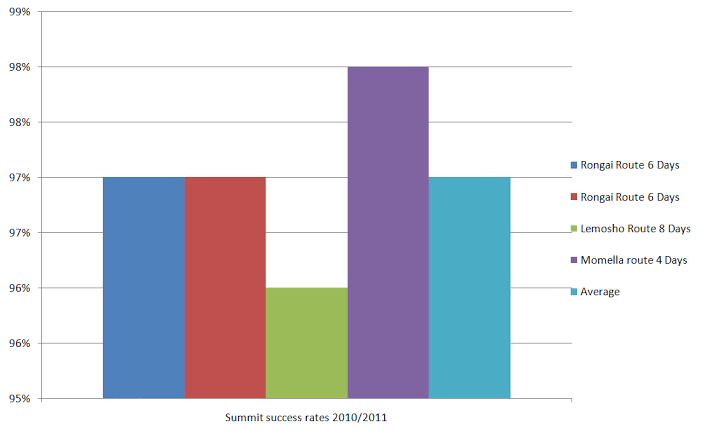
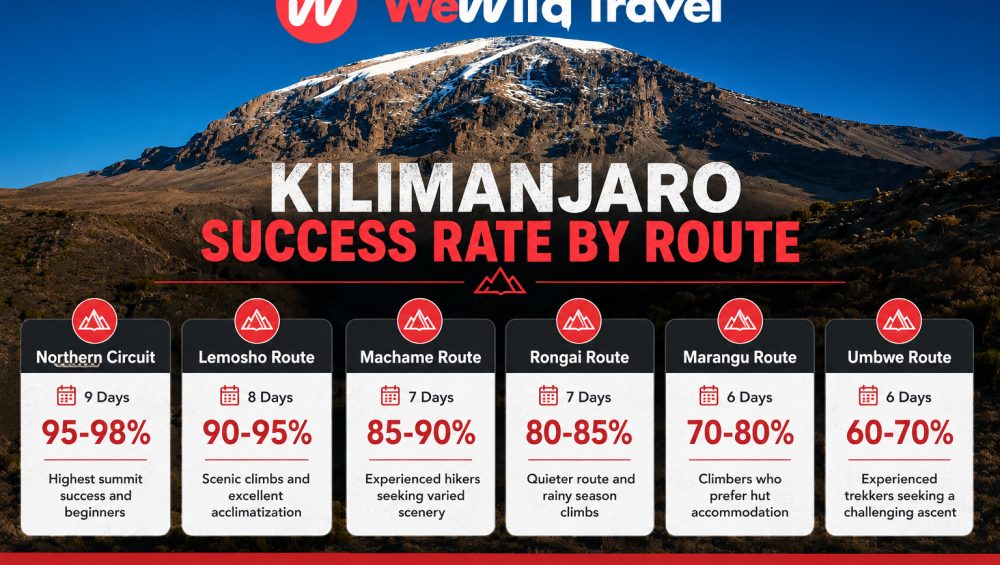
Kilimanjaro Success Rates
Kilimanjaro Success Rates
Kilimanjaro success rates are often quoted at around two-thirds of climbers reaching the summit, but that figure hides enormous variation. On short five-day climbs, success rates are far lower. On well-run eight- and nine-day climbs with experienced guides, the majority of climbers stand on the summit. Understanding why helps you make choices that put the odds firmly in your favor.
Understand Kilimanjaro success rates by route and itinerary length, why climbers fail, and proven ways to reach Uhuru Peak: acclimatisation, pacing, training, operator choice and summit night tactics.
This guide explains Kilimanjaro success rates, why climbers fail, and the practical steps that give you the best chance of reaching Uhuru Peak safely.
What Does “Success” Mean on Kilimanjaro?
Success usually refers to reaching Uhuru Peak, the highest point on the crater rim at 5,895 metres. Some climbers count reaching Stella Point or Gillman’s Point on the crater rim as a summit, and they receive certificates for those points. For most people, though, Uhuru Peak is the goal.
| Point | Altitude | Notes |
| Gillman’s Point | About 5,685 m | Crater rim on Marangu and Rongai routes |
| Stella Point | About 5,756 m | Crater rim on Machame, Lemosho and Northern Circuit routes |
| Uhuru Peak | 5,895 m | Highest point in Africa |
Kilimanjaro Success Rates by Itinerary Length
Official data is limited, but operators and park observers consistently report that itinerary length is the strongest predictor of success.
| Itinerary length | Typical success level | Why |
| 5 days | Low | Too little time to acclimatise |
| 6 days | Moderate | Some acclimatisation, still rushed |
| 7 days | Good | Better acclimatisation |
| 8 days | High | Excellent acclimatisation profile |
| 9 days | Very high | Most time to adapt |
Kilimanjaro Success Rates by Route
| Route | Typical itinerary | Acclimatisation | Relative success |
| Northern Circuit | 9 days | Excellent | Highest |
| Lemosho | 7 to 8 days | Excellent | High |
| Machame | 6 to 7 days | Good | Good on 7 days |
| Rongai | 6 to 7 days | Good | Good on 7 days |
| Shira | 7 to 8 days | Fair | Moderate to good |
| Marangu | 5 to 6 days | Fair | Lower on 5 days |
| Umbwe | 6 to 7 days | Poor | Lower without prior acclimatisation |
Why Climbers Fail to Reach the Summit
Altitude sickness
The most common reason. Acute mountain sickness causes headaches, nausea, dizziness, fatigue and poor sleep. Severe forms, such as high-altitude cerebral or pulmonary oedema, require immediate descent.
Ascending too fast
Short itineraries and fast walking leave the body no time to adapt.
Exhaustion on summit night
Summit night involves six to eight hours of climbing in the cold and dark, followed by a long descent. Without stamina and good pacing, many climbers run out of energy.
Cold and dehydration
Inadequate clothing, sleeping bags or water intake can undermine performance.
Illness
Stomach problems, colds or minor injuries can make the climb impossible.
Mental fatigue
Doubt, discomfort and fear can stop climbers who are physically capable.
How to Improve Your Chances of Reaching Uhuru Peak
Choose a longer itinerary
Eight or nine days dramatically improve acclimatisation. If budget allows, this is the single most effective decision you can make.
Pick a route with a good altitude profile
Routes like Lemosho, Machame and the Northern Circuit follow the “climb high, sleep low” principle, helping the body adapt.
Walk slowly
Guides repeat “pole pole,” meaning slowly, slowly. Walking at a pace where you can talk comfortably conserves energy and helps acclimatisation.
Hydrate and eat well
Drink three to four litres of water a day and eat regularly, even when your appetite drops at altitude.
Train properly
Build endurance with long hikes, hill walks and back-to-back training days over two to four months.
Use acclimatisation strategies
Climbing Mount Meru before Kilimanjaro, or spending time at altitude beforehand, helps your body adapt. Some climbers also discuss acetazolamide (Diamox) with their doctor.
Choose an experienced operator
Good guides monitor your health with pulse oximeters, recognise warning signs and manage pace and rest.
Prepare for summit night
Have warm layers ready, eat before starting, carry snacks and insulated water bottles and focus on one step at a time.
How Guides Monitor Your Health
Reputable operators carry out health checks twice daily, measuring oxygen saturation and pulse and asking about symptoms. A common scoring system, such as the Lake Louise score, helps track altitude sickness. Guides use this information to adjust pace, recommend rest or arrange descent.
| Symptom | Severity | Typical response |
| Mild headache, slight nausea | Mild | Rest, hydrate, monitor |
| Persistent headache, vomiting | Moderate | Rest, consider medication, possible descent |
| Confusion, loss of coordination | Severe | Immediate descent |
| Breathlessness at rest, persistent cough | Severe | Immediate descent |
he Psychology of Summit Night
Summit night is as much a mental test as a physical one. Climbers walk in the dark, in freezing temperatures, with little sense of progress. Many report that the hardest moments come between 2:00 and 5:00 a.m., when the cold is most intense and the summit feels far away.
Strategies that help include:
- Breaking the climb into small goals, such as reaching the next rest stop
- Focusing on breathing and steady steps
- Listening to guides’ songs and encouragement
- Thinking of sunrise, which brings warmth and renewed energy
- Accepting discomfort as temporary
Pre-Climb Checklist for Success
| Area | Checklist |
| Itinerary | 7 to 9 days, good altitude profile |
| Operator | Experienced guides, health checks, emergency oxygen |
| Fitness | Long hikes and back-to-back training days |
| Gear | Warm layers, quality sleeping bag, broken-in boots |
| Health | Doctor consultation, vaccinations, medication plan |
| Mindset | Realistic expectations, determination, flexibility |
Success Rate Myths
“Fit people always succeed.” Fitness helps, but altitude affects everyone differently. Very fit climbers sometimes struggle by walking too fast.
“Shorter climbs are cheaper and just as good.” Shorter climbs are cheaper, but success rates drop sharply.
“Age is the main factor.” Many climbers in their sixties and seventies succeed with good preparation.
“Medication guarantees success.” Diamox can help, but it is not a substitute for gradual ascent.
How Acclimatisation Works
When you climb higher, each breath contains fewer oxygen molecules. Your body responds by breathing faster, increasing heart rate and, over days, producing more red blood cells to carry oxygen. This process, called acclimatisation, takes time. On Kilimanjaro, you are climbing from around 1,800 metres to almost 6,000 metres in less than a week, which is a significant challenge for any body.
Good itineraries give your body time to adjust through gradual ascents and rest days. “Climb high, sleep low” days, such as the Lava Tower day on Machame and Lemosho, expose you to higher altitudes during the day before descending to sleep. This stimulates adaptation without overwhelming the body overnight.
Everyone acclimatises differently. Some people adapt quickly, others slowly, and it is not always predictable. That is why choosing a longer itinerary gives you a margin of safety.
The Role of Your Guide
Experienced guides are your greatest asset on Kilimanjaro. They set a slow, steady pace, encourage you to drink and eat, and monitor your health throughout the climb. They know when a headache is a normal response to altitude and when it is a warning sign. On summit night, they know how to keep groups moving at a sustainable pace, when to rest and how to encourage tired climbers.
A good guide will also make difficult decisions. If your symptoms worsen, they may advise you to descend, even close to the summit. Trusting their judgement is essential. Many experienced guides have climbed Kilimanjaro hundreds of times and have seen every scenario.
Mental Strategies for the Final Hours
Many climbers reach a point on summit night where they doubt they can continue. The cold, the darkness and the slow progress can feel overwhelming. At this stage, simple strategies help: focus on your breathing, count steps, repeat a phrase or think of the people who supported you. Guides often sing songs to lift spirits, and seeing the first light of dawn can transform your energy.
Remember that reaching the crater rim at Stella Point or Gillman’s Point is a huge achievement. From there, the walk to Uhuru Peak is less steep, though still demanding at altitude.
Health Considerations Before the Climb
| Consideration | Recommendation |
| Medical check-up | See a doctor before booking, especially if over 50 or with health conditions |
| Vaccinations | Follow travel health advice for Tanzania |
| Medication | Discuss altitude medication and any personal medications |
| Insurance | Ensure cover for high-altitude trekking and evacuation |
| Fitness | Train consistently for several months |
| Rest | Arrive in Tanzania rested, ideally a day or two before the climb |
Arriving healthy and rested makes a noticeable difference to how you cope on the mountain.
Common Mistakes That Reduce Success
Walking too fast on the early days. Feeling strong in the forest tempts many climbers to push. Slow down; you will need the energy later.
Not drinking enough. Dehydration worsens altitude symptoms. Sip regularly throughout the day.
Skipping meals. Appetite drops at altitude, but your body needs fuel.
Hiding symptoms from your guide. Early reporting allows guides to manage problems before they become serious.
Choosing a five-day itinerary. It is the single biggest factor in failed summit attempts.
Arriving exhausted. Long flights and late nights before the climb can undermine performance. Arrive a day or two early to rest.
Real-World Scenarios
Consider two climbers of similar age and fitness. One books a five-day Marangu climb to save time and money. By the third day, at Kibo Hut, she has a pounding headache and cannot eat. On summit night, she turns back below Gillman’s Point. The other books an eight-day Lemosho climb. He spends days gradually climbing through forest and across the Shira Plateau, sleeps well at Barranco after the Lava Tower day and arrives at Barafu feeling tired but healthy. On summit night, he reaches Uhuru Peak at sunrise.
Stories like these are common among guides. The difference is rarely fitness or determination; it is time. Giving your body extra days to adapt is the most reliable way to improve your odds.
What to Expect After the Summit
Reaching Uhuru Peak is only part of the day. After photographs, you begin a long descent to high camp, often feeling exhausted and elated at the same time. Many climbers underestimate this part of the day.
Altitude symptoms usually ease quickly as you descend, but legs can be very tired. Guides set a steady pace, and porters often meet climbers with drinks and help carry daypacks. By evening, most climbers are at a lower camp, eating dinner and celebrating with their crew.
Final Week Before Your Climb
The last week before a Kilimanjaro climb matters more than many people realise. Reduce training intensity so your legs are fresh. Prioritise sleep, eat well and avoid illness by washing hands often while travelling.
Arrive in Moshi or Arusha at least a day before the climb, ideally two, to recover from flights and adjust to the climate. Use this time to attend your operator’s briefing, check rental gear, pack your duffel within the weight limit and organise your daypack for the first day. A calm, rested start sets the tone for the whole climb.
Frequently Asked Questions About Kilimanjaro Success Rates
What is the overall success rate on Kilimanjaro?
It is often quoted at around two-thirds of climbers, but varies hugely depending on itinerary length and operator.
Which route has the highest success rate?
The Northern Circuit and eight-day Lemosho itineraries generally have the highest success rates.
Does age affect success?
Age is less important than preparation, pacing and acclimatisation.
Can Diamox help me reach the summit?
It can help some climbers acclimatise but should be discussed with a doctor and is not a guarantee.
What happens if I cannot continue?
Your guide will arrange a safe descent, usually with an assistant guide or porter.
Do I get a certificate if I reach Stella or Gillman’s Point?
Yes. Certificates are issued for reaching the crater rim as well as Uhuru Peak.
How can I check an operator’s success rate?
Ask for recent summit statistics by route and itinerary length, and read independent reviews.
Does the weather affect success?
Yes. Storms, snow and extreme cold can make summit night harder, but itinerary length remains the biggest factor.
Is it normal to feel unwell at altitude?
Mild headaches, poor sleep and reduced appetite are common. Tell your guide so they can monitor you.
Related Posts