Serengeti National Park Vs Kruger National Park Serengeti National Park Vs Kruger National Park are the…
Small Group vs Large Group Safari
Small Group vs Large Group Safari: Pros and Cons
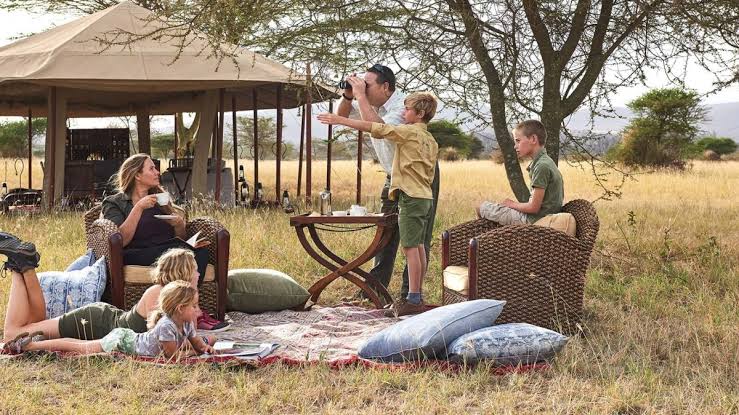
Group safari sizes in East Africa range from intimate four-person vehicles to larger departures of ten or more travelers, and this range genuinely matters beyond just cost, affecting your view of wildlife sightings, the pace and flexibility of each day, and even the overall social atmosphere of the trip.
Understanding the real trade-offs between small and large group formats helps travelers choose deliberately rather than simply booking whichever specific tour happens to come up first in a search.
This guide breaks down exactly what changes between small and large group safaris: viewing angles and photography space, schedule flexibility, cost, and the social experience, helping you decide which group size genuinely suits your priorities.
Why Group Size Affects More Than Just Cost
The most obvious difference between small and large groups is cost, larger groups spread fixed vehicle and guide costs across more people, generally lowering the per-person price. But group size also directly affects the physical experience of each game drive: how many people are competing for window space and camera angles at a sighting, how quickly the group can reach a consensus on whether to linger or move on, and how personal or anonymous the overall trip feels.
Neither size is universally better, and the right choice depends on how much you value cost savings against the genuine trade-offs in viewing space, flexibility and social dynamics that come with a larger group.
What Genuinely Changes Between Small and Large Groups
Viewing angles and photography space are meaningfully affected by group size. In a smaller vehicle, four to six passengers, everyone has reasonable access to a window and can reposition relatively easily when a sighting occurs.
In a larger vehicle, eight to twelve passengers, competition for the best angle at a sighting is genuinely more pronounced, and photographers specifically may find themselves shooting around or between other travellers rather than having clear sightlines.
Schedule flexibility and pacing decisions become more complex as group size increases, simply because more people’s preferences need to be balanced.
A smaller group can more easily reach quick consensus on whether to linger at a sighting, skip a planned stop, or adjust the day’s pace, while a larger group’s decisions inherently take longer and are more likely to involve some compromise that doesn’t perfectly suit every individual traveller.
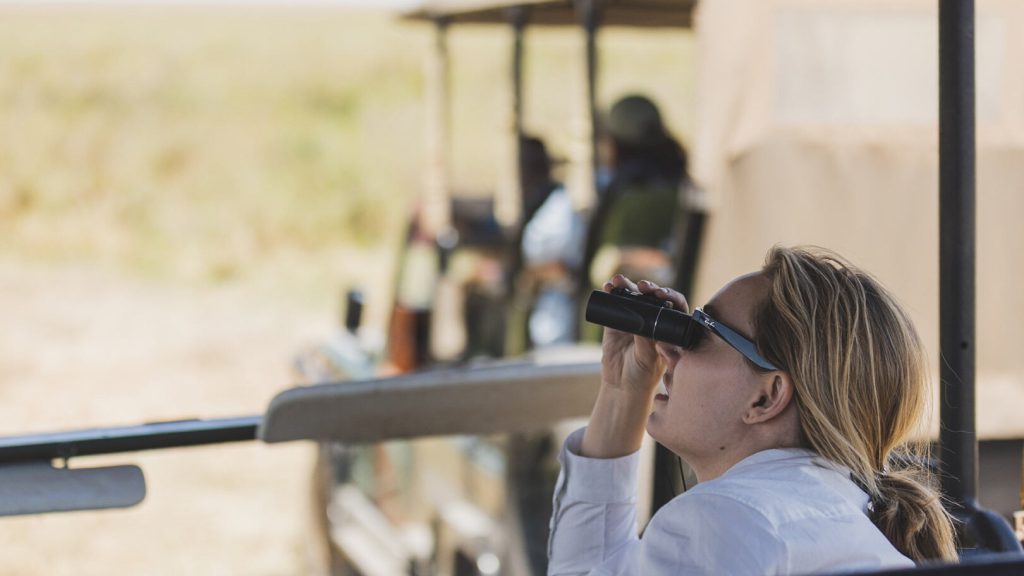
The social dynamic differs considerably too, and this cuts both ways depending on personal preference. Smaller groups tend to develop a more genuine, personal rapport, both among travellers and with the guide, given more sustained one-on-one interaction across the trip. Larger groups offer more overall social variety, a wider range of people to potentially connect with, though individual conversations and connections may feel less deep given the larger number of people sharing the same limited conversational space and time.
Small Group vs Large Group Safari at a Glance
Here is a direct comparison of the two formats across the factors that matter most.
| Factor | Small Group (4-6 people) | Large Group (8-12+ people) |
| Per-person cost | Higher, given fewer people sharing fixed costs | Lower, given more people sharing fixed costs |
| Viewing/photography space | Better; easier repositioning at sightings | More competition for window space and angles |
| Schedule flexibility | Faster consensus, more adaptable pacing | Slower consensus, more compromise required |
| Social atmosphere | More intimate, personal rapport | More social variety, less individual depth |
| Guide attention per traveller | Higher | Lower, though still generally attentive |
How Group Size Availability Varies Across the Region
Different operators and destinations offer genuinely different group size ranges, and understanding this helps with realistic expectations.
Budget Camping Group Tours
Typically run at the larger end of the group size spectrum, given the cost-efficiency this format depends on, commonly eight to twelve travellers sharing a single vehicle and camp.
Mid-Range Scheduled Departures
Often positioned at a genuinely smaller group size, four to eight travellers, as a specific selling point differentiating them from the largest budget departures.
Private Conservancy-Based Safaris
Frequently structured around small private groups by default, given the conservancy model’s general emphasis on lower density and more personalised guiding.
Fully Private Tailor-Made Safaris
The smallest possible group size, your own party exclusively, offering maximum flexibility but without the cost-sharing benefit of any group structure at all.
How Season Affects Group Size Considerations
Group composition and size can vary somewhat by season, since peak season departures often fill to their maximum capacity given high demand, while shoulder and low season departures may run with smaller actual group sizes even if the operator’s stated maximum capacity is larger.
| Season | Months | Group Size Consideration |
| Long dry/peak season | June – October | Departures often fill to maximum capacity given high demand |
| Short dry season | December – February | Similarly high demand, especially around holidays |
| Long rains | March – May | Departures may run smaller given lower overall demand, even at the same stated price |
The Cost Difference Between Group Sizes
Understanding the genuine scale of the cost difference helps weigh it against the viewing and flexibility trade-offs.
Large group budget safari — The most cost-effective option per person
Maximising group size to spread fixed costs is the core mechanism behind the most affordable safari options available in the region.
Small group mid-range safari — A moderate premium for meaningfully better viewing and flexibility
A common and popular middle ground, offering much of a large group’s cost efficiency while retaining smaller-group viewing and pacing benefits.
Fully private safari — The highest per-person cost
No cost-sharing at all, but complete flexibility and viewing space exclusively for your own party.
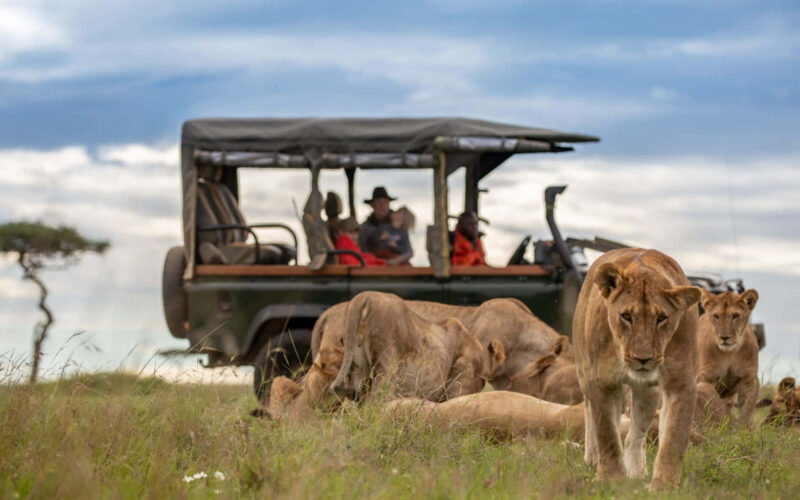
How Group Size Affects Accommodation Experience
Group size also affects the accommodation portion of a safari, not just the vehicle-based game drives.
| Group Size | Accommodation Consideration |
| Large groups | Often use larger camps with more rooms; dining and common areas can feel busier |
| Small groups | Often use smaller, more intimate camps; quieter, more personal common area experience |
| Private safaris | Full flexibility in accommodation choice, unconstrained by group consensus |
Practical Considerations for Choosing Group Size
A few specific practical questions help clarify which group size genuinely suits your priorities.
How Important Is Photography to You?
If capturing high-quality images is a genuine priority, the viewing space and positioning flexibility advantage of a smaller group is worth the cost premium for most serious photographers.
How Much Do You Value Meeting Other Travelers?
If part of your motivation for choosing a group tour at all is the social aspect, a larger group offers more overall variety of people to potentially connect with, even if individual connections feel less deep than in a smaller group.
How Important Is Schedule Flexibility to You?
If you have strong preferences about pacing, lingering longer at sightings, adjusting wake-up times, a smaller group’s faster consensus-building genuinely improves your ability to get what you want from each day.
What Is Your Absolute Budget Ceiling?
If cost is the overriding constraint, a larger group’s cost-sharing efficiency may simply be necessary regardless of the other trade-offs, making this the deciding factor by default.
| Question | If Photography/Flexibility Matters More | If Budget Matters More |
| Photography priority | Choose a smaller group | Accept a larger group’s viewing trade-off |
| Schedule flexibility priority | Choose a smaller group | Accept a larger group’s pacing compromises |
| Social variety priority | Consider a larger group specifically for this reason | A larger group serves both goals simultaneously |
| Absolute budget ceiling | May need to prioritise this over group size preference | Choose the largest reasonable group size available |
Making Your Decision
Be honest about which specific factors matter most to you personally, since this is a genuine trade-off rather than a purely financial calculation.
If you’re uncertain, asking a specific operator directly about their typical group size for a given departure, rather than assuming a stated maximum capacity always fills completely, can reveal that some departures run smaller than their advertised ceiling, particularly during shoulder season.
It’s also worth asking specifically about vehicle configuration rather than relying on passenger count alone, since two operators quoting the same group size can offer meaningfully different experiences depending on the vehicle itself.
A larger, purpose-built safari vehicle with a raised roof hatch and individual window seating for every passenger handles a group of eight far better than a smaller, more basic minivan carrying the same number of people, where seating and window access may be considerably more cramped.
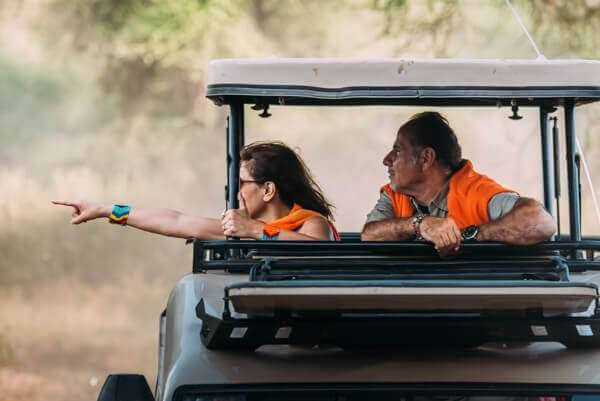
Confirming the specific vehicle type and seating arrangement, not just the headcount, gives a more accurate sense of what the actual day-to-day experience will feel like.
Finally, consider whether your preference might reasonably change across different parts of a longer trip. Some travellers choose a larger, more social group for an initial northern circuit safari where meeting people adds to the fun of a first big adventure, then switch to a smaller, more private arrangement for a specific highlight activity later in the trip, such as gorilla trekking or a dedicated photography-focused stay, where the smaller group’s flexibility and viewing advantages matter more.
Treating group size as a per-activity decision rather than a single choice for an entire itinerary can capture the benefits of both formats within one trip.
Recommendations by Traveller Priority
Here is a direct guide to which group size best matches specific traveller priorities.
| Priority | Recommended Group Size | Why |
| Lowest possible cost | Large group (8-12+) | Maximum cost-sharing efficiency |
| Photography and viewing quality | Small group (4-6) | Better positioning and less competition for angles |
| Schedule flexibility and pacing control | Small group (4-6) | Faster consensus, more adaptable to individual preferences |
| Meeting a wide range of fellow travellers | Large group (8-12+) | More overall social variety |
Frequently Asked Questions
Is a smaller group safari always more expensive?
Generally yes, since fewer people are sharing the same fixed vehicle and guide costs, though the specific premium varies by operator and destination.
Do larger groups mean worse wildlife sightings?
Not necessarily fewer sightings, but genuinely more competition for the best viewing angle and photography space at each sighting, and less flexibility for the group to collectively decide to linger longer.
What is considered a small group versus a large group safari?
Small groups are generally four to six travellers per vehicle; large groups typically run eight to twelve or more, though exact definitions vary by operator.
Can I ask an operator about their typical group size before booking?
Yes, and this is worth doing directly, since actual group sizes can run smaller than an operator’s stated maximum capacity, particularly during shoulder or low season departures.
Related Posts