Best Hiking Destinations in Uganda Uganda's nickname, the Pearl of Africa, gets used for its…
Wildebeest Migration Safaris
Wildebeest Migration Safaris
Our travel team at Salt Holidays has put together the Wildebeest Migration Safaris guide below to help our travelers plan their trip accordingly and professionally. Experiencing this once-in-a-lifetime safari tour in Tanzania requires advance planning.
Whether you’re a first-time safari goer or a seasonal African traveler, this well-arranged migration safari book will give you a clear picture of how to plan your Tanzania safari to Tanzania to witness the dramatic animal movement on Earth.
What is the Great Migration Safari in Tanzania?
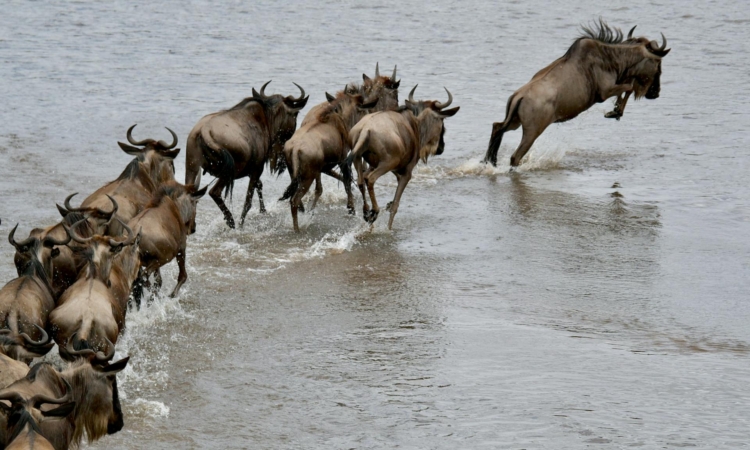
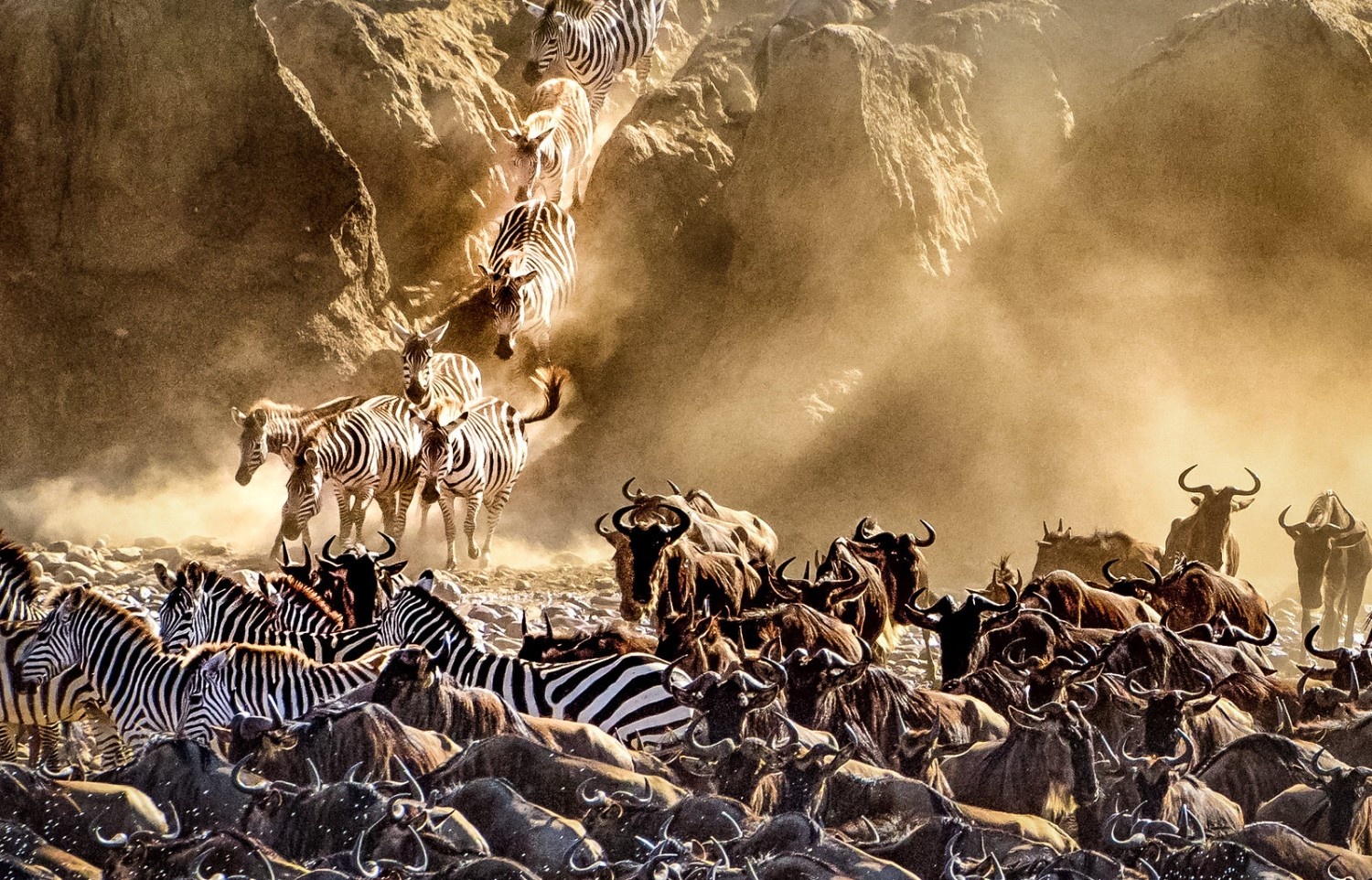
Great Wildebeest Migration Safari in Africa is the live mass movement of wild animals that takes place yearly in the Tanzania Serengeti ecosystem, which involves around two million wildebeests, zebras, and antelopes moving in a clockwise direction from the Southern Serengeti National Park/Ndutu ecosystem area to the Northern Serengeti National Park via the Western Serengeti Wildlife Corridor and crossing to Kenya’s side/Mara ecosystem via the Maasai Mara River and later returning to the Southern Serengeti National Park/Ndutu ecosystem via the Eastern Serengeti/Lobo Wildlife Valley. This movement is considered the most epic experience for safari and nature enthusiasts. The journey covers a distance of 500 miles/800 kilometers.
Why do wildebeest move, and what happens on the way?
The reason why wildebeest migrate is to search for nutritious grasses and water to sustain their lives; during the river crossing, they are expected to be pregnant. It needs to be clarified how Wildebeest knows it is time to start moving.
However, some say wildebeest began their journey to follow the rainfall pattern and the taste they feel from the grass in the southern Serengeti tells them droughts are around the corner. Hence, they need to start moving to northern Serengeti National Park and cross to Kenya, where in the coming months, it should begin to rain and the grass will be available to feed the pregnant females. So much tragedy happens on the way.
Predators like lions, leopards, and cheetahs are never away and are also part of the movement. The weak, injured, youngest, and old prey are most vulnerable during this move; the crocodiles have been waiting for the return of the herds for almost six months; it’s time to take their shares, too. This is truly a natural wonder of the Earth.
What is the Right Time for Wildebeest Migration Safaris? & the best season for a Serengeti migration safari in Tanzania.
Throughout a year, a wildebeest migration safari is possible in Tanzania; only for a short time will these remarkable herds cross to Kenya, the Maasai Mara Game Reserve. This is from July to mid-October when the herds cross the Mara River in Tanzania between the Lamai triangular and Kogatende plains.
The typical river crossing is often seen in Tanzania, and that’s the reason we recommend folks to consider booking from June to October to see the actual river crossing. Even after a few have crossed to Kenya, some wildebeest are still meandering in the Lobo areas, Kogatende, and Klein’s savannah.
The annual great migration in December, January, February and March.
It’s famously known as calving season. During these months, it rains in Southern Serengeti, and the arrival of herds from the Northern Serengeti is seen for the first time after a month’s journey. The area is very green; grasses are everywhere, and female wildebeests are ready to give birth. Just a few weeks after they arrive in the area, more than 40,000 calves are born, and it is estimated that every day, more than 8,000 new calves are brought into the world. It’s during this time when lions and other predators snatch as many wildebeest babies as possible; it’s nicknamed “Animal Massacre.” For those inspired and who would like to witness this spectacle, it is advisable to travel during these months.
April, May, and Early June – Trek North, Same Old Round & Rut.
April: Now the grasses are depleted in the southern Serengeti/Ndutu area; the herds of wildebeest, accompanied by zebras, gazelles, and antelopes, slowly start making their way out to the western Serengeti via the Seronera Valley/Central Serengeti National Park, where the grasses are plentiful. Here females are fed enough so they can milk their babies.
May: Now, the herds are around Moru Kopjes near the Dunia Camp, operated by Asilia Camps and lodges. Herds will stay for a few weeks grazing, and wildebeest males start the fight as the mating season begins; many lose their horns and lives as well.
Early Weeks of June: Slowly, the entire herd moves to the Western Serengeti Corridor; during this time, you can witness the first river crossing attempt at the Grumeti River; many of the wildebeests will face the consequences as crocs kill as many as they can. It’s the finest moment to witness the crossing; regardless of the trouble these herds encounter, they still need to cross the river, as it is the only way to continue the journey towards the Northern Serengeti. This month, there are the best lodges in the Western Corridor, such as Grumeti River Lodge by andBeyond Lodges and Camps.
Late June and July: Now, since the herds have successfully crossed the Grumeti River, the journey continues and spreads entirely in the Western Serengeti Corridor until they enter the Singita Grumeti Reserves, while other herds spread throughout the Serengeti National Park and proceed with movement towards the Northern Serengeti National Park. The herds will then continue to Ikorongo Game Reserves before the front heads finally arrive in the Kogatende plains in early July. Most of the lodges and mobile camps, like Nyikani Serengeti Camps, Mara River Camp, and even luxurious lodges such as Serengeti Lamai and Sayari Retreat Camp, are located in the premium wildlife zones, providing the best possible safari experience in Africa.
The Best Recommended Time to See Wildlife Crossing the River is August through October.
If you ever want to see the actual river crossing, then, at Salt Holidays, our expert team that deals explicitly with the migration safaris planning advises August to early weeks of October. Given that the movements of the herds depend on the rainfall pattern, these times are still the best time to jump on an African safari tour to see the great wildebeest migration safari in Serengeti, Tanzania. During these months, the herds have spread almost everywhere in the Kogatende area; a few groups are seen every day attempting to cross the river, and many of the travelers are visiting to see this extraordinary event that happens nowhere on Earth but the Serengeti in Tanzania. Many of the travelers or information seekers believe that river crossing happens in June and arrives in Kenya, stays there until November, and makes its way back to the Serengeti; however, no, the herds can very often be witnessed crossing from the Serengeti to the Maasai Mara and returning back on the same day via the other crossing point; this simply signifies that “River Crossing is Unpredictable.”
November: The food is very limited in Maasai Mara; in the southern Serengeti/Ndutu plains, it’s raining, and grasses are regrowing again; the herds now return to Serengeti National Park through the eastern portion of the park. The mass will spread to Loliondo Reserve. In the Kleins area, by late December, they again arrive, and the process starts again.
Our experts advise that animal movement is truly unpredictable; nature triggers the movement, especially the rainfall pattern. We have no confidence to guarantee our travelers that they will surely see the river crossing. However, we have a few tips to really help you catch a glimpse of migration:
Choose the best mobile or permanent camp; these facilities are located at the doorstep of where the river crossing is taking place. Please note that some of the camps relocate very often; your tour operator will advise accordingly.
Obviously, the best safari operator in Tanzania, like Salt Holidays, will offer the best safari tour guides, who are the best in the industry; our professional tour guides have intensive knowledge of which side or location the crossing can be seen from since the river runs from the west to the east, making it challenging to capture the crossing at the right time.
Plan in advance: The Serengeti Wildebeest Migration is the most booked safari experience. So, it is advised to plan at least 6-12 months in advance to secure your preferred type of accommodation.
Set a reasonable budget plan: The Great Migration safari happens during the peak safari season in East Africa, which means most of the logistics go high too; due to this, it is recommended to have a reasonable safari budget to be able to afford the trip (budget migration camps will cost $250 per person per night excluding park fees, transport and other items; luxury will cost around $800 per person per night excluding transportation, entrance fees, and other items).
Choose a long safari itinerary: Typically, spending more time in the Serengeti during the migration tour increases the chance of witnessing the river crossing. Our travel experts recommend staying at one or two camps/lodges for a few nights each that will maximize the possibilities of seeing the Mara crossing; visiting a few different lodges/camps is also counted as one of the best safari experiences.
Consider a private safari. Private vehicle: Sharing a vehicle or safari with other people is likely to compromise your safari experience; remember that not everyone in the group will be interested in seeing the wildebeest river crossing as you are. This means traveling privately gives you total flexibility on how to spend your day; you may decide to go out and spend the entire day hunting for the river crossing without being bored. If you join other people with different interests, it will be challenging to accomplish your target and then your whole African safari experience is aborted.
Choose a reputable safari company: Planning a Tanzania safari/African adventure can be somewhat hectic; having a professional safari planner helps reduce the hard work. There is no need to dig for so much information; there are many ways of celebrating a luxury safari in Tanzania, depending on what you want to see, where you prefer to stay, and how you would like to travel.
The native experts, like the ones at Salt Holidays, have intensive knowledge of planning African vacations/Tanzanian holidays for over ten years; the combination of the sales department and safari guides department guarantees you that you will receive premium safari service that you will live with forever. They arrange all the necessary logistics for you; whether you need a domestic flight, a hot-air safari balloon, sundowners, a bush breakfast, or a guided walking Serengeti bush safari, we can help arrange that. Book with confidence today and enjoy the unbeaten African tours.
Related Posts