Essence of Africa 2026 in Zanzibar Essence of Africa is a trade forum, which means…
Conservancies in Amboseli National Park
Conservancies in Amboseli National Park
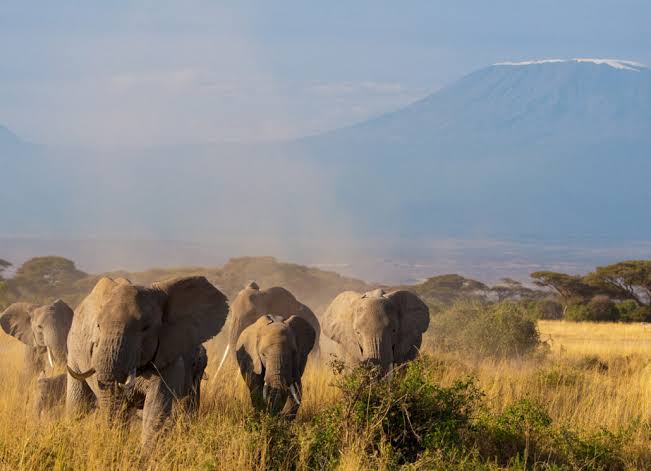
Conservancies in Amboseli National Park; Amboseli National Park is one of Kenya’s most beloved safari destinations, famous for its huge herds of elephants moving beneath the snow-capped peak of Mount Kilimanjaro.
Yet the park itself, at around 392 square kilometres, is only a small piece of a far larger story. Surrounding the park is a vast web of community-owned lands, wildlife corridors, and private conservancies that together form the Greater Amboseli ecosystem, a landscape of some 5,700 square kilometres stretching from the foot of Kilimanjaro to the Chyulu Hills and Tsavo West. These conservancies are not a footnote to Amboseli; they are the living framework that keeps the whole ecosystem, and its elephants, alive.
Understanding the conservancies of Amboseli transforms how you see the park. The famous elephants you photograph on the open plains do not stay within the park boundaries; they roam far beyond them, dispersing across Maasai community lands in the wet season and retreating to the park’s permanent swamps in the dry season. That movement is only possible because of the conservancies and corridors that keep these lands open. For travellers, staying in an Amboseli conservancy also unlocks a very different kind of safari: exclusive, low-density, and rich in walking safaris, night drives, and genuine cultural connection with the Maasai communities who own the land.
This guide explores the conservancies in and around Amboseli National Park, explaining what they are, how the ecosystem is organised, the main conservancies and group ranches to know, why they matter so much for elephant conservation, and what staying in one means for your safari. Whether you are planning a trip or simply want to understand this remarkable landscape, here is your guide to the community lands and private reserves that make Amboseli one of Africa’s great conservation success stories.
What Are Conservancies, and How Does Amboseli Work?
To understand Amboseli, it helps to know the difference between the national park and the conservancies that surround it. The national park is government-owned and managed by the Kenya Wildlife Service, open to all visitors, and home to the swamps and plains where wildlife concentrates in the dry season. The conservancies, by contrast, are community-owned lands, belonging to the local Maasai, that have been set aside wholly or partly for wildlife and tourism, usually through lease agreements in which a tourism operator pays the landowners to keep the land open for conservation.
This model works because it aligns conservation with local livelihoods. Rather than seeing wildlife as a threat to grazing and farming, Maasai landowners receive a steady, predictable income from tourism leases, giving them a real incentive to protect wildlife and keep their land open rather than fence it, farm it, or sell it.
In Amboseli, much of this land is organised into what are historically called group ranches, large communal landholdings such as Olgulului, Kimana, Mbirikani, Eselenkei, Rombo, and Kuku, within and alongside which the named tourism conservancies operate. Together, the park, the group ranches, and the conservancies function as a single connected system.
The single most important thing to understand about Amboseli’s conservancies is that they exist to keep wildlife moving. Amboseli’s elephants and other wide-ranging animals cannot survive on the national park alone; they depend on a network of seasonal habitats and the corridors that connect them.
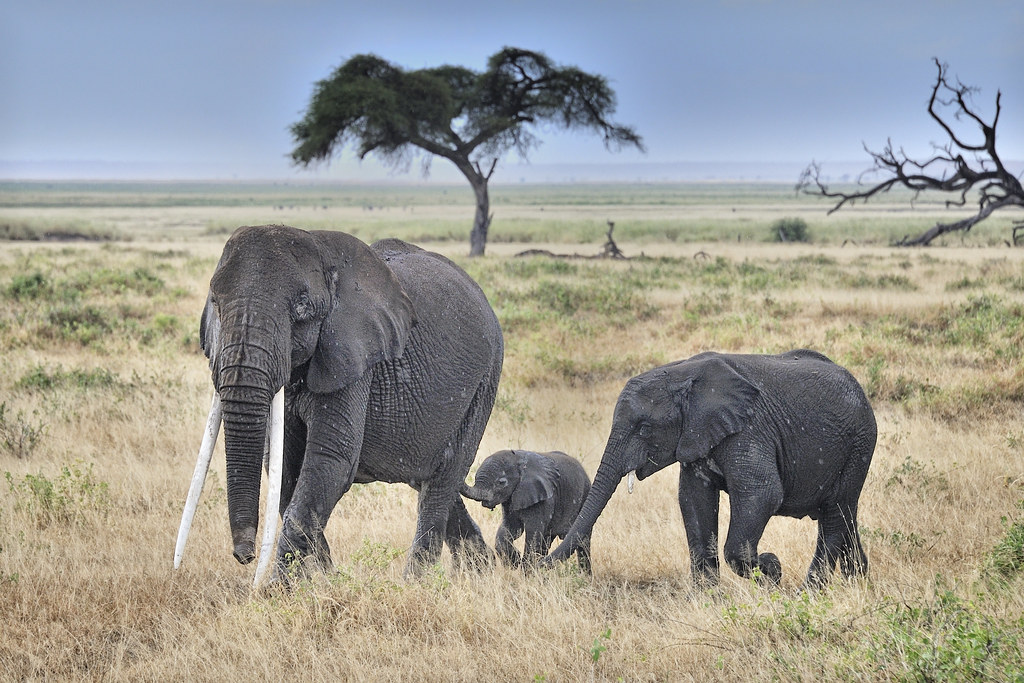
The permanent swamps inside the park, fed by underground water from Kilimanjaro, are vital dry-season refuges, while the surrounding community lands provide essential wet-season grazing and dispersal areas.
The conservancies protect the corridors that link these areas together, and this is a matter of real urgency. As Maasai group ranches are increasingly subdivided into private plots and pressure from farming, fencing, and settlement grows, some of these wildlife corridors have narrowed dramatically, with the vital Kimana corridor reported to shrink to just a few dozen metres wide at its tightest point.
Without the conservancies keeping these pathways open, Amboseli risks becoming an isolated island, cut off from Tsavo, the Chyulu Hills, and Kilimanjaro, which would be disastrous for its elephants and the wider ecosystem. The conservancies are, quite literally, the glue holding this landscape together.
The Main Conservancies and Community Lands Around Amboseli
The Greater Amboseli ecosystem contains a growing number of conservancies at various stages of development, from well-established tourism conservancies to emerging community initiatives. Here are the most significant ones for travellers and for conservation.
Selenkay Conservancy
Lying to the north of Amboseli National Park on Eselenkei group ranch land, Selenkay is one of the best-known and most celebrated Amboseli conservancies. Established in 1997 through a pioneering partnership between the Maasai community and Gamewatchers Safaris, it is widely regarded as an early model of community-private conservation and is home to the acclaimed Porini Amboseli Camp. Selenkay functions as a crucial wildlife dispersal area beyond the park, offering excellent game viewing, including elephants, lions, and cheetahs, in an exclusive, low-density setting with walking safaris and night drives that are not permitted inside the park.
Kimana Sanctuary (Kimana Conservancy)
To the east of Amboseli, the Kimana Community Wildlife Sanctuary holds a special place in Kenyan conservation as the countrys first community-owned wildlife sanctuary. Set on Maasai land where the Kimana and Isinet rivers meet, fed by underground seepage from Kilimanjaro, Kimana protects the critically important Kimana corridor, the key linkage connecting Amboseli to Tsavo West and the Chyulu Hills. More than a tourism area, Kimana is a strategic connectivity gatekeeper, a corridor bottleneck under intense pressure from agriculture and settlement, which makes its protection one of the most urgent conservation tasks in the whole ecosystem.
Kitirua Conservancy
Bordering the southwestern side of the national park, Kitirua is a private conservancy known for its beautiful scenery, superb views of Kilimanjaro, and exclusive, uncrowded safari experience. Leased from the community, it offers off-road driving, walking safaris, and night game drives alongside excellent wildlife, providing a peaceful and private complement to a day in the busier national park.
Kitenden Conservancy
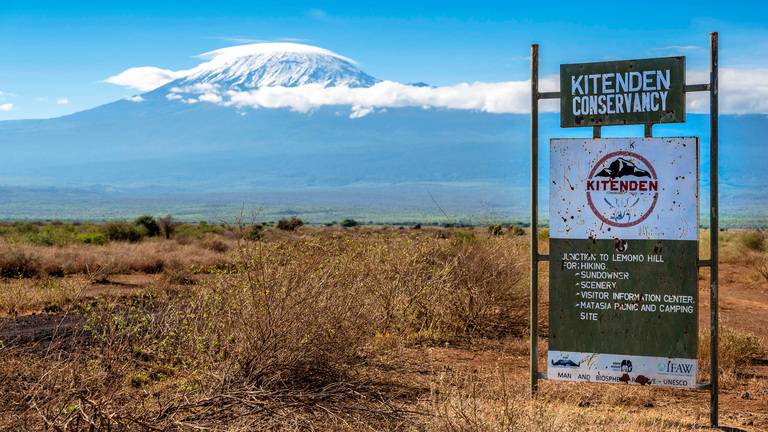
On the southern side of Amboseli, along the vital corridor running toward the forests of Kilimanjaro, Kitenden is an important conservancy on Olgulului group ranch land. It protects the key transboundary link that allows elephants and other wildlife to move between Amboseli and the Kilimanjaro foothills, and even across the border into Tanzania, making it ecologically crucial as well as a fine area for exclusive tented-camp safaris.
Other Group Ranches and Emerging Conservancies
Beyond these, the ecosystem includes the vast Olgulului group ranch, which almost entirely surrounds the national park and carries several critical corridors, along with Mbirikani, Kuku, and Rombo group ranches, which sustain the wider migratory range toward Tsavo and Chyulu.
Within the former Kimana group ranch, smaller conservancies such as Osupuko, Nailepu, and Kilitome have emerged along the corridors. Many more community conservancies across the landscape are at emerging or proposed stages, coordinated under the Amboseli Ecosystem Trust, which brings together a large membership of conservancies protecting hundreds of thousands of acres.
| Conservancy | Location | Known For |
| Selenkay | North of the park | Porini Camp, dispersal area, 1997 model |
| Kimana Sanctuary | East of the park | First community sanctuary, key corridor |
| Kitirua | Southwest border | Kilimanjaro views, exclusivity |
| Kitenden | South, toward Kilimanjaro | Transboundary corridor to Tanzania |
| Olgulului | Surrounds the park | Critical corridors, largest group ranch |
Why Stay in an Amboseli Conservancy?
For travellers, choosing to stay in a conservancy rather than only visiting the national park opens up a richer, more exclusive, and more responsible safari experience. While the national park offers the classic Amboseli spectacle of elephants beneath Kilimanjaro, the conservancies add a level of intimacy, freedom, and connection that the park, with its rules and higher visitor numbers, cannot match.
- Fewer crowds: conservancies strictly limit the number of guests and vehicles, so wildlife sightings are private and uncrowded, without the vehicle clusters seen in the park.
- Off-road and night drives: unlike the national park, conservancies permit off-road driving and night game drives, allowing closer wildlife encounters and the chance to see nocturnal species.
- Walking safaris: guided bush walks with Maasai trackers, impossible in the park, let you experience the wilderness on foot and learn about smaller details of the ecosystem.
- Authentic cultural connection: staying on Maasai land means genuine cultural interaction, with Maasai guides, rangers, and village visits enriching your understanding.
- Direct conservation impact: your stay directly funds the community leases and rangers that keep the land open, making your safari a force for conservation and coexistence.
- Combined experiences: most conservancy camps also run game drives into the national park, giving you the best of both worlds in one trip.
Conservancies and the Maasai Community
At the heart of the Amboseli conservancy model are the Maasai people, whose traditional lands these are and who have coexisted with wildlife for generations. The conservancy system is built on a partnership in which the Maasai lease their land for wildlife use in return for income, employment, and community benefits, turning conservation into a source of livelihood rather than a cost. Revenue from tourism supports schools, clinics, water projects, and employment as guides, rangers, and camp staff, giving communities tangible reasons to value living wildlife.
This partnership is not without its challenges. The subdivision of communal group ranches into private plots, the spread of irrigated farming, and population growth all put pressure on the open rangelands that wildlife needs, and the future of some corridors remains uncertain. Yet the conservancy model, supported by organisations such as the Amboseli Ecosystem Trust, Big Life Foundation, and the Amboseli Trust for Elephants, represents the best hope for keeping this landscape open and connected. When you visit an Amboseli conservancy, you become part of that effort, helping to prove that wildlife can pay its way and that people and elephants can share the land.
Planning a Conservancy Safari in Amboseli
- Combine park and conservancy: stay at a conservancy camp that also offers game drives into the national park for the full Amboseli experience.
- Book intimate camps early: conservancy camps are small and exclusive, so reserve well in advance, especially in peak season.
- Choose your conservancy: pick Selenkay or Kitirua for exclusivity and classic dispersal-area wildlife, or a Kimana-area camp for corridor and cultural interest.
- Ask about activities: confirm which camps offer walking safaris and night drives, the signature conservancy experiences.
- Travel in the dry season: June to October and January to February offer the best game viewing, when wildlife concentrates near water.
- Engage with the culture: take up village visits and time with Maasai guides to deepen your understanding of the community conservation story.
- Use a specialist operator: an experienced Kenya operator can match you to the right conservancy and camp and arrange the whole safari.
Related Posts