Mara Serena Safari Lodge | Maasai Mara, Kenya Mara Serena Safari Lodge holds a unique…
Best Biking & Riding Adventures in Uganda
Best Biking & Riding Adventures in Uganda
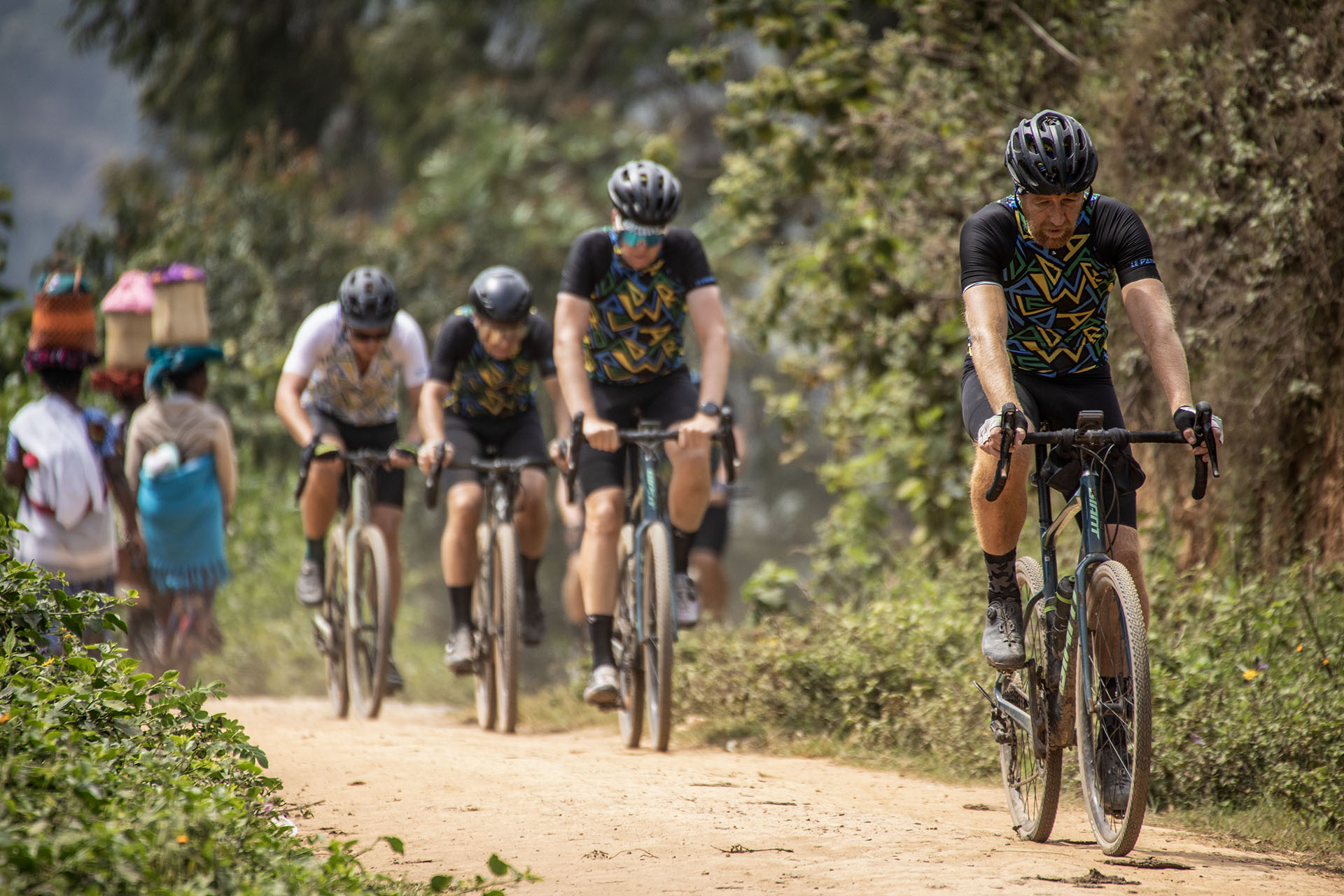
Best Biking & Riding Adventures in Uganda; Uganda rewards travelers who move through it slowly enough to notice the details: a woman balancing matoke on her head along a red dirt road, a troop of colobus monkeys crossing a forest track, the hush that falls over open grassland when a herd of zebra lifts its head to watch you pass. Few African countries offer this much usable terrain for cycling and horseback riding.
Rolling hills replace flat scrubland, quiet rural roads carry a fraction of the traffic you’d find in Kenya or South Africa, and one national park still permits riding on horseback among genuinely wild, free-roaming animals.
That combination of varied topography, low-traffic back roads, and wildlife-adjacent trails is why we now build biking and riding days into itineraries that, a decade ago, would have been built entirely around vehicle-based game drives.
A 60-kilometer forest ride out of Jinja and a gentle three-hour horseback walk through Lake Mburo’s acacia woodland both count as “biking and riding adventures,” but they ask completely different things of a traveler’s body and attention.
This guide breaks down where in Uganda you can bike or ride, how demanding each route actually is, and how to decide what belongs in your itinerary versus what to skip. It’s built from routes and operators actually running trips on the ground, not a generic list of activities that only sound good on paper.
Biking or Horseback Riding: How to Choose
Should your active day in Uganda be spent on two wheels or on horseback? The honest answer depends on what draws you to the country in the first place, and on how your body handles sustained effort versus sustained balance.
Cycling in Uganda spans a wide range of intensity. At the gentle end, sandy tracks on the Ssese Islands and the quiet roads around Kampala require nothing more than a comfortable saddle and a willingness to pedal for two or three hours.
At the demanding end, the climbs through the Rwenzori foothills and the dirt roads around Fort Portal’s crater lakes involve steep, sustained gradients at altitude, often on rough surfaces, and suit travelers who cycle regularly at home. Most guided rides in Uganda sit somewhere in the middle: rolling hills, a mix of tarmac and dirt, and enough climbing to feel it without demanding race fitness.
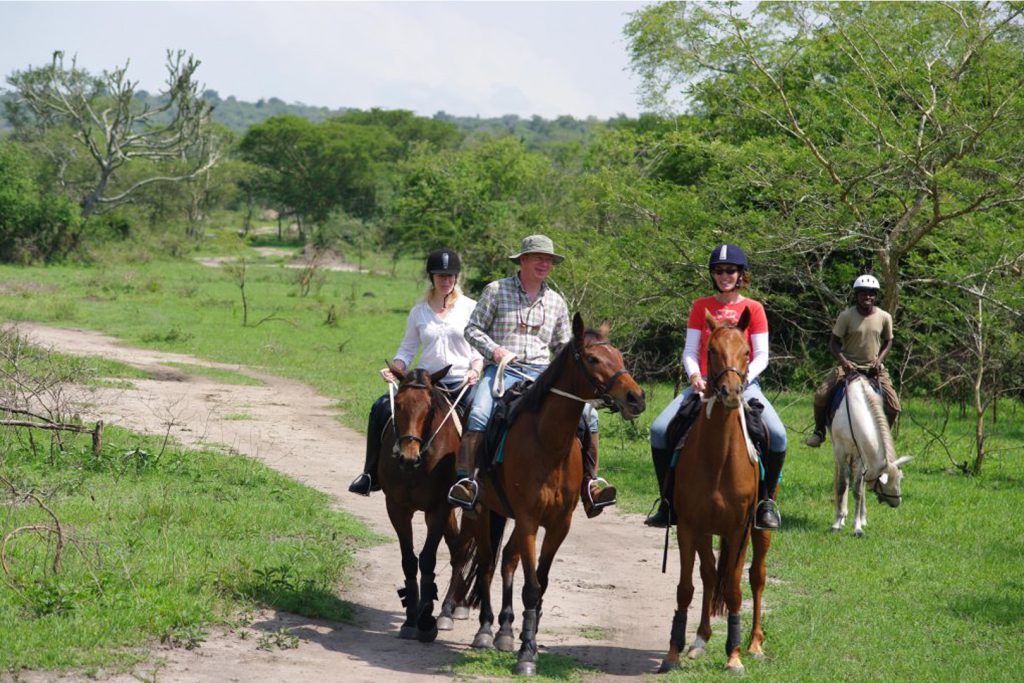
Horseback riding is a smaller category here but a distinctive one. Lake Mburo National Park is one of the only places in East Africa where riding through a park with free-roaming wildlife is officially permitted, because a horse doesn’t alarm grazing animals the way a vehicle engine does.
You don’t need prior riding experience. Horses are matched to skill level, and beginners typically walk while confident riders trot or canter across open grassland. What you do need is comfort with the idea of being at eye level with a giraffe, or close to a herd of zebra, with nothing between you and them but a horse.
If you’re weighing the two, think about what you came to Uganda for. Travelers chasing scenery, culture, and a physical challenge tend to gravitate toward cycling, since it covers more ground and puts you directly among tea plantations, fishing villages, and forest edges.
Travelers who came primarily for the wildlife, and want one more way to experience it beyond a vehicle, tend to choose the Lake Mburo horseback safari. Many of our clients do both, treating cycling as an activity day earlier in the trip and the horseback ride as a highlight within a broader Lake Mburo stay.
Uganda’s Best Biking & Riding Adventures at a Glance
The table below lines up Uganda’s best-known biking and riding experiences side by side, so you can see quickly where each one fits into an itinerary and who it suits best.
| Adventure & Location | Activity | Difficulty | Duration | Best For |
| Source of the Nile & Mabira Forest Ride (Jinja) | Mountain biking | Moderate–Challenging | Half day to 2 days | Fit adventure travelers wanting adrenaline plus scenery |
| Lake Bunyonyi Hills Ride (Kabale) | Road/gravel cycling | Moderate | Half day to full day | Intermediate cyclists, cultural travelers, Bwindi stopovers |
| Ssese Islands Ride (Lake Victoria) | Leisure cycling | Easy | 2–4 hours | Beginners, families, relaxed or beach-focused travelers |
| Rwenzori Foothills Ride (Kasese/Fort Portal) | Mountain biking | Challenging | Full day to multi-day | Fit, experienced cyclists wanting a real physical challenge |
| Fort Portal Tea Country & Kibale Crater Lakes | Mountain biking | Moderate–Challenging | Half day to full day | Adventure travelers pairing biking with chimp trekking |
| Lake Mburo Horseback Safari | Horseback riding | Easy–Moderate | 1–5 hours, overnight option | Wildlife-focused riders, beginners through experienced |
| Murchison Falls Biking & Nature Trails | Cycling and walking trails | Easy–Moderate | 1–3 hours | Travelers wanting a slower, contemplative wildlife day |
| Kampala City Cycling Tour | Urban cycling | Easy | 3–4 hours | First-timers, transit-day travelers, culture-focused visitors |
| Bwindi Forest Edge Ride | Mountain biking | Moderate–Challenging | Half day | Fit travelers filling a rest day around gorilla trekking |
The Adventures in Detail
1. Jinja and the Source of the Nile
Jinja earned its reputation as East Africa’s adventure capital through white-water rafting, but its cycling is just as good a reason to visit. The signature ride follows the Nile north from Bujagali, climbing through fishing villages, sugar cane and tea plantations, and patches of forest before reaching viewpoints over the river’s rapids.
A typical half-day loop covers 25–35 kilometers; the fuller route runs closer to 60 kilometers and takes most of a day, including a stop near the actual point where the river leaves Lake Victoria. Some operators run a two-day, one-night version that adds a boat ride to the source itself.
Just west of Jinja, Mabira Forest offers a different kind of ride: narrow single-track under a closed forest canopy, threading between coffee, banana, and sugar plantations rather than open countryside. It’s shadier and cooler than the Nile-side routes and a good add-on if you have an extra half-day in the area.
Both rides are graded moderate to challenging. Expect genuine climbing and uneven dirt surfaces, though nothing that requires technical mountain-biking skill. This is a strong choice for fit travelers who want their first Uganda cycling experience to also feel like the country’s signature adventure activity, and it pairs naturally with rafting or kayaking on the same trip.
2. Lake Bunyonyi: Cycling Above Uganda’s Deepest Lake
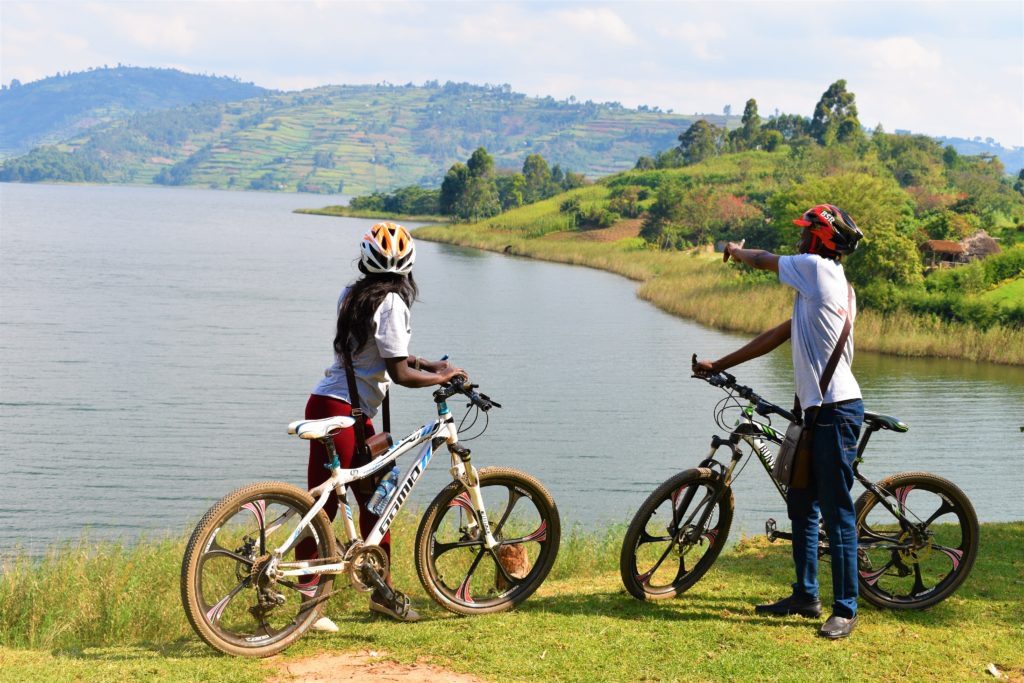
Lake Bunyonyi sits near the Rwanda border in Uganda’s far southwest, terraced hillsides dropping steeply toward a lake dotted with 29 islands. Cycling here means climbing out of Kabale town onto ridge roads with views over the entire lake, then descending, sometimes on genuinely exhilarating switchbacks, toward the shoreline.
Routes wind through small farming communities where terraced plots grow everything from sorghum to Irish potatoes, a crop this cool, high-altitude corner of Uganda is known for.
Most guided rides run half a day, with a full-day option for those who want to circle further around the lake or reach a specific viewpoint. The terrain is graded moderate: the climbs are real, given Bunyonyi sits at nearly 2,000 meters, but the pace is set by the group and there’s no technical single-track to navigate.
This is a strong choice for travelers already routing through southwestern Uganda toward Bwindi for gorilla trekking, since Lake Bunyonyi is the natural rest stop along that road and a cycling half-day breaks up what would otherwise be a long drive.
3. Ssese Islands: Easy Cycling on Lake Victoria
The Ssese archipelago, 84 islands scattered across the northwestern corner of Lake Victoria, is Uganda’s most relaxed cycling destination, and deliberately so. After a scenic ferry crossing from Entebbe, you can rent a bicycle, or a quad bike if you’d rather not pedal, and follow flat, sandy tracks along the shoreline or inland toward Kalangala, the islands’ main town.
Along the way you pass fishing villages, forest edges, and beaches that see a fraction of the visitors Uganda’s national parks do.
This is easy cycling: flat terrain, two-to-four-hour outings, and no need for prior fitness or experience. It suits families, travelers who want a beach-and-bike day rather than a physical challenge, or anyone building in downtime after a demanding gorilla trek. Sitatunga antelope, an unusual swamp-dwelling species, are sometimes spotted from the trails, and shoreline birding is genuinely good.
Because Ssese requires a ferry crossing, roughly three and a half hours from Entebbe, or a shorter hop from near Masaka, it works best as a two- or three-night stop rather than a rushed day trip.
4. The Rwenzori Foothills: Uganda’s Toughest Riding
For cyclists who want Uganda’s most physically demanding terrain, the foothills of the Rwenzori Mountains near Kasese and Fort Portal deliver it. Multi-day guided tours here climb steadily through the western rift valley’s escarpment roads, with sustained gradients, altitude (much of the riding sits above 1,500 meters), and a mix of tarmac and rough dirt that tests both legs and bike-handling skill.
Operators running these routes typically build them into 10- to 17-day cycling holidays across western Uganda, though shorter one- or two-day sections are usually available if you don’t want the full itinerary.
This isn’t a route for anyone without recent cycling fitness. It suits experienced, regular cyclists who specifically want a challenge and are comfortable riding six or more hours a day over several consecutive days. The reward matches the effort: views stretch across the rift valley toward the snow-capped Rwenzori peaks on clear days, and the roads pass through Bakonzo farming communities rarely visited by tourists in vehicles.
If this level of intensity doesn’t match your fitness or travel style, the gentler tea-country routes around Fort Portal below cover similar scenery at a more manageable pace.
5. Fort Portal and Kibale’s Crater Lakes: Tea Country and Chimp Territory
Fort Portal sits in one of Uganda’s most photogenic landscapes, and cycling is the best way to actually experience it rather than view it through a vehicle window. Routes head out through tea estates, expect to ride between hedge-like rows of tea bushes and possibly stop to watch pickers at work, before reaching the crater lakes south of town: a cluster of volcanic lakes, some over 400 meters deep, set among banana plantations and rolling farmland.
Many rides finish by descending toward the edge of Kibale Forest National Park, home to Uganda’s largest population of chimpanzees.
A well-known highlight along the way is a viewpoint locally nicknamed “Top of the World,” where several crater lakes, the Kibale forest canopy, and the Rwenzori range are all visible at once on a clear day. Rides here are graded moderate to challenging: real climbs and descents on dirt roads, but shorter and less relentless than the deeper Rwenzori foothills routes.
This is one of the best regions in Uganda to combine biking with wildlife. Pair a half-day or full-day ride with a chimpanzee trekking permit in Kibale, and you get both the physical adventure and the primate encounter within the same two- or three-day stop.
6. Lake Mburo: Horseback Safari Among Zebra and Giraffe
Lake Mburo National Park is the one place in Uganda where you can ride on horseback among genuinely wild, free-roaming animals, and it’s run exclusively through Mihingo Lodge, perched on a rock outcrop near the park’s eastern boundary.
Rides move through open acacia savanna where zebra, eland, impala, and Rothschild’s giraffe graze; because a horse doesn’t sound or smell like a vehicle or a person on foot, animals that would normally keep their distance often let riders approach far closer than a game-drive vehicle could manage.
The quiet is part of the experience too: no engine, just hooves on dirt and wind through acacia branches.
Standard rides run four to five hours, with pace set to the rider. Complete beginners are kept at a walk, while experienced riders can trot or canter across open grassland. An overnight option exists for confident riders, combining an evening ride with camping on a hilltop or along the lakeshore.
There’s a weight limit, generally cited around 85–100 kg per rider, worth confirming directly with the lodge if it applies to you. Dry season, June to August and December to February, is the best window, since trails stay firm and animals cluster more predictably around water sources.
Buffalo and leopard are present in the park, so rides are always guided and routed to avoid close contact with dangerous game. This is a controlled, well-run activity rather than an unsupervised trail ride.
7. Murchison Falls: Biking and Nature Trails Along the Nile
Murchison Falls is Uganda’s largest national park and best known for game drives and the boat trip to the base of the falls, but its network of nature trails and adjacent cycling routes offer a quieter, slower way to experience the same landscape.
Trails around Rabongo Forest, Kaniyo Pabidi, and the Albert Delta wind through riverine forest and grassland, with cycling generally kept to seldom-used roads adjacent to the park rather than through the core game-viewing sections, for safety around large wildlife.
These rides and walks run one to three hours and are graded easy to moderate. This is about pace and observation, not physical challenge. It suits travelers who’ve already had their fill of dramatic game drives and want a calmer, more contemplative way to spend part of a Murchison stay, as well as birders, since the mix of forest and riverine habitat here is excellent.
Because cycling routes here are more limited and site-specific than in Jinja or Fort Portal, it’s worth confirming current trail access and any wildlife-related restrictions with your lodge before counting on it as a full activity day.
8. Kampala: A City Cycling Tour for First or Last Days
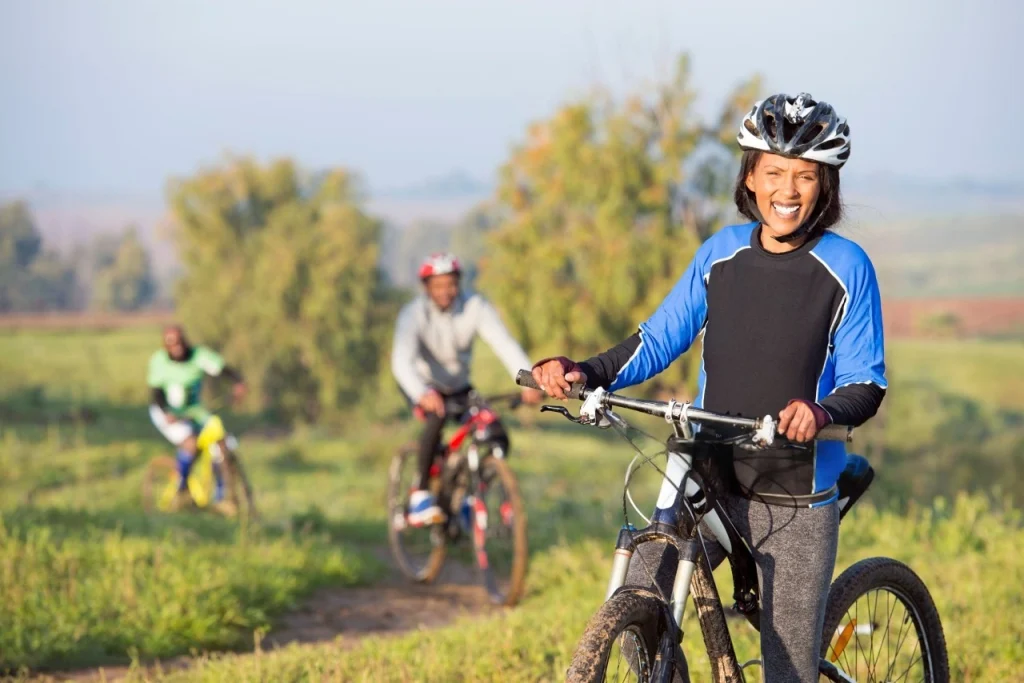
Most travelers spend at least one night in Kampala on arrival or departure, and a guided city cycling tour is a good use of a few spare hours rather than sitting in traffic. Standard tours run around three hours and roughly 20 kilometers, moving through the city’s hills and neighborhoods to landmarks like the Gadhafi National Mosque and the Kabaka’s Palace, usually finishing at the shores of Lake Victoria with a short boat ride included. Bikes and helmets are provided, and English-speaking guides handle navigation through what can be genuinely congested city traffic.
This is easy, low-commitment cycling suited to complete beginners and travelers who want a cultural orientation to Uganda’s capital rather than a physical challenge. It isn’t the wildlife or wilderness experience the rest of this list covers, but it’s a practical, low-risk way to fill a transit day and get a feel for Kampala’s street life, markets, and architecture before or after the more remote parts of your trip.
9. Bwindi Impenetrable Forest: Cycling Before or After Gorilla Trekking
Most visitors to Bwindi come for one reason, gorilla trekking, but the forest’s edges and surrounding hills also offer guided mountain biking, an underused way to fill the day before or after a trek without simply resting at the lodge.
Routes follow trails and roads around the forest boundary through terraced, densely cultivated hillsides typical of this part of southwestern Uganda, with genuine climbing given the altitude and terrain.
Rides here are graded moderate to challenging and suit travelers already reasonably fit from the trekking itself, or those with a rest day between a gorilla permit and a golden monkey trek or second gorilla visit. It’s a good option if you want to stay active without another full trekking day, adding variety to a trip that can otherwise be entirely on foot in this region.
Availability and specific routes vary more by lodge here than in Uganda’s dedicated cycling hubs, so this is one to confirm and book locally rather than assume is available everywhere around Bwindi.
Frequently Asked Questions
Do I need to be an experienced cyclist to bike in Uganda?
No. Most guided rides — Ssese Islands, Kampala, Lake Bunyonyi, the gentler Fort Portal routes — are graded easy to moderate and are led at a pace the group sets together. The routes that do demand real fitness, mainly the Rwenzori foothills and the full-day Jinja and Bwindi rides, are clearly marketed as challenging, so you can self-select out of them if you’re not a regular cyclist at home.
Is horseback riding near wild animals at Lake Mburo actually safe?
Yes, when run through an experienced operator, which in Lake Mburo means Mihingo Lodge, the only outfit licensed to run horseback safaris in the park. Guides route rides away from buffalo and other animals that pose genuine risk, horses are matched to rider skill level, and beginners are kept at a walk. The activity has been running for years specifically because horses don’t spook grazing wildlife the way vehicles or people on foot can.
What’s the best time of year for biking and riding in Uganda?
Uganda’s two dry stretches, roughly June through September and December through February, are best. Trails and dirt roads stay firmer, climbs are less of a slog, and wildlife viewing during horseback rides improves as animals concentrate near remaining water sources. Cycling is still possible in the rainier months, but expect muddier tracks and a higher chance your operator adjusts the route.
Can I combine biking or horseback riding with gorilla trekking or a bigger safari?
Yes, and most of our itineraries do exactly this. A typical pattern: ease into the trip with a Ssese Islands or Kampala ride, head west for Fort Portal tea-country cycling and Kibale chimp trekking, continue to Bwindi for gorilla trekking with an optional cycling rest day, then finish with a Lake Bunyonyi ride on the way back, or loop north to Murchison Falls for game drives with a nature-trail add-on.
How much does a biking or riding day in Uganda cost?
Independent bike rental runs around $15 a day, with helmets and wet-weather gear available separately for a few dollars each. Guided half-day tours through local operators typically fall in the $50–100 per person range, including bike, guide, and safety gear.
Multi-day supported cycling holidays run by international operators cost considerably more, often $150–250 or more per day once accommodation and a support vehicle are included. Lake Mburo horseback rides are usually priced per ride rather than per day, with overnight rides costing more than a standard four-to-five-hour outing.
Confirm current rates directly with the operator or with us when planning, since pricing shifts year to year.
What should I wear or bring?
Closed-toe shoes for both biking and riding, padded cycling shorts if you’re doing more than a couple of hours in the saddle, sunscreen, a hat or buff, and a refillable water bottle. Most operators provide the bike, helmet, and basic tools, and Lake Mburo’s horseback operator provides horses, saddles, and helmets. If you have a specific bike-fit need, mention it when booking, since rural operators keep smaller equipment fleets than you’d find at a dedicated cycling destination.
Is it safe to cycle on Uganda’s roads?
The routes built for tourism, rural back roads around Jinja, Kabale, Fort Portal, and the Ssese Islands, carry a fraction of the traffic you’d find on Uganda’s main highways. Guides choose routes specifically to avoid busy roads and know which sections need extra caution.
Kampala’s city tour is the exception worth flagging: it does cross real urban traffic, which is exactly why it’s led by experienced local guides rather than run as a self-guided ride.
Related Posts